Daily Dose Of Jazz…
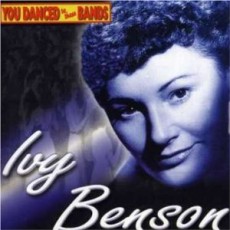
Ivy Benson was born on November 11, 1913 in Holbeck, Leeds, England. Her father Digger Benson, a musician who played with ensembles, began teaching her to play piano at the age of five. She played at working men’s clubs from the age of eight, billed as Baby Benson, and performed on BBC Radio’s Children’s Hour at nine years.
Ivy’s father had ambitions for her to become a concert pianist, but she was inspired to become a jazz musician after hearing a Benny Goodman record and learned to play clarinet and alto saxophone. Leaving school at 14, she took a job at the Montague Burton factory in Leeds, putting aside half a crown from her wages each week to save up for her first saxophone, supplementing her income by playing evenings in dance bands.
Benson joined a sextet, Edna Croudson’s Rhythm Girls in 1929, touring with them until 1935, followed by Teddy Joyce and the Girlfriends where she became a featured soloist. Moving to London in the late 1930s, she formed her own band and her first significant engagement was performing with the all-female revue Meet the Girls, starring Hylda Baker.
During World War II opportunities opened up and Ivy’s band became the BBC’s resident dance band in 1943 and was top of the bill at the London Palladium for six months in 1944. By wars end she was playing the VE Day celebration in Berlin, touring Europe and the Middle East performing for Allied troops, headlining variety theatres and performing at the 1948 Summer Olympics. Over the next thirty years the band experience much success with television appearances, a tribute on This Is Your Life, and a speaking role in the film The Dummy Talks.
The group disbanded in 1982 but she was honored as a fellow of Leeds Polytechnic, a plaque at her childhood home and a play, The Silver Lady, was based on her life. Retiring to Clacton-on-Sea, Essex, multi-instrumentalist Ivy Benson passed away on May 6, 1993 at age 79.
Daily Dose Of Jazz…
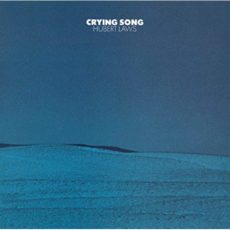
Hubert Laws was born November 10, 1939 in the Studewood section of Houston, Texas, the second of eight children. He grew up across the street from a honky-tonk called Miss Mary’s Place where his grandfather played harmonica and his mother, a pianist, played gospel music. He began playing flute in high school after volunteering to substitute for the school orchestra’s regular flutist. Becoming adept at jazz improvisation he played in the Houston-area jazz group the Swingsters, which eventually evolved into the Modern Jazz Sextet, the Night Hawks, and The Crusaders. At age 15, he was a member of the early Jazz Crusaders while in Texas from 1954–60. Multi-talented, he also played classical music during those years.
A scholarship to Juilliard School of Music in 1960 saw him studying music in the classroom and with master flutist Julius Baker. Laws went on to play with both the New York Metropolitan Opera Orchestra (member) and the New York Philharmonic Orchestra during the years 1969–72. In 971 he recorded renditions of classical compositions by Fauré, Stravinsky, Debussy, and Bach on the CTI album Rite of Spring with strings and enlisted the talents of Airto Moreira, Jack DeJohnette, Bob James, and Ron Carter.
During his years at Juilliard he played flute with Mongo Santamaría and began recording as a bandleader for Atlantic in 1964, releasing the albums The Laws of Jazz, Flute By-Laws, and Laws Cause. He has worked with In the Seventies he can also be heard playing tenor saxophone on some recordings.
The 1980’s saw the minor hit Family on CBS Records getting played on many UK soul radio stations. In the 1990s Hubert resumed his career, recording with opera singers Kathleen Battle and Jessye Norman. His albums on the Music Masters Jazz label—My Time Will Come in 1990 and Storm Then Calm in 1994 show a return to his old form of his early 1970s albums.
Over the course of his career he also recorded with Herbie Hancock, Chick Corea, McCoy Tyner, Nancy Wilson, Quincy Jones, Paul McCartney, Paul Simon, Aretha Franklin, Ella Fitzgerald, Sarah Vaughan, Lena Horne, Leonard Bernstein, Antonio Carlos Jobim, James Moody, Jaco Pastorius, Sérgio Mendes, Steve Barta, Bob James, Carly Simon, Grant Green, George Benson, Freddie Hubbard, Clark Terry, Stevie Wonder, J. J. Johnson, and The Rascals, Morcheeba Ashford & Simpson, Chet Baker, George Benson, and Moondog, his brother Ronnie, Gil Scott-Heron, among others, and was a member of the New York Jazz Quartet.
Laws has been honored with the Lifetime Achievement Awards from the National Flute Association and the National Endowment for the Arts in the field of jazz, as well as a recipient of the NEA Jazz Masters Award and three Grammy nominations. Flautist and tenor saxophonist Hubert Laws who also plays the piccolo, continues to compose, record and perform.
Daily Dose Of Jazz…
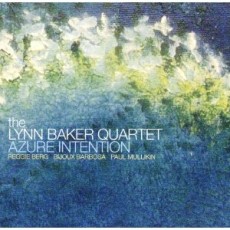
Lynn Baker was born on November 9, 1955 and spent the early years of his life in Salem, Oregon. At seven he started piano lessons and by fifth grade was in band class playing clarinet. While in sixth grade he received his first tenor saxophone and enrolled in summer band program at Morningside Elementary. By seventh grade he was first chair in the junior and high school bands.
During his training he learned many Dixieland tunes that started him on the road to jazz. He would go on to play with McNary High School band and swing choir, and after graduation enrolled at Oregon College of Education (OCE) with the intent of playing and teaching music. He would later transfer to the University of Oregon, return to OCE and eventually enter Mt. Hood Community College’s music program.
After graduation he joined a top 40 band, bought an old Rickenbacker bass and learned some rudimentary bass lines. Post band and teaching privately Baker moved to Los Angeles, California but ended up in Washington teaching in Upward Bound. A Move to Eugene, Oregon put him in the Experimental Jazz Ensemble. He then joined a rock/Latin band and then found his niche as a college educator.
Throughout most of Lynn’s professional career he would teach saxophone, start and direct college bands, form big bands, become director of Jazz Studies, build music programs, playing with several jazz orchestras, an improvising trio culminating in his forming the Lynn Baker Quartet and Quintet. He has performed on several jazz, big band and classical recordings, but finally released his debut album as a leader titled “Azure Intention in 2010. He continues to compose, perform, tour and educate.
More Posts: saxophone
Daily Dose Of Jazz…
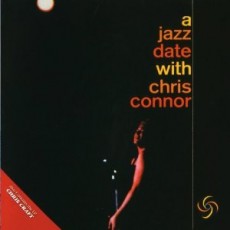
Chris Connor was born Mary Loutsenhizeron November 8, 1927 in Kansas City, Missouri. Her mother died when she was thirteen and her older sister finished raising her. She studied 8 years through junior and high school and became a proficient clarinetist. She first sang publicly in 1945, performing “Amor” at the Jefferson City Junior College’s graduation.
Having been well received Chris decided to pursue a singing career full-time, initially working around Kansas City. Her first professional job was with the University of Missouri college band. Moving between local bands from 1946–47; in 1948 she moved to New York City, struggled to acquire work, finally becoming a member of the Claude Thornhill ’s vocal group “The Snowflakes”. During her time with the Snowflakes, Connor recorded “There’s A Small Hotel” and “I Don’t Know Why”. She joined Jerry Wald’s big band and recorded more prolifically with songs like “Cherokee” and “Pennies From Heaven”.
Nearing one of her sporadic engagement departures June Christy recommended Connor to Stan Kenton and subsequent recording of Jeepers Creepers, If I Should Lose You, I Get A Kick Out Of You and All About Ronnie, which would become her signature song. Tired of touring by 1953 she left Kenton, she returned to New York, found a manager who got her work at Birdland that eventually landed her a recording contract at Bethlehem Records. Her solo career took flight and a succession of successful albums followed. She moved to much bigger Atlantic label, becoming the first white female signed. She worked with such jazz musicians like Ralph Burns, Ralph Sharon, Richard Wess, Jimmy Jones, Al Cohn, Don Sebesky, Maynard Ferguson, Oscar Pettiford and others.
Chris had a long and prolific career through the Sixties and Seventies recording for FM, ABC, Paramount, JVC, Stanyan, Sony Japan, Progressive and Japanese Lobster Record labels. She made her final two recordings in the early 2000s for HighNote Records. Vocalist Chris Connor died on August 29, 2009, from cancer at age 81.
More Posts: vocal
Daily Dose Of Jazz…
Howard Rumsey was born on November 7, 1917 in Brawley, California and first began playing the piano, followed by the drums and finally the bass. After jobs with Vido Musso and Johnnie Davis, he became part of Stan Kenton‘s first band. After an argument ensued he left Kenton and played with Charlie Barnet and Barney Bigard before taking a short hiatus from music.
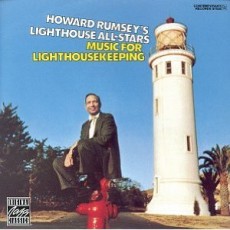
Upon his return Howard hit the Los Angeles jazz scene and formed the Lighthouse All-Stars. For most of the 1950s this group played each Sunday at the Lighthouse Cafe in Hermosa Beach. During its lifetime, the Lighthouse All-Stars were one of the primary modern jazz institutions on the West Coast that provided a home for many Los Angeles musicians. He opened his debut show on May 29, 1949 to immediate success.
Rumsey employed in the first Lighthouse All-Stars group the Los Angeles musicians who had been a part of the Central Avenue scene in the 1940s, including Richie Kamuca, Rolf Ericson, Bud Shank, Bob Cooper, Shorty Rogers, Jimmy Giuffre, Hampton Hawes, Shelly Manne, Herb Geller, Stan Levey, Max Roach, Chet Baker, Russ Freeman, Sonny Clarke, Conte Candoli, Pepper Adams, Barney Kessel,and Frank Rosolino among others. His second band featured a new wave of players, Jimmy Giuffre, Shorty Rogers, and Shelly Manne. The success of this group soon had them recording for Les Koenig’s Contemporary Records. This contract expanded to include many of the members of the group leading sessions for this same label, such as Art Pepper and Stan Getz.
This third edition of the Lighthouse All-Stars included Bud Shank, Bob Cooper, Rolf Ericsson and Max Roach. This band took part in a historic recording in 1953 that featured both Chet Baker and Miles Davis, along with Russ Freeman and Lorraine Geller.
Various editions of the band hosted other players until the early Sixties when jazz interest faded in Los Angeles, but during its heyday some seventy-five musicians came through their ranks until the group eventually dissolved. From 1971 to 1985 he owned and operated the 200 seat club Concerts by the Sea in Redondo Beach, California.In 2005 the film Jazz on the West Coast: The Lighthouse was released about the group. Double-bassist Howard Rumsey passed away on July 15, 2015 from complications of pneumonia in Newport Beach, California, at the age of 96.
More Posts: bass