

Daily Dose Of Jazz…
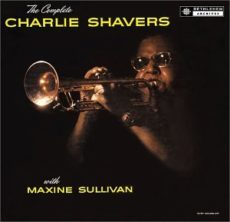
Charles James Shavers was born on August 3, 1920 in New York City and took up piano and banjo before switching to trumpet. In the mid-Thirties he performed with Tiny Bradshaw and Lucky Millinder. In 1935 he joined the trumpet section with Dizzy Gillespie and Carl “Bama” Warwick in Frankie Fairfax’s Campus Club Orchestra.
1936 saw him as a member of John Kirby’s Sextet as trumpet soloist and arranger. Only 16 at the time he gave his birth date as 1917 to avoid child labor laws, Charlie’s arrangements and solos helped make the band one of the most commercially successful and imitated of its day. In 1937, he performed with Midge Williams and her Jazz Jesters. By 1944 he began playing sessions in Raymond Scott’s CBS staff orchestra.
Leaving John Kirby’s band In 1945 he joined Tommy Dorsey’s Orchestra, with whom he toured and recorded, off and on, until Dorsey’s passing in 1956. In 1949, he sang and played the hit The Hucklebuck with Dorsey. He was a member of Dorsey’s Orchestra on numerous Stage Show telecasts for CBS, including early Elvis Presley appearances. During this time he continued to play at CBS while also appearing with the Metronome All-Stars and making a number of recordings as trumpet soloist with Billie Holiday.
From 1953 to 1954 he worked with Benny Goodman and toured Europe with Norman Granz’s popular Jazz at the Philharmonic series, where he was a crowd favorite. He formed his own band with Terry Gibbs and Louie Bellson.
Swing era trumpeter Charlie Shavers passed away from throat cancer in New York City on July 8, 1971 at the age of 50. While on his deathbed his close friend Louis Armstrong passed away, and his last request was that his trumpet mouthpiece be buried with Armstrong.

More Posts: bandleader,composer,history,instrumental,jazz,music,trumpet
Daily Dose Of Jazz…
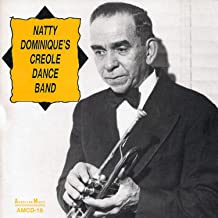
Anatie “Natty” Dominique was born on August 2, 1896 in New Orleans, Louisiana of Afro-Italian descent. Claiming to be a direct descendant of Dominique You, the half-brother of the pirate Jean Lafitte, he studied with Manuel Perez.
Moving to Chicago, Illinois in 1913, over the course of more than three decades there, Dominique played with a number of New Orleans jazzmen, including Louis Armstrong, Jimmie Noone, and especially Johnny Dodds, who employed him from 1928 until his death in 1940.
Shortly afterward, Natty was forced to retire due to a heart condition, keeping him out of the music business for almost a decade. Returning to part-time work with a small combo in the 1950s, he played up till his death.
Trumpeter Natty Dominique, who recorded for American Music Records, Challenge Records, and Black Swan Records, passed away on August 30, 1982 in Chicago.
More Posts: bandleader,history,instrumental,jazz,music,trumpet
Daily Dose Of Jazz…
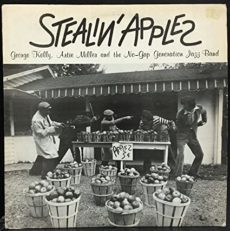
George Kelly was born on July 31, 1915 in Miami, Florida. In the 1930s Panama Francis was a sideman in Kelly’s band. During the Forties, he played in Al Cooper’s band.
Kelly played in Francis’s Savoy Sultans band in the 1970s, and had played of the same name in the 1940s. Leading his own bands he was also a sideman who worked with Tiny Grimes, Rex Stewart, and Cozy Cole.
Tenor saxophonist, vocalist, bandleader, and arranger George Kelly, who recorded seven albums as a leader, passed away at the age of 82 on May 24, 1998.

More Posts: arranger,bandleader,history,instrumental,jazz,music,saxophone,vocal
Daily Dose Of Jazz…
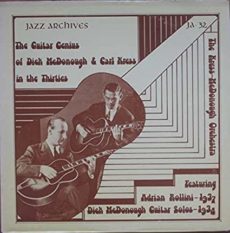
Richard Tobin McDonough was born on July 30, 1904 in New York City and began playing banjo and mandolin in high school. While matriculating through Georgetown University, he performed professionally at weekend dances and two years later started a band. Attending Columbia Law School he played with bands in New York City.
McDonough played with Red Nichols in 1927 as a banjoist, and soon after played with Paul Whiteman. He began studying the guitar and eventually was in demand for session work, recording with The Dorsey Brothers, Red Nichols, and Miff Mole. In the 1930s, he performed in a duo with jazz guitarist Carl Kress and cut several sessions with an orchestra under his own name, in addition to backing numerous other recording artists.
His session work with Mildred Bailey, Smith Ballew, The Boswell Sisters, Rube Bloom, Chick Bullock, The Charleston Chasers, Cliff Edwards, Gene Gifford, Benny Goodman, Adelaide Hall, Annette Hanshaw, Billie Holiday, Baby Rose Marie, Glenn Miller, Irving Mills, Red McKenzie, Johnny Mercer, Red Norvo, Fred Rich, Adrian Rollini, Pee Wee Russell, Ben Selvin, Artie Shaw, Frank Signorelli, Jack Teagarden, Claude Thornhill, Frankie Trumbauer, Joe Venuti, Don Voorhees, and Ethel Waters. He played in the Jam Session at Victor with Fats Waller, Bunny Berigan, and George Wettling.
Struggling with alcohol abuse during his adult life and guitarist Dick McDonough passed away of pneumonia on May 25, 1938 in New York City.
More Posts: bandleader,guitar,history,instrumental,jazz,music,tenor banjo

Daily Dose Of Jazz…
Patricia Dean was born in Tampa, Florida on July 29th and went through her banging on pots and pans stage listening to drummer/singer Karen Carpenter’s records until she got a drum set and began studying privately and really playing, at the age of 11. Growing up she was literally and figuratively surrounded by music while growing up, her father a recorded clarinetist and alto saxophonist and musicians were always around. She played her first professional job with her father and brother when she was fourteen.
One of the few artists in the history of jazz who play drums and sing, Dean does both at an exceptional level. As a drummer, she’s an inspiring and supremely tasteful time-keeper, accompanist, and soloist and as a vocalist, she swings with sensitivity and is a heartfelt ballad singer and evocative interpreter of Brazilian melodies.
Patricia cites Sarah Vaughan, Shirley Horn, Nancy Wilson, and Julie London as among her singing influences. Careful listeners may hear some overtones of Dinah Washington who, of course, greatly influenced Nancy Wilson and Betty Roche. Her drumming influences in addition to Carpenter are Ed Thigpen, Jack DeJohnette, Tony Williams, and Sonny Payne.
Through the years, she has worked with a number of jazz legends, including Nat Adderley, Ira Sullivan, Whitey Mitchell, Bobby Militello, and the late John LaPorta. Drummer Patricia Dean continues to perform and record.
More Posts: bandleader,drums,history,instrumental,jazz,music