

Daily Dose Of Jazz…
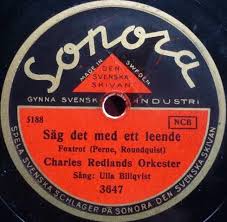
Charles Redland was born Carl Gustaf Mauritz Nilsson on July 7, 1911 in Södertälje, Sweden. The son of a musician, he learned several instruments when he was young.
In the 1930s he was a member of bands in which he played alto saxophone, clarinet, trumpet, and trombone. During that decade he also worked as a leader.
On clarinet, he recorded with Benny Carter in Sweden in 1936. He composed and arranged jazz and popular music. He also composed for more than 80 films, as well as for radio and television programs. Alto saxophonist, Charles Redland passed away on August 18, 1994 in Stockholm, Sweden.

More Posts: bandleader,clarinet,history,instrumental,jazz,music,saxophone,trombone,trumpet
Daily Dose Of Jazz…
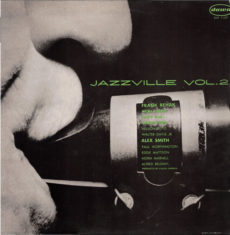
Frank Rehak was born on July 6, 1926, in New York City and started on piano and cello before switching to trombone. He was a member of the Gil Evans band and worked with Miles Davis, appearing with Davis on the broadcast The Sounds of Miles Davis.
As a leader he recorded Jazzville Vol. 2 on the Dawn label but as a sideman he had a prolific career. He recorded with Tony Bennett, Al Cohn, Dizzy Gillespie, Woody Herman, Quincy Jones, Gene Krupa, Hugo Montenegro, Cat Anderson, Ernestine Anderson, Charlie Barnet, Big Maybelle, Art Blakey, Bob Brookmeyer, Ruth Brown, Cándido Camero, Chris Connor, Urbie Green, Johnny Hartman, Michel Legrand, Melba Liston, Mundell Lowe, Teo Macero, Carmen McRae, Red Mitchell, Whitey Mitchell, Blue Mitchell, André Previn, Gerry Mulligan, Kai Winding and the list goes on.
Along with a failed marriage to nightclub dancer Jerri Gray, he also had a heroin addiction, which combined with other financial problems led to his withdrawal from music. With that, he lapsed into relative obscurity.
In an effort to deal with these issues he spent time at Synanon, which led to his mention in Art Pepper’s autobiography. Trombonist Frank Rehak passed away on June 22, 1987 in Badger, California.
More Posts: bandleader,cello,history,instrumental,jazz,music,piano,trombone
Daily Dose Of Jazz…
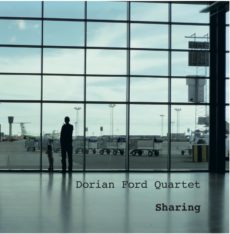
Dorian Ford was born on July 5, 1967 in London, England and started playing jazz in his early teens when he began attending weekly workshops led by trumpeter, composer, broadcaster, and music writer Ian Carr. Playing alongside many musicians who went on to form the backbone of the London jazz renaissance of the 1980s, he won a scholarship to Berklee College of Music, receiving the prestigious Chick Corea Jazz Masters Award. Piano studies were with Donald Brown, a regular in Art Blakey’s band at the time.
Dorian’s performance and recording list are a who’s who of players including but not limited to Julian Joseph, Courtney Pine, Dill Katz, Birelli Lagrene, Jeff Beck, Ingrid Laubrook, Julia Biel, Carol Grimes, Barbara Thompson, Igor Butman, Ian Carr, Colin Lazzarini, Gareth Locraine, Sebastian Rochford, Annie Whitehead, Donny McCaslin, and the list goes on.
Pianist Dorian Ford performs privately as well as publicly as he continues to compose and record.
Daily Dose Of Jazz…
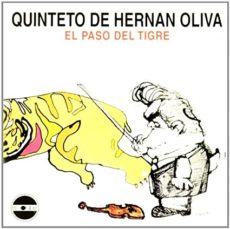
Hernán Oliva was born in Valparaíso, Chile on July 4, 1913 and began his violin studies at age 8 under a dominating mother. Around 1927 at the age of fourteen, he joined the Ernesto Davagnino Orchestra. Bohemian in character and dedicating himself to music over his father choice of law, his father disinherited and expelled from the home.
Around 1935 he crossed to Mendoza, Argentina and worked a few months on the LV10 radio in Cuyo, with his orchestra. Migrating to Buenos Aires, Argentina where Luis Davagnino, Ernesto’s brother, also a musician, lived, and after finding him whistling from corner to corner of Calle Alsina a tune that he knew Luis would recognize received him at his home after. Getting him a job as a companion to Betty Caruso and Fanny Loy on Radio Belgrano, then joined the René Cóspito Orchestra.
He played at the Boite La Chaumiere, with Enrique “Mono” Villegas on piano, David Washington on trumpet, and the English Phillips on sax. The following year Hernán joined the Oscar Alemán orchestra and by 1944 he began working with Ahmed Ratip’s Cotton Pickers, then with Tito Alberti and José Finkel they formed the Jazz Casino in 1951 with singer Lorna Warren.
His later years were spent hanging around the bars of San Telmo playing for whoever asked, sometimes for a glass of whiskey and for many who never appreciated his enormous talent. Violinist Hernán Oliva, who recorded six albums as a leader, passed away in the early morning of June 17, 1988 in Buenos Aires, Argentina lying on a sidewalk in the Palermo neighborhood, hugging his violin case.
More Posts: bandleader,history,instrumental,jazz,music,violin
Daily Dose Of Jazz…
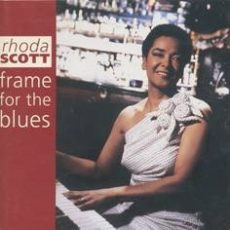
Rhoda Scott was born in Dorothy, New Jersey on July 3, 1938 the daughter of an A.M.E. pastor. She spent most of her childhood in New Jersey, where she learned to play the organ in her father’s churches from the age of seven. Soon she was organist for youth and gospel choirs in her father’s church or in other churches. Later she studied classical piano and focused more on the organ while earning a Masters in Music Theory from the Manhattan School of Music.
During this time, a choir member asked her to be in a small band as a jazz pianist. Accepting under the condition that she play the organ instead of the piano, and overtime on the Hammond organ, she became an outstanding jazz musician. She played the church organ barefoot, and continued this practice earning her the nickname “The Barefoot Lady”. It is considered a role model for many who also play the organ barefoot today. Because of her church training, Scott uses the pedals to play walking bass lines. This leaves her left hand free for more sophisticated chords.
Scott was discovered by Count Basie, who hired her for his club in Harlem, New York. In 1967 she moved to France, where her success was far greater than in the United States. She performed at the Paris Olympia and appeared on stage with many greats such as Ray Charles, George Benson , Ella Fitzgerald, Kenny Clarke and Gilbert Bécaud. In the 1970s she was frequently requested by Joe Thomas, Cees Kranenburg Jr., Bill Elliott, Kenny Clarke, Julie Saury, Sophie Alour, Lisa Cat-Berro, Anne Paceo, Géraldine Laurent, Julien Alour, and Thomas Derouineau.
Her music is a fusion of jazz, gospel, and classical and reflects both her early practice and formal training. Hard bop and soul-jazz organist Rhoda Scott, who has recorded eight albums from 1963 to today, continues to perform and record.
More Posts: bandleader,history,instrumental,jazz,music,organ