

Daily Dose Of Jazz…
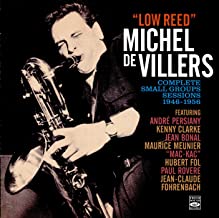
Michel De Villers was born July 13, 1926 in Villeneuve-sur-Lot, France and learned to play alto saxophone as a teenager. He would later expand to clarinet and baritone saxophone. Playing in the latter half of the 1940s with Jean-Claude Fohrenbach, Django Reinhardt and Rex Stewart, he then joined the Edward VII Theatre band in Paris.
In the 1950s he worked in the bands of Geo Daly, Jack Diéval, André Persiany, and Gérard Pochonet. He also played with touring American musicians such as Buck Clayton, Bill Coleman, Jonah Jones, and Lucky Thompson. The Seventies saw De Villers as less active as a musician, working as a jazz writer and radio screenwriter. In the 1980s he became active again as an educator and performer, working later in his career with Christian Garros, Pierre Michelot, Roger Guérin, and Marc Fosset.
Saxophonist, clarinetist, and bandleader Michel De Villers October 25, 1992, Mont St. Aignan, France.

More Posts: bandleader,clarinet,history,instrumental,jazz,music,saxophone
Daily Dose Of Jazz…
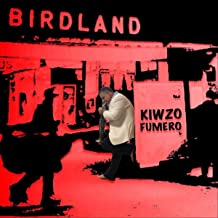
Kiwzo Fumero was born on July 12, 1972 in Marianao, Havana, Cuba. A trumpeter from his youth, he began his professional career in 1991 with the creation of the first youth mariachi band in Cuba, of which he was its creator and director, and who is currently El Mariachi Real Jalisco De La Habana.
In 2000 Kiwzo settled in Miami, Florida. where he has participated with several orchestras and has accompanied Gilberto Sta Rosa, Huey Dumbar, Thalia, Tito Nieves, Rey Ruiz, Jose Jose, and many more. He has performed with the Willy Chirino Orchestra, La Sonora Carruseles, the tour “Embrace Me Very Strong”, Tropicana All-Stars, Celia Cruz, and Cachao.
As an educator Fumero has also had the honor of sharing a lectern with world-class musicians such as Arturo Sandoval, Paquito D’Rivera, John Fadis, Israel López Cachao, Jimmy Bosch, Andy García, Chocolate Armenteros, Patato Valdez among many others.
Winner of 2 Grammy Awards with 6 nominations, he has performed for President Bush in 2007, and has recorded nine albums. Kiwzo Fumero, one of the most recognized and influential Cuban trumpeters of his generation, continues to perform, record and tour.
More Posts: bandleader,history,instrumental,jazz,music,trumpet
Daily Dose Of Jazz…
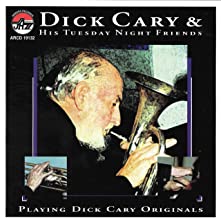
Dick Cary was born in Hartford, Connecticut on July 10, 1916 and earned a bachelor’s degree in music from Wesleyan University in 1938. He began performing in Connecticut and New York and landed a two-year full-time solo gig at Nick’s in Greenwich Village in New York City in 1941. The early 1940s saw him playing with Joe Marsala, the Casa Loma Orchestra, Brad Gowans, and as a staff arranger for Benny Goodman.
During a stint in the Army in 1944-46 while stationed on Long Island, Cary managed to continue recording with Muggsy Spanier and Wild Bill Davison among others. After his discharge, he worked with Billy Butterfield, then the pianist in the initial formation of Louis Armstrong’s All-Stars in 1947–48. In 1949–50 he was in Jimmy Dorsey’s orchestra, and throughout the 1950s worked with Eddie Condon, Pee Wee Russell, Max Kaminsky, Bud Freeman, Jimmy McPartland, and Bobby Hackett.
A move to Los Angeles, California in 1959 saw him becoming an active freelance, touring, and studio musician. Dick began writing and arranging music for the Tuesday Night Friends, who only performed annually at the Los Angeles Classic Jazz Festival and Sacramento Jazz Jubilee.
Trumpeter, composer, and arranger Dick Cary, who recorded eight albums asa leader and two-dozen as a sideman, passed away on April 6, 1994 in Glendale, California.
More Posts: arranger,composer,history,instrumental,jazz,music,trumpet

Daily Dose Of Jazz…
Alex Welsh was born on July 9, 1929 in Edinburgh, Scotland, Welsh and started playing in the teenage Leith Silver Band and with Archie Semple’s Capital Jazz Band. After a move to London in the early 1950s, he formed a band with clarinetist Archie Semple, pianist Fred Hunt, trombonist Roy Crimmins, and drummer Lenny Hastings. The band played a version of Chicago-style Dixieland jazz and was part of the traditional jazz revival in England in the 1950s.
In the 1960s, Welsh’s band played with Earl Hines, Red Allen, Peanuts Hucko, Pee Wee Russell, and Ruby Braff. During that period and into the early 1970s, Welsh frequently toured, including many visits to the United States. Influenced by his fellow trad jazz bandleader Chris Barber, he built up an extensive musical repertoire, working from popular music, jazz, and a large mainstream following for ensembles.
Welsh recorded under the Decca Record label from 1955 and had four records released that year, I’ll Build A Stairway To Paradise, Blues My Naughtie Sweetie Gives To Me, and What Can I Say After I Say I’m Sorry, and Dixielanders. Although none of these recordings charted, he found some success with the single Tansy from the film No My Darling Daughter.
In 1963 he was part of the biggest trad jazz event in Britain and would go on to tour internationally, playing festivals on both the American and European continents. He was a regular in the early 1970s, playing clubs around London and having continued success as a vocalist and playing Dixieland, and trad jazz. Singer, bandleader, cornetist, and trumpeter Alex Welsh passed away on June 25, 1982 in Hillingdon Hospital in London, England, at the age of 52.
More Posts: bandleader,cornet,history,instrumental,jazz,music,trumpet,vocal
Daily Dose Of Jazz…
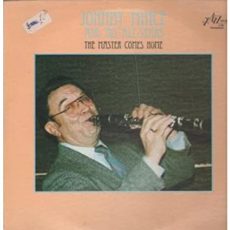
Johnny Mince, born John Muenzenberger on July 8, 1912 in Chicago Heights, Illinois played with Joe Haymes from 1929 to 1934. He recorded with Red Norvo and Glenn Miller in 1935. Working with Ray Noble from 1935-37 and Bob Crosby in 1936 he went on to become a member of the Tommy Dorsey Orchestra in 1937.
Mince played with Dorsey through 1941 and was one of the participants in his Clambake Seven recordings before entering the military. After an extended stint to the end of World War II, he became a studio musician for several decades. He taught locally in New York City and played in small-time ensembles in the 1950s and 1960s.
1974 saw Johnny returning to play with the Dorsey Orchestra after Tommy’s death, then followed this engagement with the New Paul Whiteman Orchestra in 1976, Yank Lawson, Bob Haggart, and the World’s Greatest Jazz Band. As a member of the Great Eight, he toured Europe in 1983. He continued to play at jazz revival festivals until his retirement due to ill health.
He recorded as a leader only late in his life, for Monmouth Evergreen in 1979, Jazzology Records in 1980, and Fat Cat Jazz in 1982. Never receiving much recognition beyond that of his fellow musicians, he did not lead his own band. As an unknown musician, Tommy Dorsey invited him to become his partner in starting his first band but Johnny’s father talked him out of it due to risk. Clarinetist Johnny Mince passed away on December 23, 1994 in Boca Raton, Florida.
More Posts: clarinet,history,instrumental,jazz,music