

Daily Dose Of Jazz…
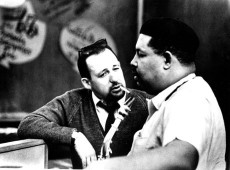
Orrin Keepnews born March 2, 1923 in Bronx borough of New York City and graduated from Columbia University with a degree in English in 1943. And was subsequently involved in bombing raids over Japan in the final months of World War II before returning for graduate studies at Columbia in 1946.
While working as an editor for the book publishers Simon & Schuster he moonlighted as editor of The Record Changer magazine in 1948 and by 1952 along with the magazine’s owner Bill Grauer, produced a series of reissues on RCA Victor’s Label “X”. The following year they founded Riverside Records, which was originally devoted to reissue projects in the traditional and swing jazz idioms.
Signing pianist Randy Weston was the label’s first modern jazz artist, who helped them to begin paying attention to the current jazz scene. Their most significant early move came in 1955, when they were made aware of the availability of Thelonious Monk, who was leaving Prestige and from this point, the label concentrated on the burgeoning modern jazz scene.
Keepnews produced significant young artists as Bill Evans, Cannonball Adderley, Wes Montgomery, Johnny Griffin, Jimmy Heath and was soon rivaling Blue Note and Prestige as a New York independent jazz label. In 1961, Keepnews produced what many regard as one of the greatest live jazz recordings of all time with the Bill Evans Trio, Sunday At The Village Vanguard and Waltz For Debby. However, in 1963 Grauer died of a heart attack and a year later the company was bankrupt, closing the Riverside doors. Not to be trumped, Keepnews founded Milestone Records in ’66 and released albums by McCoy Tyner, Joe Henderson, Lee Konitz and Gary Bartz. 1972 saw him in San Francisco as jazz A&R for Fantasy Records who bought both Riverside and Milestone masters.
Returning to freelancing he opened the doors of Landmark Records in 1985 that eventually passed to Muse Records in 1993. Over the course of his career he has won several Grammy Awards, including Best Album Notes and Best Historical Album; was given the Trustees Award for Lifetime Achievement, received an NEA Jazz Masters Lifetime Achievement Award in 2011 in the field of jazz.
He continued to be responsible for extensive reissue compilations, including the Duke Ellington 24CD RCA Centennial set in 1999 and Riverside’s Keepnews Editions series. Orrin Keepnews, writer and record producer, passed away on March 1, 2015 in El Cerrito, California.
More Posts: record producer,writer
Daily Dose Of Jazz…
Norman Connors was born on March 1, 1947 in Philadelphia, Pennsylvania. He became interested in jazz as a child when he began to play drums and while in middle school once sat in for Elvin Jones at a John Coltrane performance. He continuing music studies took him to Temple University and Julliard.
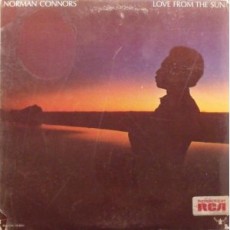
His first recording was on Archie Shepp’s 1967 release, Magic of JuJu and then played with Pharoah Sanders for the next few years. In 1972 he signed with Cobblestone Records and released his first album as a leader. He went on to front some great jazz recordings with Carlos Garnett, Gary Bartz, Dee Dee Bridgewater and Herbie Hancock such as “Love From the Sun”.
By the mid 70s Norman’s focus leaned more towards R&B, scoring several U.S. hits with songs and love ballads featuring guest vocalists such as Michael Henderson, Jean Carn and Phyllis Hyman. He also produced recordings for various artists, including collaborations with Carn and Hyman and also Norman Brown, Al Johnson, and Marion Meadows.
Norman Connors is a drummer, composer, arranger and producer who has recorded for Buddah, Arista, Capitol, Motown and Shanachie record labels; worked with Howard Hewitt, Bobby Lyle, Ray Parker Jr., Peabo Bryson and Antoinette and has since ventured into disco and smooth jazz and urban crossover arenas.
More Posts: drums
Daily Dose Of Jazz…
Charles Gayle was born February 28, 1939 in Buffalo, New York and his childhood was influenced by religion, and his musical roots trace to black gospel music. He began his musical education on piano then added tenor and alto saxophone. Much of his history is murky, he spent an apparent homeless period of about twenty years playing saxophone on street corners and subway platforms around New York City.
A multi-instrumentalist playing pianist, bass clarinetist and percussion, his music is spiritual, heavily inspired by the Old and New Testaments, explicitly dedicated several albums to God. Gayle credits among his influences Louis Armstrong, John Coltrane, Albert Ayler, Thelonious Monk and Art Tatum.In 1988, he gained fame through a trio of albums recorded on the Swedish label Silkheart Records. Since then he has become a major figure in free jazz, recording for Black Saint, Knitting Factory, FMP and Clean Feed record labels.
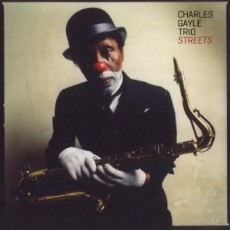
Charles has performed and recorded with Cecil Taylor, William Parker and Rashied Ali with his most celebrated work to date being Touchin’ on Trane with Parker and Ali. He would include lengthy spoken-word addresses in his performances and for a period performed as a mime, “Streets the Clown”. As an educator he taught music at Bennington College.
In 2001, Gayle recorded an album titled Jazz Solo Piano of consisted mostly of straightforward jazz standards in response to critics who charge that free jazz musicians cannot play bebop. In 2006, Gayle followed up with a second album of solo piano originals, and his most recent release in 2012 is titled Streets. His final recording as a leader was The Alto Sessions in 2019.
Suffering from complications of Alzheimer’s disease, saxophonist Charles Gayle, who also played piani, bass clarinet, bass and percussion, died in Brooklyn, New York on September 7, 2023 at the age of 84.
Daily Dose Of Jazz…
Harold Jones was born on February 27, 1940 in Richmond, Indiana. His early professional years were spent drumming with the Count Basie Orchestra and over a five year span recorded fifteen albums before moving on to work with Sarah Vaughan. He toured the world with her, playing the White House five time. Natalie Cole enlisted him on her landmark album “Unforgettable” and subsequent tour.
He has played with such luminaries as Frank Sinatra, Sammy Davis Jr., Roger Williams, Nancy Wilson and Tony Bennett to Herbie Hancock, Jimmy Smith, Donald Byrd and Benny Goodman to Marlena Shaw, Billy Eckstine, Kay Starr, Carmen McRae and John Lee Hooker on the short list.
As an educator, Jones has held a position on the staff for the Henry Mancini Institute at the University of California in Los Angeles and leads drumming workshops at colleges and universities throughout the country.
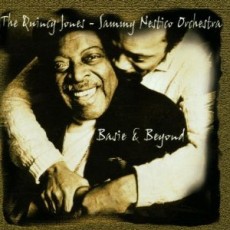
He has performed on the Quincy Jones CD, “Count Basie and Beyond,” fronts his own 17-piece big band, The Bossmen, bringing the Basie swing style back by playing for community events and corporate occasions.
More Posts: drums
Daily Dose Of Jazz…
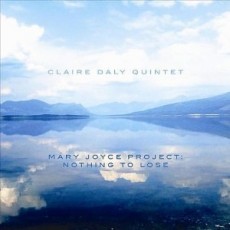
Claire Daly was born on February 26, 1959. At the age of 12 she began playing the saxophone and was soon turned onto jazz by way of a live performance by the Buddy Rich Big Band. She went on to attend Berklee College Of Music and upon graduation she became a full-time professional musician.
In the late 70s and early 80s Claire played with various groups in the jazz and rock arenas, and her powerful tenor saxophone suited the latter perfectly. However, playing more jazz than rock, Daly switched to the baritone saxophone and has worked in New York City since the mid-80s.
>A seven-year association with the all-female big band, Diva, was followed with her working with People Like Us. Daly’s versatility moves between jazz, R&B and Latin, releasing two CDs as a leader for Koch Records and three on her own label DalyBread.
Her influences include Rahsaan Roland Kirk and Sonny Rollins and, on baritone, Serge Chaloff, Ronnie Cuber and Leo Parker. She has performed with Aretha Franklin, James Brown, Joe Williams, and Rosemary Clooney among many others, and her first CD Swing Low resides in the William Jefferson Clinton Library in Little Rock, Arkansas.
Claire Daly, a gifted improviser whose rich tone and emotional depth has earned her a place as a respected member of the baritone saxophone family, continues to lead her own jazz groups and to pass the gift of music on to the next generation.
Diagnosed with head and neck cancer in 2023, baritone saxophonist and composer Claire Daly died at the residence of a friend in Longmont, Colorado, on October 22, 2024, at the age of 66.
More Posts: saxophone