

Daily Dose Of Jazz…
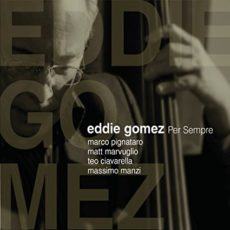
Edgar Gómez was born October 4, 1944 in Santurce, Puerto Rico and emigrating with his family at a young age arrived in New York City, where he was raised. He started on double bass in the City’s school system at the age of eleven and at age thirteen went to the New York City High School of Music & Art. He played in the Newport Festival Youth Band, led by Marshall Brown from 1959 to 1961, and graduated from Juilliard in 1963.
Gómez has performed with Miles Davis, Dizzy Gillespie, Gerry Mulligan, John Coltrane, New York Art Quartet, Benny Goodman, Buck Clayton, Ahmad Jamal, Bill Bruford, Scott LaFaro, Marian McPartland, Paul Bley, Michael Brecker, Wayne Shorter, Steps Ahead, Steve Gadd, Ron Carter, Jeremy Steig, Herbie Hancock, Tony Williams, Al Foster, Chick Corea, Mark Kramer, Eugenio Toussaint and Carli Muñoz, just to name a few giants.
Spending a total of eleven years with the Bill Evans Trio and touring the United States, Europe and Asia, as well as recording dozens of albums, in which two of the Trio’s recordings won Grammy awards. Though Eddie was a member of the Manhattan Jazz Quintet and Steps Ahead, most of his career has been as an accompanist, a position suited for his quick reflexes and flexibility. This gave him the opportunity to record some 73 albums above and beyond his projects as a leader.
He was awarded an Honorary Doctorate of Music from Berklee College of Music in Valencia, Spain, and was the first honorary doctorate granted at the college’s new international campus. Double bassist Eddie Gómez continues to perform, record and tour.

More Posts: bass
Daily Dose Of Jazz…
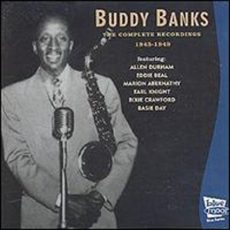
Ulysses Banks, nicknamed Buddy, was born on October 3, 1909 in Dallas, Texas and began playing saxophone in his youth. Moving to Los Angeles, California in the early Thirties he played with the Charlie Echols band from 1933 to 1937. He remained in the group after it was taken over by Claude Kennedy and subsequently by Emerson Scott due to Kennedy’s death. The group then scored a gig at the Paradise Cafe, and Cee Pee Johnson became its leader and played in Johnson’s ensemble until 1945.
Following his departure from the group Buddy led his own group that featured tenor saxophone and trombone as its most prominent instruments. Holding down the trombone chair was Allen Durham and then by Wesley Huff. Guitarist Wesley Pile and drummer Monk McFayalso recorded as members of this group. The ensemble played throughout southern California and recorded until 1949.
Banks led a new group in 1950, but disbanded it quickly and started playing piano, and though he accompanied Fluffy Hunter on tenor saxophone in 1953, he spent most of the rest of his life on piano. From 1953 to 1976 he enjoyed a piano-bass duo with Al Morgan. By 1980 he was playing solo piano.
Tenor saxophonist, pianist and bandleader Buddy Banks passed away on September 7, 1991 in Desert Hot Springs, California.
Daily Dose Of Jazz…
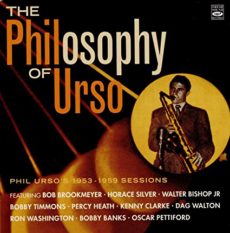
Phil Urso was born on October 2, 1925 in Jersey City, New Jersey and learned clarinet as a child, but switched to tenor sax while in high school. He served in the Navy during World War II and then moved to New York City in 1947.
Once he landed in the mecca for jazz from 1948 to 1954 he played with Elliot Lawrence, Woody Herman, Terry Gibbs, Miles Davis, Oscar Pettiford , Jimmy Dorsey, and Bob Brookmeyer.
In 1955, he first began working with Chet Baker, and was a prominent contributor to Baker’s Pacific Jazz releases in 1956. Urso and Baker would collaborate sporadically for some 30 years. He also recorded with Walter Bishop Jr., Horace Silver, Percy Heath, Kenny Clarke and Bobby Timmons among others.
He went on to work with Claude Thornhill late in the 1950s, but receded from national attention in later decades. Moving to Denver, Colorado he continued performing locally into the 1990s. Tenor saxophonist Phil Urso passed away on April 7, 2008 in Denver.
More Posts: saxophone
Daily Dose Of Jazz…
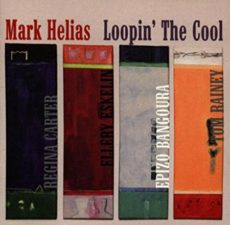
Mark Helias was born on October 1, 1950 in New Brunswick, New Jersey and did not begin playing the double bass until the age of 20. He graduated from Yale University’s School of Music with a Masters degree in 1976 and went on to study at Rutgers University. In the late Seventies he, along with Gerry Hemingway on drums, put together BassDrumBone, and continuing to play together. The 80s saw him again with Hemingway and trombonist Ray Anderson where he led the avant-funk band Slickaphonics.
Helias performed with the previous members of Ornette Colemans original band, Don Cherry, Dewey Redman, and Ed Blackwell. Mark also performed with AACM affiliates Anthony Braxton, Anthony Davis, Muhal Richard Abrams, and Julius Hemphill. Furthermore, he played with Cecil Taylor, Marilyn Crispell, Simon Nabatov, and reed players Oliver Lake, Carlos Ward, Arthur Blythe, Don Byron, and Marty Ehrlich, among others. He also had performances with Abbey Lincoln, Mose Allison, and J.B. Horns.
Since 1984 he has released six recordings under his own name and further six albums leading the archetypal improvising trio Open Loose since 1996. The group comprises Helias on bass, first Ellery Eskelin, then Tony Malaby on tenor saxophone and Tom Rainey on drums.
Bassist Mark Helias has received six NEA Grants in Jazz Performance, two NYFA Grant in Music Composition, teaches at Sarah Lawrence College, The New School, and SIM (School for Improvised Music) when not performing, composing or recording.
More Posts: bass
Daily Dose Of Jazz…
Joe Mudele also Joe Muddel was born on September 30, 1920 in Downham in the south-east of London, England. His father died in 1931 following the consequences of a war and after leaving school at the age of 14, he worked as a singer in a cinema and soon played in local bands. He served in the RAF during the Second World War where he had lessons with James Merritt, contrabassist at the Philharmonia Orchestra.
1946 saw Mudele beginning to work as a professional musician, initially as a member of the Tito Burns Sextet. He met Ronnie Scott and John Dankworth and with them he belonged to the group of musicians who held the first bebop sessions as Club Eleven. To listen to Charlie Parker he attended the Festival International 1949 de Jazz and had the opportunity to play two numbers with Parker and his drummer Max Roach.
At the beginning of the 1950s, Mudele was a member of the Club Eleven Johnny Dankworth Seven but he soon left for family reasons to work the Coconut Grove nightclub in London’s West End. He toured with musicians like Hoagy Carmichael, Sophie Tucker, Judy Garland and Billy Eckstine. In 1951, he formed his own band with saxophonist Joe Harriott.
In the 1940s and 1950s, Alan Dean, Ralph Sharon, Larry Adler, Humphrey Lyttelton, Tommy Whittle, the Melody Maker All Stars in 1952 and 1955, and George Chisholm and Sid Phillips. In the 1960s, he recorded with Johnnie Spence and Alan Branscombe while his last recordings under his own name were made with pianist Robin Aspland and Geoff Gascoyne on drums.
Between 1948 and 2010 he performed on radio and television with Mantovani, Cilla Black, Yehudi Menuhin, Stéphane Grappelli, and the Big Ben Banjo Band, and the Sing Something Simple radio program. He also played regularly at the Bexley Jazz Club.
He recorded some 52 jazz recording sessions, however, outside the jazz he also played on recordings with Johnny Mercer, Barry Gray, John Williams and the Cliff Adams Singers. Bassist Joe Mudele, one of the pioneers of bebop in England, passed away on March 7, 2014.
More Posts: bass