

Daily Dose Of Jazz…
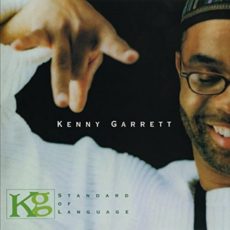
Kenny Garrett, born October 9, 1960 in Detroit, Michigan and his father played saxophone as a hobby. After graduating from Mackenzie High School in 1978 he joined the Duke Ellington Orchestra, led by Mercer Ellington. He moved on to join the Mel Lew Orchestra playing the music of Thad Jones followed by a stint with the Dannie Richmond Quartet that focused on the music of Charles Mingus.
1984 saw him recording his first album as a bandleader, Introducing Kenny Garrett, on the Criss Cross label. Moving to Atlantic Records he recorded Prisoner of Love and African Exchange Student. Since 1990 the majority of Garrett albums are co-produced by pianist/composer Donald Brown beginning with signing with Warner Bros. Records label, releasing Black Hope in 1992. Songbook, his first album made up entirely of his own compositions, recorded in 1997, was nominated for a Grammy Award.
Over the course of his ongoing career Kenny has performed and recorded with among others, Art Blakey, Joe Henderson, Brad Mehldau, Freddie Hubbard, Woody Shaw, McCoy Tyner, Pharoah Sanders, Brian Blade, Marcus Miller, Chick Corea, John McLaughlin, Herbie Hancock, Bobby Hutcherson, Ron Carter, Elvin Jones, Geri Allen, Jack Walrath, Cedar Walton, Rodney Kendrick, Charnett Moffett and Mulgrew Miller. Best known in many circles for the five years he spent playing with Miles Davis during the trumpeter’s electric period.
Garrett has won a Grammy Award, has been nominated for a Soul Train Award, a Grammy and a NAACP Image Award nominations for Seeds from the Underground, was awarded an Echo Award in the Saxophonist of the Year in 2013 and has received an Honorary Doctorate in Music from Berklee College of Music. Post-bop saxophonist and flautist Kenny Garrett who has released nineteen albums as a leader and over thirty as a sideman, continues to pursue his solo career.

More Posts: saxophone
Daily Dose Of Jazz…
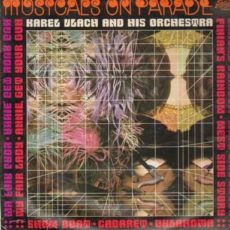
Karel Vlach, born in Prague, Czech Republic on October 8, 1911 and founded his first orchestra in 1938. Over the years many important composers, instrumentalists and arrangers of the Czech jazz scene went through his band.
From 1947 to 1948 Vlach’s orchestra performed at the V+W Theatre, recorded prolifically with Supraphon and his albums include both light classical, orchestral, jazz and pop arrangements for big band with strings.
During the decades from 1940to 1980 Karel arranged and conducted many Czech film scores, launched the singing careers of Czech artists Yvetta Simonová and Milan Chladil. He and his musical colleagues Dalibor Brazda and Gustav Brom also arranged and recorded many titles that are now a part of the Great American Songbook for British singer Gery Scott in the late 1950s.
Dance orchestra conductor and arranger Karel Vlach passed away on February 26, 1986 in Prague.

Daily Dose Of Jazz…
Beverly Peer was born on October 7, 1912 in New York City and started out playing piano professionally early in his career before switching to bass. He worked with Chick Webb from 1936 to 1939 and continued to play in the orchestra under the direction of Ella Fitzgerald.
In 1942 he joined the Sabby Lewis Orchestra and also worked extensively as an accompanist for Sarah Vaughan, Lena Horne, Johnny Mathis, and Barbra Streisand among others. The 1950s and 1960s saw him working with pianists Barbara Carroll and Ellis Larkins. Performing with Bobby Short from the 1970s into the 1990s, Peer was often heard performing with him at the Cafe Carlyle in New York City.
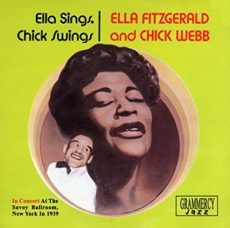
Among his many recording sessions were Ella Fitzgerald’s release Ella Sings, Chick Swings with the Chick Webb Orchestra and Lucky Thompson & His Lucky Seven with Harold “Money” Johnson, Jimmy Powell, Clarence Williams, Earl Knight, Beverly Peer and Percy Brice.
Aside from music, late in his career Peer also had cameo roles in films such as Hannah and Her Sisters and For Love or Money. Double bassist Beverly Peer passed away on January 16, 1997.

Daily Dose Of Jazz…
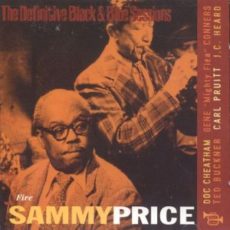
Samuel Blythe Price was born in Honey Grove, Texas on October 6, 1908 and during his early career, he was a singer and dancer in local venues in the Dallas, Texas area. While living in Kansas City, Missouri, Chicago, Illinois and Detroit Michigan he played jazz. In 1938 he was hired by Decca Records as a session sideman on piano, assisting singers such as Trixie Smith and Sister Rosetta Tharpe.
Price was most noteworthy for his work on Decca Records leading his own band, known as the Texas Bluesicians, that included fellow musicians Don Stovall and Emmett Berry. He would also go on to have a decade-long partnership with Henry “Red” Allen.
Later in his life, Sammy partnered with the Roosevelt Hotel in New York City, and was the headline entertainment at the Crawdaddy Restaurant, a New Orleans themed restaurant in New York in the mid-1970s. Here he would play with both Benny Goodman and Buddy Rich.
During the Eighties he moved to Boston, Massachusetts switched to performing in the bar of Copley Plaza. Pianist and vocalist Sammy Price passed away from a heart attack on April 14, 1992, at home in Harlem, in New York City, at the age of 83.

Daily Dose Of Jazz…
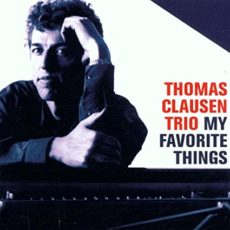
Thomas Clausen was born on October 5, 1949 in Copenhagen, Denmark and grew up in a musical home with his father playing a strong and able jazz piano in swing style, his mother from a family of singers. He began playing very young with great artists of jazz and his energetic and lyrical piano playing was discovered by Dexter Gordon in 196. During that same year he joined Palle Mikkelborg’s projects and groups and was soon playing regularly with the bass players Niels-Henning Orsted Pedersen, Bo Stief, and Mads Vinding, as well as with the drummers Alex Riel, Bjarne Rostvold, and Kasper Winding.
Accompanying a number of international jazz stars visiting Copenhagen, Thomas has performed with Ben Webster, Elvin Jones, Jan Garbarek, Joe Henderson, Phil Woods, Lee Konitz, Stan Getz, Chet Baker, Eddie ”Lockjaw” Davis, Jackie Mclean, Gary Bartz, and Johnny Griffin, just to mention a few. In the mid 80’s he was a regular member of the Peter Herboltzheimer International Big Band in Germany.
Clausen formed his own band in 1978, when he started Mirror, a group that recorded the first LP with his own compositions and included Jan zum Vohrde on saxophone and flute, bassist Ole Skipper Moesgaard, and Aage Tanggaard on drums. 1979 saw him leading his first jazz trio, with bassist Niels-Henning Orsted Pedersen and once again Tanggaard on drums, releasing two albums by 1983. Towards the end of the decade another trio emerged with Mads Vinding and Alex Riel and participated in the first Jazzpar Prize concerts in Copenhagen, Odense, and Paris in 1990, joined by with Gary Burton. The collaboration with Burton lasted a couple of years and led to two recording sessions.
Through the Nineties he delved into Brazilian music, recording and performing with many who were living in Denmark and Germany. His Brazilian Quintet continued into the new millennium, performing and touring throughout Europe. At 67, pianist, composer, arranger and bandleader Thomas Clausen has received the Ben Webster Prize, The Jasa Prize, The Fanfare Prize, and The Danish Society for Jazz, Rock and Folk Composers Prize, received support from the Danish Arts Foundation for fifteen consecutive years from 1993 to 2007 and continues to compose, perform as a leader and co-leader and to tour.

More Posts: piano