

Daily Dose Of Jazz…
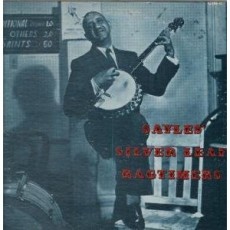
Emanuel Sayles: The Banjoist Who Followed the Music HomeEmanuel Sayles was born on January 31, 1907, in Pensacola, Florida, and began his musical education in the classical tradition, playing violin and viola as a child. But the jazz spirit was calling, and Sayles answered by teaching himself banjo and guitar, the instruments that would define his career and connect him to the early New Orleans jazz tradition.
Following the Music to New Orleans
After high school, Sayles made the pilgrimage that so many musicians made: he relocated to New Orleans, the birthplace of jazz, where he joined William Ridgely’s Tuxedo Orchestra, a prestigious gig that put him in the center of the city’s vibrant music scene.
What followed was a classic New Orleans apprenticeship: Sayles worked with the legendary pianist Fate Marable, violinist Armand Piron, and trumpeter Sidney Desvigne on Mississippi riverboats, those floating conservatories where musicians learned to swing, read charts, and play for dancers night after night. The riverboat gigs were grueling but invaluable, connecting Sayles to the earliest generations of jazz musicians and teaching him the repertoire that would sustain him for decades.
Making History in Chicago
In 1929, Sayles participated in recordings with the Jones-Collins Astoria Hot Eight—sessions that captured the raw, collective improvisation style of early New Orleans jazz before it became codified and nostalgic. These recordings remain treasured documents of a transitional moment in jazz history.
By 1933, Sayles had moved to Chicago, where he led his own group and became a sought-after accompanist on blues and jazz recordings, working frequently with the great barrelhouse pianist Roosevelt Sykes and others. Chicago in the 1930s was electric with blues and swing, and Sayles’ banjo added that distinctive rhythmic drive that made everything move.
Always Returning to New Orleans
In 1949, Sayles returned to New Orleans, the first of several homecomings, and joined forces with clarinetist George Lewis, one of the leading voices in the New Orleans traditional jazz revival. In 1963-64, he toured Japan with Lewis, bringing authentic New Orleans jazz to audiences halfway around the world who were hungry to hear the music in its original form.
Back in New Orleans, he played with the beloved pianist Sweet Emma Barrett, then traveled to Cleveland in 1960 to work with trumpeter Punch Miller. From 1965 to 1967, he was back in Chicago playing in the house band at the Jazz Ltd. Club, one of the premier traditional jazz venues in the country.
Preservation Hall and the Final Chapter
Returning once more to New Orleans in 1968, Sayles found his spiritual home with the Preservation Hall Jazz Band, the ensemble dedicated to keeping the traditional New Orleans sound alive for new generations. Preservation Hall wasn’t just a venue, it was a mission, and Sayles was perfectly suited to be part of it.
Documenting the Tradition
Sayles recorded prolifically as a sideman with cornetist Peter Bocage, trumpeter Kid Thomas Valentine, pianist Earl Hines, and drummer Louis Cottrell, each session a masterclass in the early New Orleans ensemble style. As a leader, he recorded extensively throughout the 1960s for GHB, Nobility, Dixie, and Big Lou record labels, ensuring that his particular approach to the banjo, rhythmically propulsive, harmonically sophisticated, never overplaying, would be preserved for future students of the tradition.
The Unsung Rhythm Master
Emanuel Sayles passed away on October 5, 1986, having spent nearly eight decades playing the music he loved. As a master banjoist, he represented something increasingly rare: a direct connection to the earliest days of jazz, when the banjo was king of the rhythm section and New Orleans was the only place the music existed.
Why His Story Matters
Sayles’ career is a reminder that jazz history isn’t just about the innovators who pushed the music forward, it’s also about the dedicated musicians who preserved what came before, who understood that the old New Orleans collective improvisation style had value and beauty that shouldn’t be lost in the rush toward bebop and beyond.
Every time he returned to New Orleans—and he kept returning, Sayles was affirming that the music’s roots mattered, that there was wisdom in the way the old-timers played, that the banjo had a place even as guitars became dominant. From Pensacola to riverboats to Chicago clubs to Preservation Hall, Emanuel Sayles followed the music wherever it led and always, eventually, back home to New Orleans, where it all began.
Daily Dose Of Jazz…
Buddy Montgomery: The Youngest Brother Who Kept the Music Alive
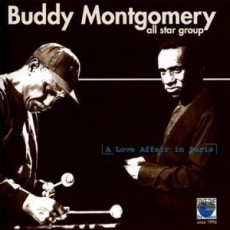
Charles “Buddy” Montgomery was born on January 30, 1930, in Indianapolis, Indiana—the youngest of the Montgomery brothers, a family that would become one of jazz’s most remarkable musical dynasties. While his older brothers Monk and Wes would achieve fame on bass and guitar respectively, Buddy carved his own path, mastering both piano and vibraphone with equal facility.
Early Steps in a Legendary Family
Buddy began his professional career in 1948 at just eighteen years old. By the following year, he was playing with blues shouter Big Joe Turner, then working alongside the innovative trombonist Slide Hampton—learning the ropes from established masters while developing his own voice.
After fulfilling his military service in the Army—where he led his own quartet, never letting Uncle Sam keep him away from music for long—Buddy returned to civilian life ready to make his mark.
The Mastersounds Era
In the late 1950s, Buddy joined forces with his brother Monk to form the Mastersounds, a vibrant West Coast jazz group that produced ten recordings and helped define the accessible, groove-oriented sound that made jazz appealing to wider audiences without sacrificing musicality. The Mastersounds were part of that great wave of organ-and-vibes combos that kept the clubs packed and the jukeboxes humming.
Simultaneously, Buddy led the Montgomery-Johnson Quintet with saxophonist Ray Johnson from 1957 to 1959, helming his first recording session as a leader—proof that even within the family business, he had his own ideas about what jazz could be.
A Brief Brush with Miles
Buddy played briefly with Miles Davis—imagine being good enough to catch Miles’ attention, even momentarily. But when the Mastersounds disbanded, family called once again. Buddy and Monk joined their brother Wes for a series of “Montgomery Brothers” recordings, with Buddy contributing sophisticated arrangements that showcased all three siblings’ talents.
Tragedy on the Road
The brothers toured together in 1968, three Montgomery brothers bringing their distinctive Indianapolis sound to audiences across the country. But in the middle of that tour, tragedy struck: Wes died suddenly of a heart attack at just 45 years old, robbing jazz of one of its most influential guitarists and the Montgomery family of its brightest star. The loss was devastating, both personally and professionally.
Starting Over, Giving Back
In 1969, still processing his grief, Buddy moved to Milwaukee, Wisconsin, where he dedicated himself to teaching music—passing on what three generations of Montgomerys had learned about swing, harmony, and making music that moved people. He spent years nurturing young talent, ensuring that the knowledge didn’t die with his brother.
Oakland and a Second Act
In the 1980s, Buddy relocated to Oakland, California, where he experienced something of a renaissance. He released solo material that showcased his mature artistry and played with the Riverside Reunion Band alongside heavyweights like saxophonists Charlie Rouse and David “Fathead” Newman, and vibraphonist Bobby Hutcherson, peers who understood and appreciated what Buddy brought to the bandstand.
A Full Musical Life
Buddy Montgomery—vibraphonist, pianist, composer, arranger, bandleader, producer, and teachercontinued working in all these capacities right up until his death on May 14, 2009. He produced fourteen recordings as a leader over his career, each one a testament to his versatility and his refusal to be limited by anyone’s expectations.
More Than “The Other Montgomery Brother”
It would have been easy for Buddy to be overshadowed by Wes’ legendary status or defined solely as “one of the Montgomery brothers.” Instead, he built a career that honored the family legacy while establishing his own distinct identity. His vibraphone playing had a clarity and swing that was unmistakably his own. His piano work combined the influence of Indianapolis stride players with bebop sophistication. His arrangements showed a deep understanding of how to make a small group sound rich and full.
And perhaps most importantly, his decades of teaching ensured that the Montgomery musical tradition, that Indianapolis approach to swing, melody, and making accessible music still challenges close listening. His legacy would continue through his students who never met Monk or Wes but learned from Buddy what it meant to be a complete musician.
The Youngest, But Not the Least
Buddy Montgomery lived to 79, longer than either of his famous brothers—and used that time wisely, creating, teaching, and keeping the music alive. He proved that being the youngest Montgomery brother wasn’t a limitation but an opportunity to build something that lasted.
From teenage piano prodigy in Indianapolis to elder statesman of Oakland’s jazz scene, Buddy Montgomery showed that longevity in jazz isn’t just about surviving, it’s about continuing to grow, give, and create until the very end.
More Posts: pano,vibraphone
Daily Dose Of Jazz…
Sacha Distel: The Jazz Guitarist Who Became France’s Crooner to the World
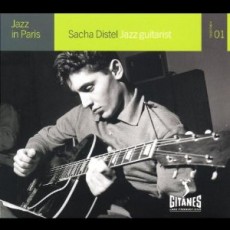
Sacha Distel was born on January 29, 1933, in Paris, France, and started out like many young musicians, plinking away at the piano. But the guitar called to him with a voice he couldn’t ignore, and once he made the switch, there was no turning back.
A Life-Changing Night in 1948
When Sacha was just fifteen, his uncle Ray Ventura, founder of a jazz orchestra that had settled in Paris after the war—invited him to witness something extraordinary: Dizzy Gillespie performing with Ventura’s ensemble. For a teenage guitarist still finding his voice, hearing Gillespie’s revolutionary bebop trumpet in person was like being struck by lightning. That single concert ignited a passion that would define the next decade of Distel’s life.
Becoming a Jazz Leader
The experience with Gillespie split Ventura’s musical circle into two rival camps: Guy Wormser’s New Orleans traditionalists and a group of cool jazz and bebop enthusiasts led by the young Distel. Together with saxophonist Hubert Damisch, Sacha founded a band that quickly established him among Paris’s jazz elite.
Their talent was undeniable. At the prestigious Coliseum’s Night of Jazz, Distel’s ensemble won the Meilleur Petit Orchestre Moderne (Best Modern Small Orchestra) award, while both Damisch and Distel individually took home prizes as outstanding musicians on the same evening. Not bad for a teenager who’d only discovered jazz a few years earlier.
Crossing the Atlantic
Distel’s guitar work caught international attention. He worked alongside Dizzy Gillespie and collaborated with Tony Bennett, who would popularize Distel’s composition La Belle Vie, better known in English as The Good Life, turning it into a timeless standard that’s been recorded hundreds of times since.
By the late 1950s, Distel had appeared on The Ed Sullivan Show, introducing American audiences to his sophisticated musicianship and undeniable charisma. But something was shifting—the handsome young guitarist was also discovering he had a voice that audiences loved.
From Jazz Guitarist to International Star
What followed was a remarkable transformation. Distel evolved from serious jazz musician into one of France’s most beloved crooners and entertainers. He hosted his own variety show on French television, becoming a household name throughout the Francophone world and gaining popularity far beyond France’s borders.
His star power was genuine: he performed for the Queen Mother’s 80th birthday, played the manipulative lawyer Billy Flynn in the London production of Chicago, and famously dated Brigitte Bardot for a year. He later married Olympic skier Francine Breaud, settling into a life that balanced artistic achievement with genuine glamour.
Hits That Crossed Borders
Distel scored major hits with his cover of the Oscar-winning Raindrops Keep Fallin’ on My Head, the playful Scoubidou, which became something of a European phenomenon, and of course his own composition “The Good Life”, a song that perfectly captured the sophisticated, optimistic spirit of its composer.
A Bittersweet Ending
After a long illness, vocalist and guitarist Sacha Distel passed away on July 22, 2004, at age 71, in Rayol-Canadel, France, a small commune on the Mediterranean coast, far from the Parisian jazz clubs where he’d started and the international stages where he’d triumphed.
Two Careers, One Artist
Sacha Distel’s story is fascinating because it represents something rare: a serious jazz musician who successfully transitioned into mainstream entertainment without completely abandoning his roots. The guitarist who studied bebop never entirely disappeared, even when the crooner took center stage.
His composition The Good Life might be his most enduring legacy, a song that captures both his jazz sophistication and his gift for melody that could reach beyond the jazz cognoscenti to touch anyone who’d ever dreamed of la belle vie.
From a teenage guitar student mesmerized by Dizzy Gillespie to an international entertainer who made queens and common audiences alike smile, Sacha Distel lived the good life he sang about and shared it generously with the world.
Daily Dose Of Jazz…
Bob Moses: The Drummer Who Helped Invent Jazz Fusion
Rakalam Bob Moses was born on January 28, 1948, in New York City, arriving just as bebop was transforming into something even more adventurous. He studied drums throughout his childhood, absorbing the rhythmic complexity of modern jazz, and by the time he was a teenager in 1964, he was already playing professionally with the wildly creative multi-instrumentalist Rahsaan Roland Kirk—a baptism by fire that would shape his fearless approach to rhythm.
Pioneering Fusion Before It Had a Name
In 1966, Moses and guitarist Larry Coryell did something revolutionary: they formed the jazz-fusion group Free Spirits, blending jazz improvisation with rock energy and electric instruments at a time when most jazz purists considered such combinations heretical. This was two years before Miles Davis’ In a Silent Way, two years before Tony Williams Lifetime—Free Spirits were genuine pioneers, exploring territory that barely had a map.
The following year, 1967, Moses began a fruitful collaboration with vibraphonist Gary Burton, with whom he would record throughout the 1970s. Burton’s innovative approach to the vibraphone and his openness to musical experimentation made him the perfect partner for Moses’ exploratory drumming.
Finding His Voice as a Leader
Moses released his first album as a leader, Bittersuite, in 1975—a deeply personal statement that showcased his compositional abilities alongside his drumming. This was followed by Devotion in 1979, further establishing him as not just a sideman but a creative force with his own vision.
During this fertile period, he was also a member of Compost, an adventurous ensemble featuring saxophonist Harold Vick, percussionist Jumma Santos, bassist Jack Gregg, and the great drummer Jack DeJohnette. The group explored Afro-Cuban rhythms, modal jazz, and free improvisation—a melting pot that reflected Moses’ wide-ranging musical interests.
A Collaborator’s Collaborator
Moses became the drummer of choice for some of the most forward-thinking musicians of the era. He worked extensively with saxophonist Dave Liebman’s Open Sky ensemble, guitarist Pat Metheny (during his early, more experimental period), pianist Hal Galper, keyboardist Gil Goldstein, bassist Steve Swallow, Swiss bandleader George Gruntz, and the brilliant guitarist Emily Remler—each collaboration revealing different facets of his musical personality.
What united all these partnerships was Moses’ ability to provide both solid grounding and adventurous color, to swing hard when needed but also to explore texture, space, and unconventional rhythmic structures.
Prolific Leadership
From the 1980s into the new millennium, Moses continued recording prolifically as a leader for Gramavision, Amulet, Navarre, Sunny Side, and Jazzwerkstat record labels. Many of these releases received significant critical acclaim, recognized for their compositional depth, rhythmic sophistication, and willingness to take chances.
Unlike some drummers who lead albums that are merely showcases for technique, Moses’ recordings are genuine compositions—thoughtfully constructed pieces that happen to feature exceptional drumming rather than drum solos searching for a musical context.
Still Creating, Still Teaching
Today, Moses continues performing alongside bassist John Lockwood, bassist Don Pate, and keyboardist John Medeski with the noted spiritual jazz guitarist Tisziji Muñoz—explorations that connect to jazz’s mystical, transcendent possibilities.
He also teaches at the prestigious New England Conservatory, where he passes on decades of hard-won knowledge to the next generation of drummers and improvisers. For Moses, teaching isn’t just about technique—it’s about opening young musicians’ ears to possibilities they haven’t yet imagined.
A Legacy of Fearless Exploration
From teenage prodigy playing with Roland Kirk to jazz-fusion pioneer with Free Spirits, from sensitive accompanist with Gary Burton to visionary bandleader with dozens of albums under his own name, Bob Moses has spent over six decades refusing to be categorized, refusing to play it safe, and refusing to believe that drums are merely a timekeeper.
He’s proven that the drum kit can be a melodic instrument, a textural palette, a conversational partner, and a compositional tool—all while never losing sight of the fundamental groove that makes jazz music move and breathe.
That’s not just a career—that’s a lifetime of pushing boundaries and expanding what’s possible behind the kit.
More Posts: drums
Daily Dose Of Jazz…
Jimmie Smith: The Drummer Who Played with Everyone Who Mattered
James Howard Smith was born on January 27, 1938, in Newark, New Jersey, and from the beginning, he was serious about the drums. From 1951 to 1954, while still a teenager, he studied at the Al Germansky School for Drummers—a specialized institution that emphasized both technique and musicality. His dedication paid off with acceptance to the legendary Juilliard School in 1959, where he refined his classical training and expanded his musical vocabulary.
But Smith wasn’t destined for the orchestral world, jazz was calling, and New York City was waiting.
The New York Years: A Who’s Who Education
Smith began his professional career in New York around 1959, and what followed was an apprenticeship that reads like a masterclass in post-bop jazz. Throughout the 1960s, he worked with saxophonist Jimmy Forrest, organist Larry Young, the groundbreaking vocal trio Lambert, Hendricks & Ross, saxophonist Pony Poindexter, blues shouter Jimmy Witherspoon, pianist Gildo Mahones, organists Jimmy McGriff and Groove Holmes—each gig teaching him something new about swing, time, and the art of musical conversation.
His longest and perhaps most formative association came with the incomparable pianist Erroll Garner, with whom he played until 1975. Working with Garner—whose rhythmically complex, orchestral approach to the piano demanded both flexibility and rock-solid time—was like earning a PhD in musical sensitivity.
Heading West
In 1975, Smith relocated to California, where his career took on new dimensions. The West Coast jazz scene of the 1970s through the 1990s was vibrant and diverse, and Smith found himself performing and recording with an almost absurd roster of talent: saxophonist Sonny Criss, vocalist Bill Henderson, singer Ernestine Anderson, pianist Phineas Newborn, guitarists Barney Kessel and Herb Ellis, and saxophonist Al Cohn—just to name a few.
Each collaboration revealed Smith’s remarkable adaptability. He could swing hard with horn players, provide delicate brush work behind vocalists, and drive a guitar trio with just the right combination of propulsion and restraint.
In 1993, he toured Japan with organist Jimmy Smith, no relation, and guitarist Kenny Burrell, a dream trio that brought classic soul-jazz to enthusiastic audiences abroad.
One Legendary Night in Montreux
One of drummer Jimmie Smith’s most celebrated performances took place at the 1977 Montreux International Jazz Festival, where he shared the stage with an all-star lineup that still seems impossible: saxophonist Benny Carter, trumpeter Miles Davis, vibraphonist Milt Jackson, trumpeter Dizzy Gillespie, and pianist Count Basie.
Imagine being the drummer holding down the rhythm section for that constellation of legends—multiple generations of jazz royalty, each with their own distinct style and expectations. Smith rose to the occasion, proving he belonged in that rarefied company.
As a Leader
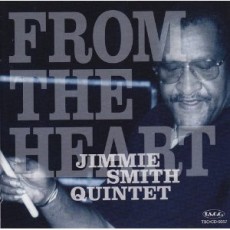
While Smith spent most of his career as the ultimate supporting player, he did step forward as a leader on select occasions. He recorded From the Heart for the Tokyo Sound City label and the superb Rockin’ in Rhythm with bassist Ray Brown and pianist Hank Jones for Concord Records—a trio session that showcased his musical intelligence and his ability to create space for his equally accomplished bandmates.
The Drummer’s Drummer
Jimmie Smith represents a particular kind of jazz musician that’s increasingly rare: the complete professional who could walk into any musical situation, read the room or the chart, and deliver exactly what was needed. No ego trips, no showboating—just deep listening, impeccable time, and the kind of musical generosity that makes everyone else sound better.
From Newark to Juilliard, from Greenwich Village clubs to Montreux’s grand stages, from New York to California and across the Pacific to Japan, Jimmie Smith spent his career doing what he loved most: sitting behind the drums and making great music with great musicians.
And really, what better legacy could a jazz musician ask for than to be known as someone every bandleader wanted on the gig, someone who made the music swing, and someone who understood that sometimes the greatest artistry lies not in the spotlight, but in making the spotlight shine brighter on everyone else?
That’s Jimmie Smith—a drummer’s drummer, a musician’s musician, and one of the unsung heroes who helped keep the jazz tradition alive and swinging for over four decades.
More Posts: drums