

Daily Dose Of Jazz…
DANIEL DIAZ 11.22.25
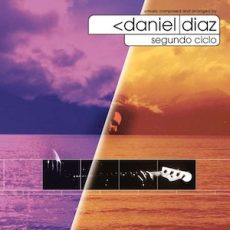
Daniel Díaz Fernández was born on November 22, 1963 in Lanús, Argentina. Living in Paris, France since 1997, he has collaborated with Juan Carlos Cáceres, on the single Tango Negro, and on the album Toca Tango. In 1993 he recorded his first album The Years Alone released by Green Linnet/Xenophile Records. The variety of styles in this album was mentioned by critics. He played most of the parts fretted and fretless basses, keyboards, acoustic and electric guitars, percussion, and more.
He continued this solo career with Segundo Ciclo, recorded in 1997, released by Dutch jazz label Timeless Records in 2002, and Swan Song, released in 2015, always with guest players from around the world. Both albums featured the cosmopolitan jazz-fusion style of the first one.
Since 2005 Diaz has been composing and recording for films, TV and documentaries. He works for French publisher and music library Cezame Music Agency for whom he composed and recorded more than 250 tracks and released 5 albums alone or in collaboration.
Since 2010 his music has been used on many TV documentaries and films. In 2022 his track “Club Recoleta” from the album Elec’ Tango was used on Tom McCarthy’s feature film Stillwater
Bassist, multi-instrumentalist, arranger, composer, Raúl Diaz whose last collaboration in 2023 with Raúl Barboza was on the album Souvenirs Panamericanos, continues to perform and compose.

More Posts: arranger,bandleader,bass,composer,guitar,history,instrumental,jazz,keyboard,music
Daily Dose Of Jazz…
Rainer Brüninghaus was born on November 21, 1949 in Bad Pyrmont, Lower Saxony, Germany. From the age of nine he was educated in classical piano and founded his first jazz trio when he was 16. He studied sociology at the University of Cologne and music during the same time. In 1970, he founded the experimental jazz rock group Eiliff, which recorded two albums and one single.
In 1973, he joined the band of German jazz guitarist Volker Kriegel. From 1973 until 1985, he was a frequent guest in the jazz ensemble and the big band of Hessian Broadcasting Corporation. In 1975, with bassist Eberhard Weber and Charlie Mariano, he formed the band, Colours. Rainere played duo concerts with Manfred Schoof and in his quintet and big band.
In 1976, Brüninghaus first played a piano solo concert at the Heidelberg Jazz Days Festival. At the German Jazz Festival Frankfurt of 1978, he performed a suite of pieces lasting 50 minutes, which he composed as commissioned work for the festival.
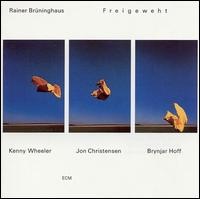
The Eighties saw Brüninghaus working mainly as a bandleader, putting effort into his own projects, Freigeweht with Kenny Wheeler and Jon Christensen. He alsoe founded his own trio in which Markus Stockhausen and Fredy Studer played until the end of 1984.
John Abercrombie and Trilok Gurtu joined the band in 1985, and for some of the performances, Charlie Mariano, Hugo Read, and Jo Thönes played in the band. In 1988, Rainer began a long association with Jan Garbarek. He has written music for symphony orchestras, big bands, small ensembles, and solo piano, as well as for film and television.
He has also worked with Carla Bley, Bob Brookmeyer, Gary Burton, Bobby McFerrin, Jim Hall, Manu Katché, Albert Mangelsdorff, Paul McCandless, Alphonse Mouzon, Archie Shepp, and Steve Swallow.
He taught piano and music theory at the Akademie Remscheid, at the University of Cologne, and from 1990 to 1993 at the Hochschule (University) for Frankfurt University of Music and Performing Arts. He has published essays on music theory and was a member of the artistic advisory board for the Union of German Jazz Musicians.
>Pianist, composer and university teacher Rainer Brüninghaus, who has performed solo Grand Piano conerts, continues to perform and record.
More Posts: bandleader,composer,educator,history,instrumental,jazz,music,piano
Daily Dose Of Jazz…
Rolando Matias was born on November 20, 1957 in Cupey Alto, San Juan, Puerto Rico. A self-taught musician, he applies his formal training as an architect into his musical education. He started playing percussion at a young age at the local Bembes, a neighborhood gathering where rumberos jam and improvise together.
Rolando has performed or recorded with Chuchito Valdez, Benny Maupin, Leon ..Ndugu.. Chadler, Azar Lawrence, Othello Molineaux, Mimi Fox, Bobby Matos, Bobby Sanabria, Bill Summers, Lenny Castro, Eddie “The Chief” Clearwater, Kenny Neal, Duke Robillard, Cleveland Roberto Ocasio, David Sanchez, and the list goes on and on.
His projects vary from Rolando Matias & The Afro-Rican Ensemble, Afro-Latin-BeBop, Latin-Soulsa & Jazz RM:Intrin-x-ico, Afro-Jazz Rolando Matias & Cuba-son Salsa na ma!, and Afro-Latin-Hip/Hop.
Percussionist Rolando Matias, who plays congas, bongos, cowbells, bata drums, hand percussion, claves, guiros, and maracas, etc, continues to perform and explore music from the African Diaspora.
More Posts: bandleader,history,instrumental,jazz,music,percussion
Daily Dose Of Jazz…
Bill Allred was born in Rock Island, Illinois on November 19, 1936 into a family where his father played the Streckfus Steamboat lines on the Mississippi.
He formed a Dixieland band while still in high school. In 1954 he enlisted in the Navy, playing with Navy bands throughout his tour and was excited to be part of a big band for the first time. Returning home he married, pursued a regular career and continued to gig.
His big break came in 1970 when, out of 2500 auditioning musicians, he was chosen to be part of the Disney World Band on the park’s opening day in 1970. While at Disney he formed a trad band called The Reedy Creek Jazz Band. The band was noticed by Bob Snow, who recruited him to put together a show and band for the Rosie O’Grady’s Goodtime Jazz Emporium, that ran for 25 years.
In 1979, Bill formed the Continental Jazz Band for a Roaring Twenties club in Fort Lauderdale, Florida. “Auntie Mame’s” later won the Carbonell Award for Best Cabaret Show in South Florida.
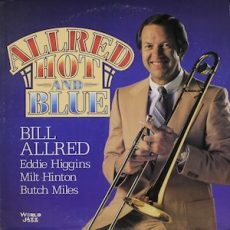
Trombonist and bandleader Bill Allred, who was a vital component of the classic jazz scene in South Florida, died on February 1, 2024 at the age of 87.
More Posts: bandleader,history,instrumental,jazz,music,trombone
Daily Dose Of Jazz…
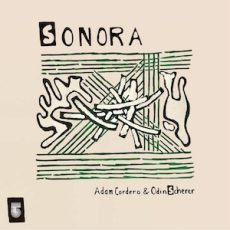
Adam Cordero was born on November 18, 1999 and grew up in Roslyn Heights, New York. He became captivated by the sounds of nature which he has incorporated in his compositions. Attending the New School for Jazz and Contemporary Music he graduated with a Bachelor of Fine Arts
Adam holds a BFA degree with high honors from The New School for Jazz and Contemporary Music. He is also an adjunct professor at the New School and teaches privately.
Cordero teaches his own studio of students privately and is an adjunct faculty member at The New School for Jazz & Contemporary Music. He has played the established jazz venues in New York City, and has toured internationally to Switzerland and South Korea.
His quintet, Arcadia, strives to unite people in the common cause of protecting the environment. Cordero is a leading founder of the music venue Julian’s NYC and the music label, Tidebloom Records.
Saxophonist, composer, educator, and multi-instrumentalist Adam Cordero, who also plays clarinet, bass clarinet, and flute, continues to perform, tour and record.
More Posts: bandleader,bassoon,clarinet,flute,saxophone