

Daily Dose Of Jazz…
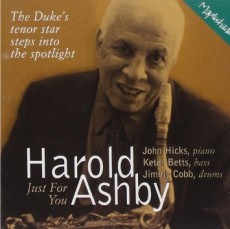
Harold Ashby was born on March 21, 1925 in Kansas City, Missouri. He began playing alto and clarinet as a teenager but gave up music while he was in the US Navy from 1943 to 1945. On return to his native Kansas City in 1946, he was soon playing again and backed the singer Walter Brown, making his first recording with Brown in 1949. He spent most of the Fifties in Chicago playing in blues bands before moving to New York in 1957 to work in the bands of Milt Larkin and Mercer Ellington.
He then found the fringes of Duke Ellington’s band and accepted as a friend and colleague by Ellington’s sidemen, he recorded with Webster (1958), Hodges (1960), Gonsalves (1961) and Lawrence Brown in 1965. Once he joined the band permanently he became a regular in all the small groups that came from the band to record. He was given more prominent roles as the band played across Europe and the Far East and won many fans across the world.
After Ellington’s death, Ashby worked with Sy Oliver in 1976 and made brief tours with Benny Goodman in 1977 and 1982. He toured there with the Ellington Alumni in 1978 and returned the following year with the Kansas City pianist Jay McShann Making another European tour paired him with the pianist Junior Mance, and he was also one of the stars of the 1985 Nice Festival.
He recorded often under his own name in the late Eighties and early Nineties, but illness curtailed his activities and he confined his work to the New York area. Ashby made an exception for one of his last appearances at the 2001 Duke Ellington Conference in Ottawa when Ashby played one of Ellington’s compositions written to feature him, “Chinoiserie”. Happily he was able to regain his top form, but it was his final appearance before an audience of any size. Tenor saxophonist Harold Ashby passed away in New York City on June 13, 2003.

Give The Gift Of Knowledge
More Posts: saxophone
Daily Dose Of Jazz…
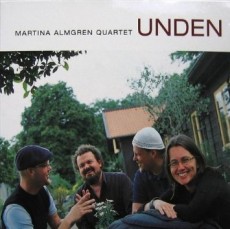
Martina Almgren was born on March 20, 1962 in Sweden and was surrounded by music as a child. She started playing the piano, then soon followed with the flute. In her late teens she was caught entirely by the drums, that became her primary instrument, along with the freedom in jazz and improvised music. It was some years later that she began composing her own music.
A colorful addition on the contemporary Swedish jazz scene, Almgren is passionate about playful improvisation, enticing rhythms and expressive melodies. This is reflective in her drumming as well as her compositions. She heads her own band, Martina Almgren Quartet, and has released four albums since 1999.
Martina together with Owe Almgren lead the Oh Yeah Orchestra comprised of ten of the top jazz musicians on the Swedish scene. In 2009 she was commissioned to compose for Swedish Jazz Celebration for Oh Yeah Orchestra. The album with the music “Freedom of Movement” was released in 2011. She expanded her performing on the European scene in 2007 when she teamed up with Scottish saxophonist Laura Macdonald on their album Open Book in 2008 followed by another in 2012.
She has been a part of Tom Bancroft´s Band of Eden, Nikki Iles Quintet and MOZ Trio that released their debut album “Sparkling Water, Please” released on the new Swedish label Oh Yeah Records in 2013. Drummer and composer Martina Almgren teaches improvisation classes at the Academy of Music and Drama at the University in Gothenburg, performs, records and tours.
Take A Dose On The Road
More Posts: drums
Daily Dose Of Jazz…
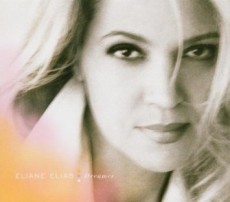
Eliane Elias was born on March 19, 1960 in Sao Paulo, Brazil and her musical talents began to show at an early age. She started studying piano at age seven, and by age twelve was transcribing solos from the great jazz masters. Fifteen, saw her teaching piano and improvisation and her performing career began at age seventeen, working with Brazilian singer/songwriter Toquinho and the poet Vinicius de Moraes.
In 1981, she headed for New York and a year later landed a spot in the acclaimed group Steps Ahead. In 1988 she was voted Best New Talent in the Critics Poll of Jazziz magazine, together with Herbie Hancock she was nominated for a Grammy in the “Best Jazz Solo Performance” category for her 1995 release, Solos and Duets, received the Downbeat Readers Poll’s “Best Jazz Album” for her recording The Three Americas and has been named in five other categories: Beyond Musician, Best Composer, Jazz Pianist, Female Vocalist, and Musician of the Year.
Elias has recorded with RCA Victor, Bluebird, Denon, Manhattan, Blue Note, EMI, Concord/Picante, ECM and Savoy Jazz spanning over twenty albums to date. She has recorded two albums solely dedicated to the works of the composer, Plays Jobim and Sings Jobim. Her 1998 release, Eliane Elias Sings Jobim, winning Best Vocal Album in Japan and was awarded Best Brazilian Album in the Jazziz Critics Poll. She has been featured in a Calle 54 documentary, received several Grammy nominations for Best Latin Jazz Album, and recorded with Denyce Graves on The Lost Days.
On her first album titled “Amanda” released in 1984 she collaborated with Randy Brecker and shortly thereafter she began her solo career. She has also collaborated with bassist Marc Johnson on the album Swept Away. Pianist, singer, arranger and songwriter Eliane Elias, known for her distinctive blend of her Brazilian roots with voice, jazz and classical music, continues to compose, record, perform and tour.
Dose A Day – Blues Away

Daily Dose Of Jazz…
Sofia Ribeiro was born on March 18, 1978 in Lisboa, Portugal. She graduated with a degree in jazz performance from “Escola Superior de Música e Artes do Espectáculo do Porto”, did a one year exchange program in Barcelona at “Escola Superior de Música de Catalunya”, and another one on scholarship at Berklee College of Music. She also received a master’s degree in jazz performance from the Royal Conservatory of Brussels, and went on to study for one year at the “Conservatoire National Superieur de Paris”.
Ribeiro has recorded five CDs in duo and quartet settings, performed children’s music written for books, has toured throughout Europe performing at the Sunset Jazz Club, Jamboree, Silesian Jazz Festival as well as the Kennedy Center and Berklee Performance Center among others.,
Sofia has taken 1st prize at the international competitions “Crest Jazz Vocal” in France, 1st prize at the international competition for singing musicians “Voicingers” in Poland, and 2nd prize at the “Brussels International Young Jazz Singers Competition”, and was a part of the Betty Carter Jazz Ahead program at the Kennedy Center in Washington, DC.
Vocalist and composer Sofia Ribeiro has developed strong and emotional performances blending elements of jazz, Brazilian and Portuguese music within her charming and powerful sound. She continues to perform, record and tour.
Give A Gift Of Jazz – Share
More Posts: vocal
Daily Dose Of Jazz…
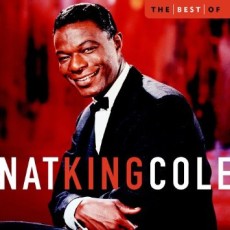
Nat King Cole was born Nathaniel Adams Coles on March 17, 1919 in Montgomery, Alabama, one of four brothers and a half sister. His brothers Ike and Freddy would follow in his footsteps and pursue careers in music. When he was four years old his family moved to Chicago, Illinois where his father became a Baptist minister and where the young lad learned to play the organ from his mother. His first performance was at age four and he began formal lessons at 12, eventually learning jazz, gospel and Western classical. He went to DuSable High School and studied in the music program under Walter Dyeth.
Sneaking out of the house and to hang around outside the clubs, he listening to artists such as Louis Armstrong, Jimmy Noone and Earl Hines, the latter who inspired him. Cole began his performing career in the mid-1930s while still a teenager, adopting the name Nat Cole. His older brother, Eddie, a bass player, joined Cole’s band playing clubs and made their first recording in 1936 under Eddie’s name. They also were regular performers at clubs. He got his nickname, “King”, presumably reinforced by the nursery rhyme “Old King Cole”.
Nat went on to be the pianist in the national tour of Shuffle Along revue about theatre legend Eubie Blake. When it closed in Long Beach, he decided to stay in California. He formed Cole and two other musicians formed the “King Cole Swingsters” that eventual became the King Cole Trio. Their first radio broadcast on NBC’s Blue Network in 1938 led to their Swing Soiree, the Old Gold, Chesterfield Supper Club, Kraft Music Hall and The Orson Welles Almanac.
Cole frequently sang in between instrumental numbers. Noticing that people started to request more vocal numbers, he obliged. There was a customer who requested a certain song one night, but it was a song that Cole did not know, so instead he sang “Sweet Lorraine”. The King Cole Trio signed with the fledgling Capitol Records, known as the “House That Nat Built” in 1943. Revenues from Cole’s record sales fueled much of the label’s success during this period including the construction of the circular building.
Nat would perform in the first Jazz At The Philharmonic, have his revolutionary lineup of piano, guitar, and bass was emulated by many musicians, among them Art Tatum, Oscar Peterson, Ahmad Jamal, Charles Brown and Ray Charles. He played with Lester Young, Red Callender and Lionel Hampton.
Cole’s first mainstream vocal hit was his 1943 recording of one of his compositions, “Straighten Up And Fly Right”, selling over 500,000 copies.
In 1946, the King Cole Trio Time program was on the air, recorded with a string orchestra and his pop stature came with his recording of “The Christmas Song” followed by a string of hits such as Nature Boy, Route 66, Mona Lisa, Too Young and Unforgettable. While this shift to pop music led some jazz critics and fans to accuse Cole of selling out, he never completely abandoned his jazz roots and in 1956 he recorded an all-jazz album After Midnight. He had one of his last major hits in 1963, two years before his death, with “Those Lazy-Hazy-Crazy Days of Summer”, which reached #6 on the Pop chart.
He would go on to have a variety show on NBC without national sponsorship despite appearances of Ella Fitzgerald, Harry Belafonte, Frankie Laine, Peggy Lee and Eartha Kitt. He would record Cole Espanol in Havana, Cuba, retool his final Nelson Riddle arranged album Wild Is Love into an Off-Broadway show titled “I’m With You”. Cole performed in many short films, sitcoms, and television shows such as St, Louis Blues, The Blue Gardenia, the Nat King Cole Story and on of his final appearances in Cat Ballou.
Cole was inducted into the Alabama Music Hall of Fame, the Alabama Jazz Hall Of Fame, the Down Beat Hall of Fame, the Hit Parade Hall of Fame, the Rock and Roll Hall of Fame, the Latin Songwriters Hall of Fame, a Grammy Lifetime Achievement Award, and has an official U.S. postage stamp in his honor.
Pianist, vocalist, composer and bandleader Nat King Cole, whose baritone voice performed in big band and jazz trio settings passed away on February 15, 1965 of lung cancer. He maintains worldwide popularity.
Jazz Is Global – Share