

Daily Dose Of Jazz…
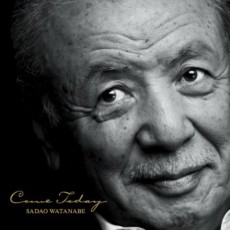
Sadao Watanabe was born on February 1, 1933 in Utsunomiya, Japan and first began learning music at the age of 18. He started performing professionally in 1953. By 1958 he had established himself as a world-class saxophonist having performed with leading musicians and quartets. In 1962 he left Japan to study at Berklee College of Music in Boston.
Known for his bossa nova recordings, Sadao’s work encompasses a large range of styles with collaborations from musicians all over the world. Of his 72 albums to date, he has had 13 albums reach the top 50 Billboard charts and two within the Top 10. He has also had numerous albums reach number one on the jazz charts.
Watanabe has been awarded the Order of the Rising Sun – the imperial medal of honor, the Fumio Nanri Award, and an honorary Doctorate Degree from Berklee College of Music.
In addition to his musical career, alto and soprano saxophonist and flutist Sadao Watanabe is also a published photographer with six books to his credit in Japan. He is also a U.S. citizen sharing his time between his homeland and Los Angeles, California as he continues to perform, record and tour.

Jazz Is Global – Share
Daily Dose OF Jazz…
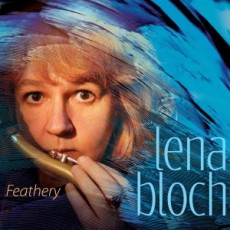
Lena Bloch was born on January 31, 1971 in Moscow, Russia. She immigrated to Israel in 1990, to attend Rubin Academy of Music and Dance, and then received a full scholarship for Jazz In July workshop. Acquiring her Artist Diploma cum laude from Cologne Conservatory, she was granted another full scholarship to attend the Jazz Workshop in Banff, Canada. Bloch has studied with Yusef Lateef, Billy Taylor, Joe Lovano, Kenny Werner, Dave Holland and Lee Konitz.
By 2001 Lena met her most important teacher, Lee Konitz, who she studied and was introduced to the music of Lennie Tristano’s school, especially Warne Marsh. She played the first tenor chair in the Jazz Ensemble and got a “Downbeat Student Award” 2005 and MENC Award 2004 in Minneapolis. She has won the “Outstanding Performance Award”.
Since 1993 Lena has been leading her own quartet and trio, writing music and arranging and she played in the legendary “Embryo” band touring Italy. She is an inventive improviser who incorporates Middle-Eastern and Eastern European elements into the jazz idiom, achieving a unique sound.
She has performed with Mal Waldron, Johnny Griffin, Horace Parlan, Keith Copeland, John Marshall, Alvin Queen, Steve Reid Vishnu Wood, Arturo O’Farrill, George Schuller, Billy Mintz, Dave Shapiro, Roberta Picket, Scott Wendholt, Dan Tepfer, Bertha Hope, Ray Drummond and Matt Wilson among many others. Alto saxophonist Lena Bloch is also a creative and inventive educator, who continues to successfully teach woodwinds and jazz improvisation to all ages and levels since 1990.
Put A Dose In Your Pocket
More Posts: saxophone
Daily Dose Of Jazz…
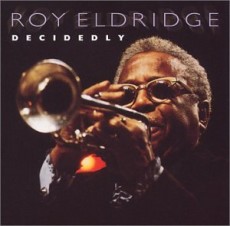
Roy Eldridge was born David Roy Eldridge on January 30, 1911 on the North Side of Pittsburgh, Pennsylvania. His mother was a gifted pianist with a talent for reproducing music by ear, a talent inherited from her. He began playing piano at age five, took up drums at six, played bugle in church and by eleven began seriously honing the instrument, especially the upper register. Though lacking a proficiency at sight-reading, he could replicate melodies by ear effectively.
Eldridge’s early years had him leading and playing in a number of Midwest bands and absorbed the influence of saxophonists Benny Carter and Coleman Hawkins in developing an equivalent trumpet style. Leaving home after expulsion from high school in ninth grade he joined a traveling show at sixteen until it folded in Youngstown, Ohio. He then joined a carnival, returned home and found work in another traveling show. By 20, he led an orchestra, auditioned for Horace Henderson, played in a number of territory bands, formed his own short-lived band once again, moved to Milwaukee and took part in a cutting contest with Cladys “Jabbo” Smith.
Eldridge moved to New York in 1930, playing in Harlem dance bands, and got the nickname “Little Jazz” from Ellington saxophonist Otto Hardwick. He laid down his first recorded solos with Teddy Hill in 1935, led his own band at the reputed Famous Door nightclub and recorded a number of small group sides with singer Billie Holiday. He would join Fletcher Henderson’s band, becoming his featured soloist because of his ability to swing a band. He would move to Chicago to form a band with his older brother, playing saxophone and arranging. In the 40s he joined the Gene Krupa Orchestra, staying until the band broke up after Krupa was jailed for marijuana possession.
Over the course of his career, Little Jazz would play with Anita O’Day, Jazz At The Philharmonic, Coleman Hawkins, Ella Fitzgerald, Earl Hines, Abbey Lincoln, Charles Mingus, Eric Dolphy, Kenny Dorham, Max Roach, Count Basie, Artie Shaw and the list goes on and on. His sophisticated use of harmony, including the use of triton substitutions, his virtuosic solos exhibiting a departure from the smooth and lyrical style of earlier jazz trumpet innovator Louis Armstrong, and his strong impact on Dizzy Gillespie mark him as one of the most influential musicians of the swing era and a precursor of bebop.
In 1971 trumpeter Roy Eldridge was inducted into the Down Beat Jazz Hall of Fame. After suffering a heart attack in 1980, he gave up playing. He died at the age of 78 on February 26, 1989 at the Franklin General Hospital in Valley Stream, New York, three weeks after the death of his wife, Viola.
Give The Gift Of Knowledge
More Posts: trumpet
Daily Dose Of Jazz…
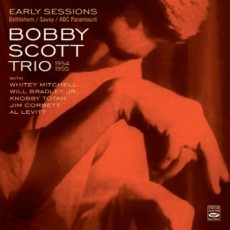
Bobby Scott was born Robert William Scott on January 29, 1937 in Mount Pleasant, New York and began his studies at the La Follette School of Music under Edvard Moritz at age 8, and by 11 was working professionally. He became a pianist, vibraphonist and singer, but could also play the accordion, cello, clarinet and double bass.
In 1952 he began touring with Louis Prima, and also performed with Gene Krupa and Tony Scott in the 1950s. In 1956 he hit the U.S. Billboard Hot 100 with the song “Chain Gang”, peaking at #13. (not the same Sam Cooke song) It sold over one million copies, and was awarded a gold disc.
As a bandleader, he recorded sessions for Verve, ABC-Paramount, Bethlehem and Musicmasters. Booby won a Grammy Award for Best Instrumental Composition for the song “A Taste of Honey”, and co-wrote the song “He Ain’t Heavy, He’s My Brother”.
In the 1960s he became a music teacher and studied again under Moritz, but occasionally recorded as well, including a Nat King Cole tribute album released in the 1980s. He also arranged for jazz and easy listening musicians.
Musician, songwriter and record producer Bobby Scott died of lung cancer on November 5, 1990, at the age of 53. He left a catalogue of twenty-seven recordings from 1953 to 1990 that include performing on soundtracks such as The Pawnbroker, Joe, Slaves, In The Heat of the Night and The Color Purple.
Take A Dose On The Road
More Posts: piano,vibraphone,vocal

Daily Dose Of Jazz…
Kent Kessler was born January 28, 1957 in Crawfordsville, Indiana and grew up on Cape Cod, Massachusetts. He began playing trombone at age ten and when his family moved to Chicago when he was 13, he became intensely interested in jazz. While attending St. Mary Center For Learning High School, he began taking electric bass lessons and jazz theory in the middle of the 1970s.
In 1977 Kent formed the ensemble Neutrino Orchestra, spent a year in Brazil in 1980, took time studying off and on at Roosevelt University in Chicago; and formed a group called Musica Menta, which played regularly at local Chicago venue Link’s Hall.
Kessler began playing double bass in the 1980s and it became his primary instrument when he was asked in 1985 to join the NRG Ensemble, toured Europe, recruited Ken Vandemark, recorded for ECM Records and the two would go on to collaborate extensively on free jazz and improvisational projects such as the Vandemark 5, DKV Trio and the Steelwool Trio.
From the 1990s on Kent would work with the leading Chicago musicians such as Hamid Drake, Fred Anderson and Joe McPhee as well as several European musicians. In 2003, Kessler released a solo album, Bull Fiddle, on OkkaDisk. Kessler performs alone on nine of the twelve tracks and with Michael Zerang on three. The double-bassist who remains active is best known for his work in the Chicago jazz and avant-garde scene.
Dose A Day – Blues Away
More Posts: bass