

Daily Dose Of Jazz…
Rodney Kendrick was born April 30, 1960 in Philadelphia, Pennsylvania and grew up in Miami, Florida where his parents moved soon after his birth. Growing up in a musical and Pentecostal church-going family, his mother is a gospel singer named Juet and his father is pianist James “Jimmy Kay” Kendrick, who worked with saxophonist Illinois Jacquet for seven years and played with saxophonist Sonny Stitt and Sam Rivers.
At eighteen Rodney turned professional, touring and playing keyboards with R&B and funk bands, traveling internationally with Harold Melvin & the Blue Notes, James Brown and George Clinton. Three years later Kendrick began to primarily focus on jazz and moved to New York in 1981. He played keyboards for Freddie Hubbard, Terence Blanchard, Stanley Turrentine, Clark Terry, J.J. Johnson and numerous others.
Studying with pianist Barry Harris, who remained his teacher and mentor for over 20 years, Kendrick cites Randy Weston and Sun Ra as influences. In the early Nineties he served as Abbey Lincoln’s musical leader for seven years. In 1994 he signed a contract with Verve Records and released his debut album “The Secrets of Rodney Kendrick”, and a year later his sophomore project “Dance World Dance”. Both recordings showcase his arranging skills as well as his compositions and feature Houston Person, Graham Haynes, Arthur Blythe and Bheki Mseleku among his guests.
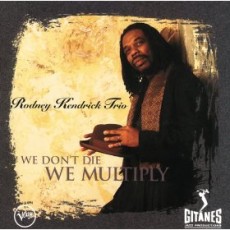
He went on to record his next album “We Don’t Die, We Multiply” with his wife Rhonda composing “Led Astray” and several tracks featuring saxophonist Dewey Redman. Rodney has produced several albums, including a solo piece titled “Thank You”, a duo-piano piece with his mentor Randy Weston, an album with his wife titled “Rhonda Ross Live: Featuring Rodney Kendrick”, as well as a project with his father, Jimmy Kay, titled “Black is Back”.
Rodney Kendrick, jazz pianist, bandleader, composer and producer who has been described as one who swings hard with a Monkish wit and drive, continues to perform, compose and record.

Give The Gift Of Knowledge
More Posts: bandleader,piano
Daily Dose OF Jazz…
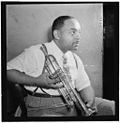
Ward Pinkett was born on April 29, 1906, the son of an amateur cornet player. He started playing the trumpet when he was ten years old. He played in the school band at Hampton Institute and later attended the New Haven Conservatory of Music.
After working with the White Brothers Orchestra in Washington, D. C. he moved to New York City and played for brief periods with the bands of Charlie Johnson, Willie Gant, Billy Fowler, Henri Saparo, Joe Steele and Charlie Skeete.
During his stint with Jelly Roll Morton in 1928–30, he participated in seven of Morton’s recording sessions and his solos on “Strokin’ Away” and “Low Gravy” that are considered by music historians to be the best of his career. He also worked with Chick Webb, Bingie Madison, Rex Stewart and Teddy Hill but was never able to achieve fame.
By 1935 he teamed with Albert Nicholas and Bernard Addison at Adrian Rollini’s Tap Room and also had a short stint with Louis Metcalf’s Big Band. He recorded with King Oliver, Bubber Miley, Clarence Williams, the Little Ramblers and James P. Johnson.
Ward Pinkett died of alcoholism-aggravated pneumonia on March 15, 1937 just six weeks short of his thirty-first birthday.
Take A Dose On The Road
Take A Dose On The Road
More Posts: bandleader,trumpet
Daily Dose OF Jazz…
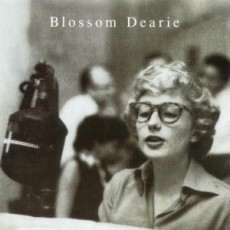
Blossom Dearie was born April 28, 1924 in East Durham, New York and as a child she studied Western classical piano but switched to jazz in her teens. After high school Dearie moved to New York City to pursue a music career and began to sing in groups such as the Blue Flames with the Woody Herman Orchestra and the Alvino Rey’s Blue Reys before starting her solo career.
She moved to Paris in 1952 and formed a vocal group, the Blue Stars of Paris, which included Michel Legrand’s sister Christine and Bob Dorough. In 1954 the group had a hit in France with a French version of “Lullaby of Birdland”. The Blue Stars would later evolve into the Swingle Sisters. Interestingly, on her first solo album released two years later, she plays the piano but does not sing.
After returning to the U.S. Blossom, Dearie made her first six American albums as a solo singer and pianist for Verve Records in the late 1950s and early 1960s, mostly in a small trio or quartet setting. In 1962, she recorded a radio commercial for Hires Root Beer. Through the Sixties she recorded with orchestra, performed in supper clubs around New York, appeared at Ronnie Scott’s in London and recorded four albums in the UK.
After a period of inactivity, by the ‘’70s she established her own label, Daffodil Records, lent her voice to “Mother Necessity” and “Figure Eight” on “Schoolhouse Rock!” and she collaborated with Johnny Mercer on one of his final songs “My New Celebrity Is You”. Her voice and songs have been featured in such films as Kissing Jessica Stein, The Squid and the Whale, My Life Without Me and The Adventures of Felix.
Blossom Dearie, vocalist, pianist and one of the last remaining supper-club performers, continued to perform in clubs until shortly before she passed away on February 7, 2006 at age 84 in Greenwich Village, New York.
Dose A Day-Blues Away
Daily Dose Of Jazz…
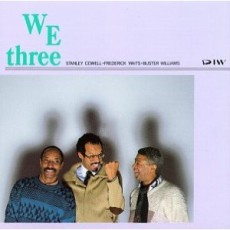
Freddie Douglas Waits was born on April 27, 1943 in Jackson, Mississippi. He played flute early on and majored in flute in at Jackson Street College but soon turned to drums as a profession. His earliest gigs were with blues artists including Memphis Slim and John Lee Hooker followed by performing soul music.
By 1962 Waits was in Detroit playing with the Jimmy Wilkins Orchestra, then the Johnny Winter band. A move to Los Angeles put him with the Gerald Wilson Orchestra before relocating to New York in the mid-‘60s. This period began some of his most important musical collaborations with Sonny Rollins, Andrew Hill, McCoy Tyner, Lee Morgan, Pharoah Sanders, Gene Harris and Max Roach.
Freddie was a founding member of M’Boom, the group Colloquim and during the Eighties played with Bill Dixon and Cecil Taylor. A respected sideman, he never led a recording session. However, he left a legacy of music along with his son, drummer Nasheet Waits.
Hard bop and post-bop drummer Freddie Waits passed away on November 18, 1989 in New York City.
Inspire A Young Mind
Daily Dose Of Jazz…
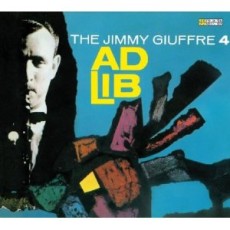
James Peter Giuffre was born on April 26, 1921 in Dallas, Texas. A graduate of Dallas Technical High School and North Texas Teachers College, he first became known as an arranger for Woody Herman. He would become a central figure in West Coast jazz and cool jazz, and was a member of Shorty Roger’s groups before going solo. Giuffre played clarinet, as well as tenor and baritone saxophones, but eventually focused on clarinet.
His first trio in 1957 consisted of Giuffre, guitarist Jim Hall and double bassist Ralph Pena, later replace by Jim Atlas. With minor hit with Giuffre’s “The Train and the River” featured on a television special The Sound of Jazz, he was matched with Pee Wee Russell for a leisurely jam session. When Atlas left the trio, Jimmy replaced him with valve trombonist Bob Brookmeyer. By 1961, Giuffre formed a new trio with Paul Bley and Steve Swallow and exploring free jazz hushed and quiet focus more resembling chamber music. The trio’s early ‘60s explorations of melody, harmony and rhythm are still as striking and radical as any in jazz.
Throughout the ‘60s Giuffre, Bley and Swallow eventually explored wholly improvised music, several years ahead of the free improvisation boom in Europe. By the early 1970s, Giuffre formed a new trio and utilized different instrumentation configurations as he ventured into electric and synthesizers. During this decade he headed the jazz ensemble at New York University, taught private lessons in saxophone and music composition. This continued through the ‘90s at the New England Conservatory of Music.
Jimmy Giuffre, who continually wrote creative and unusual arrangements and who was most notable for his development of forms of jazz which allowed for free interplay between the musicians, anticipating forms of free improvisation, passed away in Pittsfield, Massachusetts on April 24, 2008 of pneumonia, just two days shy of his 87th birthday.
Give A Gift Of Jazz – Share