

Daily Dose Of Jazz…
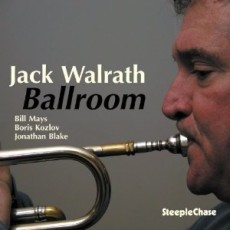
Jack Walrath was born on May 5, 1946 in Stuart, Florida and began playing the trumpet at the age of nine while living in Edgar, Montana. He graduated from Joliet High School in 1964 and attended the Berklee College of Music. Pursuing a composition diploma program instead of a full degree program, he concentrated specifically upon music classes. During his Berklee years he backed a number of R&B singers in the Boston and Cambridge areas, gigged with his fellow students and worked in the band Change with bassist Gary Peacock.
In 1969 Jack relocated to the West Coast, found work in the Los Angeles jazz scene, became a member of the band Revival, joined the West Coast Motown Orchestra, toured with Ray Charles and by the next year was back in New York City working with mainstream and Latin jazz bands. By 1974 he met and joined Charles Mingus’ quintet that broke new ground in free jazz and non-chordal improvisation. He continues the legacy working with Mingus Dynasty and the Charles Mingus Big Band.
Walrath has been a sideman for such luminaries as Miles Davis, Quincy Jones, Larry Willis, Bobby Watson, Hal Galper, Sam Rivers, Mike Longo, Elvis Costello, Richie Cole and others. He has worked with the WDR Big Band, the Jazz Tribe and the Charlie Persip Superband. He has led ensembles under the names of The Jack Walrath Group, Wholly Trinity, Hard Corps, The Masters of Suspense, and The Jack Walrath Quintet.
Post-bop jazz trumpeter Jack Walrath has amassed a catalogue of twenty-six albums as a leader and 28 as a sideman; has been nominated for a Grammy, received composition grants from the National Endowment for the Arts, has been commissioned to compose for symphony to solo piano and continues to conduct seminars, master classes, music camps and clinics around the world. He has also written an instruction book, 20 Melodic Jazz Studies for Trumpet, and is currently working on an autobiography, CD and record guide.
More Posts: trumpet
Daily Dose Of Jazz…
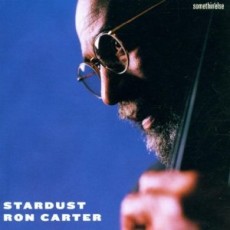
Ron Carter was born May 4, 1937 in Ferndale, Michigan and started playing the cello at the age of 10, but when his family moved to Detroit, he ran into difficulties regarding the racial stereotyping of classical musicians and instead moved to bass. He attended Cass Technical High School and later the Eastman School of Music, played in the later Philharmonic Orchestra. He received his bachelor’s degree at Eastman in 1959, and in 1961 a master’s degree in double bass performance from the Manhattan School of Music.
His first jobs as a jazz musician were with Jaki Byard and Chico Hamilton and made his first records were made with Eric Dolphy and Don Ellis in 1960. Ron led his first date as leader, “Where?”with Dolphy and Mal Waldron and a date “Out There” with Dolphy, George Duvivier and Roy Haynes playing advanced harmonies and concepts were in step with the third stream movement. He truly came to fame in the early ‘60s in the second great Miles Davis quintet with Herbie Hancock, Wayne Shorter and Tony Williams.
Over the course of his career, Carter who is also an acclaimed cellist has appeared on over 2,500 albums make him one of the most-recorded bassists in jazz history. He has played with Sam Rivers, Freddie Hubbard, Duke Pearson, Lee Morgan, McCoy Tyner, Andrew Hill, Horace Silver, Joe Henderson, Hank Jones and too many more to name.
He was a member of the New York Jazz Quartet, the Classical Jazz Quartet, was a Distinguished Professor Emeritus of the Music Department of The City College of New York after twenty years teaching and received an honorary Doctorate from the Berklee College of Music. He is currently on the faculty of the Julliard School teaching bass in the school’s Jazz Studies program, sits on the Advisory Committee of the Board of Directors of The Jazz Foundation of America.

Inspire A Young Mind
Daily Dose Of Jazz…
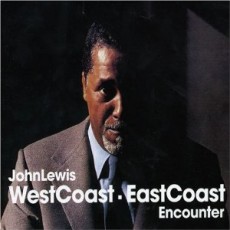
John Aaron Lewis was born in LaGrange, Illinois on May 3, 1920 but was raised in Albuquerque, New Mexico. He learned classical music and piano from his mother starting at the age of seven, then continued his musical training at the University of New Mexico and also studied anthropology. He served in the Army stationed in France during World War II and during his three-year tour of duty he met and performed with Kenny Clarke. Together they formed a band and in the bop style, John composed and arranged.
After the war he went to New York where he found work in the 52nd Street clubs with Allen Eager, Hot Lips Page and others. This led to him joining dizzy Gillespie’s bop-style big band and further developing his skill as a composer and arranger while matriculating through the Manhattan School of Music. He soon returned to Europe on tour, remained a continued to write and study piano. By ’48 he was back in the States playing with Charlie Parker, Illinois Jacquet, Lester Young, Miles Davis and Ella Fitzgerald.
Lewis, vibraphonist Milt Jackson, drummer Kenny Clarke, and bassist Ray Brown had been the small group within the Gillespie big band that played their own short sets when the brass and reeds needed a break. This led to the foursome forming a full-time working group in 1950, known at first as the Milt Jackson Quartet. After replacing Brown with Percy Heath the name was changed to the Modern Jazz Quartet and assuming the role of musical director from 1954 to 1974, John oriented it toward a quiet, chamber style of music that found a balance between his gentle, almost mannered compositions and Jackson’s more elemental writing and playing.
Over a long and illustrious career, John directed the School of Jazz at the Music Inn, was musical director for the Monterey Jazz Festival from 1958 to 1982, taught at City College of New York and Harvard University, rejoined the re-formed MJQ, led his own sextet, founded the American Jazz Orchestra, participated in Re-Birth of the Cool, was involved in various Third Stream Projects all while continuing to teach, compose and perform.
John Lewis, conservative bop pianist, composer, arranger and musical director for the Modern Jazz Quartet passed away in New York City on March 29, 2001.
Give A Gift Of Jazz – Share
More Posts: piano
Daily Dose Of Jazz…
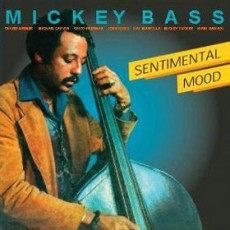
Mickey Bass was born in Pittsburgh, Pennsylvania on May 2, 1943. By the time he was nine years old he had just about every record that ‘Bird’ ever cut, not to mention living in an atmosphere that was permeated by ‘Dizzy Gillespie, Duke Ellington, Count Basie, Sarah Vaughan, Billie Holiday and Miles Davis.
1961 saw Bass matriculating through Howard University in an atmosphere hostile to jazz, failing along with classmates Harold Vick, Marion Brown and Charles Tolliver, due to the playing of jazz being forbidden on campus. Two years later he landed in New York City, getting his early breaks with Hank Mobley, Sonny Rollins and Bennie Green. His first session was with Lee Morgan on The Sixth Sense that included on of his compositions and arrangements of “Mickey’s Tune”.
As an educator from 1975 to 1978, Mickey taught Acoustic Bass & Jazz Improvisation at “The Ellington School of The Arts”, Washington, D.C. and Director of the Jazz Ensemble. He also taught in New York City for the Jazzmobile.
He has performed and recorded with John Coltrane, Charlie Parker, Freddie Hubbard, Art Blakey, Lee Morgan, Jackie McLean, Bobby Timmons, Gloria Lynne, Jimmy McGriff, Curtis Fuller, Hank Mobley, Billy Eckstine, Reuben Wilson, Chico Freeman and John Hicks among others. He led a sextet called The Cooperation, composed A Chant Blu, One For Trane, Meditation, Gayle’s Groove and Siempre Me Amor, and has cut three sessions as a leader for Chiaroscuro and Early Bird labels.
Hard bop bassist Mickey Bass, who was also an arranger and educator who also plays saxophone and has been active on the jazz scene for more than 40 years, continued to perform, compose and record until his transition on February 3, 2022.

More Posts: bass
Daily Dose Of Jazz…
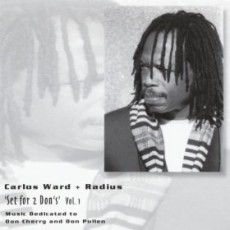
Carlos Ward was born on May 1, 1940 in Ancon, Panama and was raised in Panama City. His first instrument was the ukulele and by age 12 he took to the clarinet. His early influences were his aunt and uncle, both pianist, the former classical. He listened to Bob Crosby’s Dixieland clarinet on the radio as were as calypso.
By 1952 his family relocated to Seattle, Washington where his friend Marion Evans introduced him to the alto saxophone. Through high school he hung out with drummer Doug Robinson and the rock group The Playboys. Ward would go on to attend the Navy School of Music and worked with Albert Mangelsdorff when he was stationed in Germany.
He listened to Monk and Coltrane but it was Ornette Coleman’s “The Shape of Jazz to Come” that made the greatest impression on him. After a prophetic meeting with John Coltrane, in 1965 he took his advice and moved to New York. This led to his first major effort was his work with John Coltrane’s unrecorded octet in the period between 1965-66. He had a long-lasting association with Don Cherry from 1973 to 1980 and beyond. His duet association with pianist Abdullah Ibrahim has also been significant to his career.
Ward was a member of Cecil Taylor’s group in the period immediately after altoist Jimmy Lyons death in 1986. He also was a member of The Ed Blackwell Project and led his own quartet in 1987.
Alto saxophonist and flautist Carlos Ward has four albums as a leader and has some 15 as a sideman while working with Carla Bley, Roswell Rudd and the Jazz Composers Orchestra, Karl Berger, Abdullah Ibrahim, Paul Motian, Sunny Murray, Sam Rivers, Rashied Ali and Don Pullen & The African-Brazilian Connection.
It is unfortunate for the industry that an injury to his playing hand has sidelined this musician for many years. However, Ward is readying himself for a return to the scene and hopefully we will hear from future generations of players who will partake of the opportunity to glean knowledge from this master.
Put A Dose In Your Pocket