


Daily Dose Of Jazz…
Jesse Alexandria Stacy was born on August 11, 1904 in Bird’s Point, Missouri, a small town across the Mississippi River from Cairo, Illinois. His first piano teacher was Mabel Irene Bailey, who played piano for silent movies. In 1918 Stacy moved to Cape Girardeau, Missouri. He received his only formal music training with Clyde Brandt, a professor of piano and violin at Southeast Missouri State Teachers College, now Southeast Missouri State University while holding down a job sweeping Clark’s Music Store.
By 1920, Stacy was playing piano in Peg Meyer’s jazz ensemble at Cape Girardeau High School, the Bluebird Confectionery, and the Sweet Shop. Schoolmates called them the Agony Four. By 1921, the band was known as Peg Meyer’s Melody Kings and started touring the Mississippi River on the Majestic and other riverboats.[6]
The early 1920s saw Jess moving to Chicago, Illinois where he performed with Paul Mares, leader of the New Orleans Rhythm Kings, playing Chicago-style jazz. In 1935, Benny Goodman asked him to join his band, then moved to New York City, and spent 1935–39 with the Benny Goodman Orchestra, including a Carnegie Hall concert in 1938, where he played an unplanned piano solo during Sing, Sing, Sing (With a Swing). After leaving the Goodman Orchestra, he joined the Bob Crosby Orchestra and the Bob Crosby Bob-Cats.
Moving to Los Angeles, California in 1950 his career declined to club work and after a drunken woman spilled beer in his lap he announced he was quitting the music business and retired from public performances. He worked as a salesman, warehouseman, postman, and for Max Factor cosmetics before being rediscovered. He played for Nelson Riddle on the soundtrack of The Great Gatsby in 1974, was invited to play at the Newport Jazz Festival in New York and was asked to record twice for Chiaroscuro, in 1974 and 1977, Stacy Still Swings.
After his brief revival in the 1970s, he again retired from music and lived with his third wife, Patricia Peck Stacy, for forty-five years. Pianist Jess Stacy ,who won the DownBeat magazine piano poll in 1940 and was inducted posthumously into the Big Band and Jazz Hall of Fame in 1996, transitioned from congestive heart failure in Los Angeles on January 1, 1995.

More Posts: bandleader,history,instrumental,jazz,music,piano
Daily Dose Of Jazz…
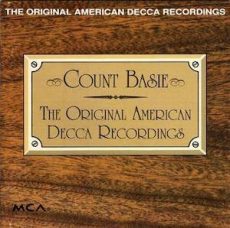
Dan “Slamfoot” Minor was born August 10, 1909 in Dallas, Texas, and played trombone for a local church orchestra in his teens before joining local band the Blue Moon Chasers. In 1927, his first major professional engagement was as a member of Walter Page’s Blue Devils.
In 1929 Minor joined the Blues Syncopaters led by Ben Smith, and during this period he also worked in bands led by Earl Dykes, Gene Coy, Lloyd Hunter and Alphonse Trent. By 1931 he joined the Bennie Moten band, remaining after Moten’s death in 1935, when its leadership was taken over by Count Basie, and stayed with the Basie orchestra until 1941. During that period he performed at the From Spirituals to Swing concerts in New York City in 1938 and 1939.
However, Dan tended to be overshadowed by other trombonists such as Benny Morton and Vic Dickenson, and rarely took solos. He joined the Buddy Johnson band in 1942, and also played around that time with Cab Calloway. He worked with Mercer Ellington in 1945, and also recorded and played with Lucky Millinder and Willie Bryant.
After the 1940s, through to the 1960s, he continued to perform occasionally on a freelance basis. Trombonist Dan Minor transitioned in New York City on April 11, 1982 at the age of 72.
More Posts: history,instrumental,jazz,music,trombone

Three Wishes
While hanging out at the Cathouse one evening Pannonica inquired of Rudy Powell as to his three wishes if they could come true and he told her:
- “I’d like to be equipped to further jazz.”
- “Through that I’d be able to promote a spotlight for musicians who’ve never had a chance and deserve some.”
- “I would try to effectuate a way to alleviate the cliques that have been developing through the years, and which have hindered some fine players from exploring their talents.”
*Excerpt from Three Wishes: An Intimate Look at Jazz Greats ~ Compiled and Photographed by Pannonica de Koenigswarter
More Posts: baroness,clarinet,history,instrumental,jazz,music,pannonica,saxophone,three,wishes
Three Wishes
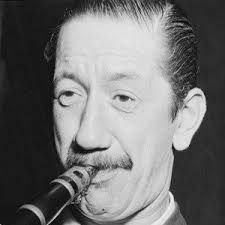
When the Baroness asked Pee Wee Russell if he had the opportunity to get three wishes granted what would they be he responded with:
- “To make Monk happy on the stage at Newport.”
- “I’d like to become a better musician ~ providing I’m one now.”
- “To make enough to give my wife everything she desires.”
*Excerpt from Three Wishes: An Intimate Look at Jazz Greats ~ Compiled and Photographed by Pannonica de Koenigswarter
More Posts: baroness,clarinet,history,instrumental,jazz,music,pannonica,three,wishes
Daily Dose Of Jazz…
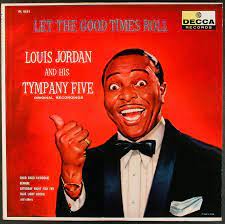
Louis Thomas Jordan was born on July 8, 1908 in Brinkley, Arkansas. His father, James Aaron Jordan, was a music teacher and bandleader for the Brinkley Brass Band and the Rabbit Foot Minstrels. His mother died when he was young and his grandmother Maggie Jordan and his aunt Lizzie Reid raised him. At an early age he studied clarinet and saxophone with his father and by his teens he was a member of the Rabbit Foot Minstrels and was playing professionally in the late 1920s.
In the early Thirties he was performing in Philadelphia, Pennsylvania and New York City with Charlie Gaines. He recorded with Clarence Williams and was a brief member of the Stuff Smith Orchestra. Joining the Chick Webb Orchestra he sang and played alto saxophone, however, in 1938 he started a band that recorded a year later as the Tympany Five.
In 1942, Jordan and his band moved to Los Angeles, California where he began making soundies, the precursors of music video. He appeared on many Jubilee radio shows and a series of programs for the Armed Forces Radio for distribution to American troops overseas. Though a hernia condition kept him out of the war his recordings made him very popular with both black and white soldiers.
During the 1940s Jordan and the band became popular with such hits as Choo Choo Ch’Boogie, Knock Me a Kiss, Is You Is or Is You Ain’t My Baby, and Five Guys Named Moe. Within a year of his breakthrough, the Tympany Five’s appearance fee rose from $350 to $2,000 per night. But the breadth of Jordan’s success and the size of his combo had larger implications for the music industry. His raucous recordings were notable for the use of fantastical narrative, best exemplified on Saturday Night Fish Fry, a two-part 1950 hit that was split across both sides of a 78-rpm record. It was one of the first popular songs to use the word “rocking” in the chorus and to feature a distorted electric guitar.
From July 1946 through May 1947, Jordan had five consecutive number one songs, holding the top slot for 44 consecutive weeks. In 1961, the IRS filed an income tax lien against Jordan and he had to sell property well below its value to pay off his debts. Musician Ike Turner stepped in and contacted and convinced the president of Jordan’s booking agency in Chicago, Illinois. to send Jordan a check for $20,000. He was unaware of this deed.
Over his career he charted dozens of singles, eighteen #1 and fifty-four in the Top Ten. He ranked fifth among the most successful musicians of the period 1942~1995, however, many he did not own the rights to, hence no financial benefit. Saxophonist, multi~instrumentalist, songwriter and bandleader Louis Jordan suffered a heart attack and transitioned on February 4, 1975, in Los Angeles.

More Posts: bandleader,history,instrumental,jazz,music,saxophone,songwriter