

Daily Dose Of Jazz…
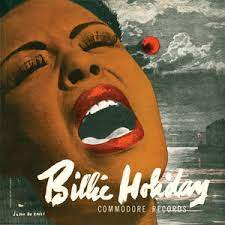
James Archibald McLin was born in Brooksville, Florida on June 26, 1908. He started on piano before picking up the banjo, then later the guitar. He played locally in Florida before relocating to New York City in 1928. He played both guitar and banjo in the early 1930s for James P. Johnson, Ward Pinkett, and Roy Eldridge.
Later in the decade he recorded with Willie “The Lion” Smith, Buster Bailey, Midge Williams, and Billie Holiday. In the early 1940s he worked with Sidney Bechet, Dave Nelson, and Claude Hopkins, then played trombone and mellophone in a military band while serving in the United States Navy during World War II. After his discharge he worked again with Hopkins and played guitar for The Ink Spots.
Banjoist and guitarist Jimmy McLin transitioned on December 15, 1983 in St. Petersburg, Florida.

Three Wishes
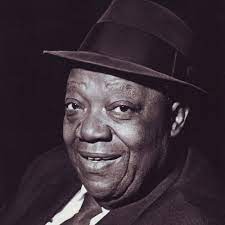
Nica never missed a chance to travel and while in conversation with Jimmy Rushing she asked if he was given three wishes that would be granted what would they be and he said:
- “I’m doing one of my wishes right now! Being in Japan.”
- “If I had my life to live over, I wouldn’t mind. I’ve always enjoyed every part of it.”
- “One thing I’d like to see is colored shows come back like it used to be in the twenties. Like Cotton Club days ~ entertainers going from table to table! And I’d like to see colored shows on TV, at the right times: not too early or too late. To see a complete show and band, and see the reactions of young people.”
*Excerpt from Three Wishes: An Intimate Look at Jazz Greats ~ Compiled and Photographed by Pannonica de Koenigswarter

More Posts: baroness,history,instrumental,jazz,music,pannonica,piano,three,vocal,wishes

Daily Dose of Jazz…
Nappy Lamare was born Joseph Hilton Lamare on June 14, 1905 in New Orleans, Louisiana. He got his nickname from his friend, Eddie Miller, because he had curly hair. He started playing trumpet but picked up the banjo when he was thirteen and weeks later he was a member of the Midnight Serenaders. During his teen years he worked with Sharkey Bonano, Monk Hazel, and Johnny Wiggs. In 1925 he toured in California with Johnny Bayersdorffer, then recorded for the first time two years later with the New Orleans Owls.
A move to New York City had him playing mostly guitar instead of banjo and he became a member of the Ben Pollack Orchestra and sang on Two Tickets to Georgia. Lamare remained with the band until 1942, performing on records and films, sometimes as a vocalist. He moved to California and spent the rest of his career playing Dixieland as leader of the Louisiana Levee Loungers, then the Straw Hat Strutters in the 1940s and 1950s. The Strutters appeared in the movie Hollywood Rhythm and on the weekly TV variety show Dixie Showboat.
The latter part of his career he spent in reunions with Bob Crosby, performing at Disneyland, and touring with the World’s Greatest Jazz Band. He played guitar, banjo, and sang until his transition at the age of 82 on May 8, 1988.
More Posts: bandleader,banjo,guitar,history,instrumental,jazz,music,vocal
Daily Dose Of Jazz…
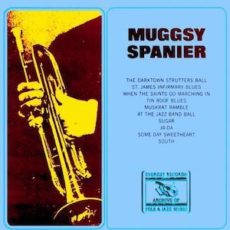
Don Murray was born on June 7, 1904 in Joliet, Illinois and attended high school in Chicago, Illinois. In his teens he made a name for himself as one of the best young jazz clarinetists and saxophonists in the city. In 1923 he recorded with the New Orleans Rhythm Kings and though he was not a regular member of the band, he was a friend who sometimes sat in with them.
Murray made early recordings with Muggsy Spanier before joining the Detroit, Michigan based band of Jean Goldkette, with whom he remained until 1927. It was here that he mentored the young Jimmy Dorsey.
After a brief stint with Adrian Rollini’s band, during which he contributed to several highly regarded recordings by Bix Beiderbecke, he was hired by Ted Lewis. He can be heard in the 1929 Ted Lewis film Is Everybody Happy?
>Suffering injuries sustained in a freak automobile accident where Don was standing on the running board of a moving roadster and fell, striking the back of his head on the pavement. Immediately hospitalized with serious head injury, clarinetist and saxophonist Don Murray transitioned at the age of 24 on June 2, 1929 in Los Angeles, California.
More Posts: clarinet,history,instrumental,jazz,music,saxophone
Daily Dose Of Jazz…
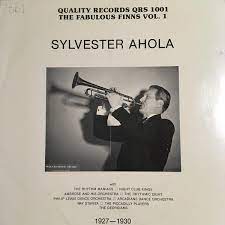
Sylvester Ahola was born on May 24, 1902 in Gloucester, Massachusetts. His parents, Sophia and John Ahola, were born in Finland. He became most popular in England rather than the United States.
He first began performing with Frank Ward and His Orchestra. In 1925 he started playing with Paul Specht and His Orchestra, with whom he did a two-month-long tour of England that following year. For the next couple of years he performed with bands like The California Ramblers and Adrian Rollini and his band.
1927 saw Ahola moving to England and landing a job playing with the Savoy Orpheans. He went on to gig with Bert Firman and Bert Ambrose. The British Musicians’ Union, unhappy to see a foreigner land so many jobs and attain so much success, effectively prohibited him from playing with anyone other than Bert Ambrose. This forced him to eventually leave in 1931 and return to New York City.
Throughout the rest of his career he never again achieved the level of success he had enjoyed during his time in England. Trumpeter and cornetist Sylvester Ahola, also known as Hooley, transitioned on February 13, 1995.
More Posts: bandleader,cornet,history,instrumental,jazz,music,trumpet