


Daily Dose Of Jazz…
James Douglas “Trump” Davidson was born on November 26, 1908 in Sudbury, Ontario, Canada. He formed one of Canada’s earliest jazz bands in 1925, under the name The Melody Five. From 1929 to 1936 he played in Luigi Romanelli’s orchestra, then led a dance band from 1937 to 1942, which broadcasted on NBC and toured in the United Kingdom with Ray Noble in 1938–39.
In 1942 during World War II he worked in Horace Lapp’s orchestra in 1942, then led a dance band in Toronto, Canada at the Palace Pier from 1944 until 1962. This group appeared often on CBC radio and recorded several times during the 1960s. He led a big band from 1974 to 1978, also singing with this group.
Cornetist, singer and bandleader Trump Davidson passed away on May 2, 1978 at the age of 69 in his hometown.
More Posts: bandleader,cornet,history,instrumental,jazz,music,vocal
Daily Dose Of Jazz…
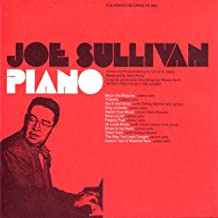
Joe Sullivan was born Michael Joseph O’Sullivan on November 4, 1906 in Chicago, Illinois. The ninth child of Irish immigrant parents, he studied classical piano for 12 years and by age 17, he began to play popular music in silent-movie theaters, on radio stations, and then with the dance orchestras, where he was exposed to jazz. Graduating from the Chicago Conservatory he was an important contributor to the Chicago jazz scene of the 1920s.
Sullivan’s recording career began towards the end of 1927, when he joined McKenzie and Condon’s Chicagoans. Other musicians in his circle included Jimmy McPartland, Frank Teschemacher, Bud Freeman, Jim Lanigan and Gene Krupa. In 1933, he joined Bing Crosby as his accompanist, recording and making many radio broadcasts.
Contracting tuberculosis in 1936, while convalescing at a sanitarium in Monrovia, California in 1937, Crosby organized and appeared in a five-hour benefit for him at the Pan-Pacific Auditorium in Los Angeles, California on May 23, 1937 in front of an audience of six thousand. The show was broadcast over two different radio stations, with fourteen bands attending and raised approximately $3,000 for Sullivan.
After suffering for two years with tuberculosis, Joe briefly re-joined Bing Crosby in 1938 and the Bob Crosby Orchestra in 1939. In 1940, when leading Joe Sullivan’s Cafe Society Orchestra, he had a minor hit with I’ve Got A Crush On You. By the 1950s, he was largely forgotten, playing solo in San Francisco, California, and marital difficulties and excessive drinking caused him to become increasingly unreliable and unable to keep a steady job.
In 1963, he met up with old colleagues Jack and Charlie Teagarden plus Pee Wee Russell when they performed at the Monterey Jazz Festival. Pianist Joe Sullivan passed away on October 13, 1971 in San Francisco at the age of 64.
More Posts: bandleader,history,instrumental,jazz,music,piano
Daily Dose Of Jazz…
Rudy Powell was born in New York City on October 28, 1907 and learned piano and violin while young before taking on the clarinet and saxophone. In the late 1920s, he played with June Clark, Gene Rodgers’s Revellers, and Cliff Jackson’s Krazy Kats.
Rudy worked extensively as a sideman throughout his career. Among his credits in the 1930s are Elmer Snowden, Dave Nelson, Sam Wooding, Kaiser Marshall, Rex Stewart, Fats Waller, Edgar Hayes, and Claude Hopkins. The Forties saw him playing with Teddy Wilson, Andy Kirk, Fletcher Henderson, Eddie South, Don Redman, Chris Columbus, Cab Calloway, Lucky Millinder and Hopkins again.
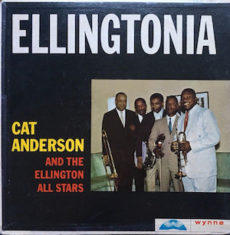
By the 1950s and through the Sixties Powell was with Jimmy Rushing, Buddy Tate, Benton Heath, Ray Charles, and Buddy Johnson. Never recording as a leader, he did record with Cat Anderson, Al Casey, Duke Ellington, Cliff Jackson, Jo Jones, Lucky Millinder, Jimmy Rushing, and Saints & Sinners. He continued playing intermittently into the 1970s and was a part of the photo A Great Day In Harlem.
Clarinetist and saxophonist Rudy Powell, who later changed his name to Musheed Karweem when he joined the Ahmadiyya Muslim Community, passed away at age 69 on October 30, 1976.

More Posts: clarinet,history,instrumental,jazz,music,saxophone
Daily Dose Of Jazz…
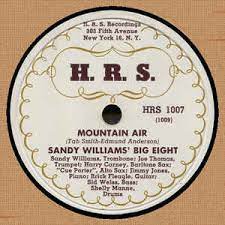
Alexander Balos “Sandy” Williams was born on October 24, 1906 in Summerville, South Carolina, the son of a preacher. The family of thirteen moved to Washington D.C. when he was very young however, losing their parents six months apart, they were sent to an orphanage in Delaware. There he joined the school band, but was put on tuba rather than trombone despite his requests. Taking private lessons while attending Armstrong High School, he occasionally played with his professor’s sons, and played with several bands before he started playing with the Lincoln Theater pit band.
Fletcher Henderson strongly influenced Williams jazz musicianship which received local notice. He played with Claude Hopkins, and later in 1929 joined Horace Henderson. He became a staple player in the Chick Webb band from 1933-1940 where he later worked with Ella Fitzgerald. Through the Forties he went on to work with other bands including Cootie Williams, Sidney Bechet, Duke Ellington, Art Hodes and Roy Eldridge, with whom he toured Europe in 1947.
By the early Forties Sandy was suffering from alcoholism, and despite his attempts to become sober, he continued to drink with many of his band leaders until he suffered from a severe breakdown with his health in 1950 causing him to retire from music.
Although he attempted to return to music, his dental health affected his embouchure causing him to quit music entirely. Trombonist Sandy Williams passed away on March 25, 1991 in New York City.
More Posts: bandleader,history,instrumental,jazz,music,trombone
Daily Dose Of Jazz…
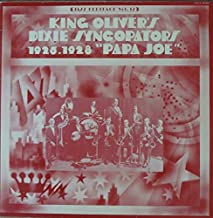
Paul “Stump” Evans was born in Lawrence, Kansas on October 18, 1904. He experimented with several instruments: alto horn, trombone, and alto saxophone. In the 1920s, he played baritone saxophone in Chicago, Illinois as a member of the Creole Jazz Band led by King Oliver and the Dixie Syncopators.
He played C melody saxophone when he backed singer Priscilla Stewart. With Oliver he played soprano saxophone, then alto saxophone with the Red Hot Peppers led by Jelly Roll Morton. Stump also worked as a sideman for Erskine Tate and Jimmy Wade.
Saxophonist Stump Evans passed away from tuberculosis on August 29, 1928. In Douglas County, Kansas at the age of 23.
Share a dose of a Lawrence saxophonist to inspire inquisitive minds to learn about musicians whose legacy lends their genius to the jazz catalog…
More Posts: history,instrumental,jazz,music,saxophone