

Daily Dose Of Jazz…
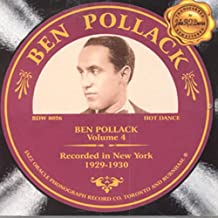
Gil Rodin was born in Russia on December 9, 1906 and studied saxophone, clarinet, flute, and trumpet in his youth. He played in Chicago, Illinois with Art Kahn in the middle of the 1920s. Moving to California and played with Harry Bastin before joining Ben Pollack in 1927, remaining in his band until 1934.
He simultaneously did studio work and played with Red Nichols’s radio band. Making his only recordings as a leader in 1930-31, amounting to four tracks which included Jack Teagarden on vocals, he also enlisted Eddie Miller and Benny Goodman as sidemen.
After Pollack’s band dissolved in 1934, Gil played with some of the players in the group until Bob Crosby regrouped them into his own ensemble. Rodin remained with Crosby through 1942, when he was drafted. While serving in the Army he played in the Artillery Band and after his discharge in 1944 he played with Ray Bauduc for a year, then with Crosby again.
His major composition was Big Noise from Winnetka, for which he wrote the lyrics with Bob Crosby. The music was written by Ray Bauduc and Bob Haggart. The song appeared in the films Raging Bull, Cannery Row, Manhattan Murder Mystery, Saving Mr. Banks, and What If.
Later in his career, Gil worked radio and television production, with Bill Cosby among others. He produced the soundtracks to the films American Graffiti and The Sting. Saxophonist, songwriter, and record producer Gil Rodin passed away on June 10, 1974.
More Posts: history,instrumental,jazz,music,record producer,saxophone,songwriter
Three Wishes
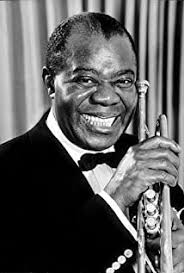
When asked, Louis Armstrong had three wishes he told to Pannonica:
- “One year off my horn to listen to all the tapes I’ve colected and index them, so I can write a few things. The rest will do me good”
- “That I go back to the world and see the fans, and play for them again.”
- “That I live a hundred years, so I can enjoy what the next generation’s doing, same as I do this one.”
*Excerpt from Three Wishes: An Intimate Look at Jazz Greats ~ Compiled and Photographed by Pannonica de Koenigswarter

More Posts: baroness,history,instrumental,jazz,music,pannonica,three,trumpet,vocal,wishes
Daily Dose Of Jazz…
Joe Britton was born on November 28, 1903 in Birmingham, Alabama and following his student days under the guidance of Fess Whatley, he went to work with Bessie Smith who took him on the road from 1924 through 1926 as a member of her backing group, followed with the Fred Longshaw Orchestra and then the Bill Woods Orchestra. The next year, he jumped to Frank Bunch & the Fuzzy Wuzzies, most likely the most obscure name in the list of the groups he played for.
Settling in New York in the ’30s and immediately got into the fast-paced jazz scene working with Ellsworth Reynold’s Bostonians, Teddy Hill, the band of classic jazz drummer Kaiser Marshall, Charlie Johnson, Edgar Hayes, and the Vernon Andrade Orchestra. In the ’40s: he worked with Benny Carter from 1940-1941 and Dizzy Gillespie, while at the same time collaborating on older styles of jazz.
In the 1940s Britton worked and recorded with Jelly Roll Morton, Jay McShann, and Lucky Millinder in 1942. He would go on to be employed by Wynonie Harris showing up on a half-dozen of her R&B records, and also recorded with Sister Rosetta Tharpe.
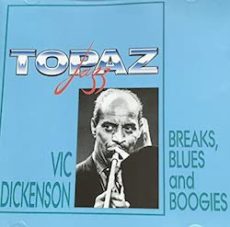
He performed and recorded with pianist Earl Hines. The trombonist dabbled into orchestra arrangements and his work in this field is highlighted on the album Breaks, Blues and Boogies by fellow bone-man Vic Dickenson. retired from full-time professional playing in the 1950s, however, he gigged off and on into the Sixties, including a regular stint in a band led by saxophonist Wesley Fagan. Trombonist Joe Britton passed away on August 12, 1972 in New York City, New York.
More Posts: arranger,bandleader,history,instrumental,jazz,music,trombone
Daily Dose Of Jazz…
William McLeish Smith was born on November 25, 1910 in Charleston, South Carolina, and raised in Cleveland, Ohio. His first instrument was the clarinet and his education was in chemistry, receiving his degree from Fisk University, an HBCU.
In 1929 Smith became an alto saxophonist for Jimmie Lunceford’s band, becoming one of the main stars in the group. 1940 had him leading his own quintet as a side project. His success with Lunceford had lost its charms by 1942 as he now wanted more pay and less travel. Moving to the Charlie Spivak Orchestra for a year and was in the navy for another year. He then switched to Harry James’s orchestra, where he made more money and stayed with him for seven years.
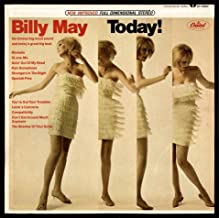
His next move was to work with Duke Ellington and Billy May. He was also part of the Gene Krupa Trio and can be heard on the 1952 live Verve album The Drum Battle, part of the Jazz at the Philharmonic series. In 1954 he returned to Harry James’s band.
He recorded some three dozen albums as a sideman with Stan Getz, Dizzy Gillespie, Lionel Hampton, Billie Holiday, Barney Kessel, Jimmie Lunceford, Billy May, Rose Murphy, Red Norvo, Andre Previn, Googie René, and Kay Starr among others.
Alto saxophonist Willie Smith, who has been described as one of the triumvirates of great jazz alto saxophonists with Johnny Hodges and Benny Carter before Charlie Parker arrived, passed away of cancer on March 7, 1967 in Los Angeles, California, at the age of 56.
More Posts: history,instrumental,jazz,music,saxophone
Daily Dose Of Jazz…
Harry Barris was born on November 24, 1905 in New York City to Jewish parents. Educated in Denver, Colorado. he became a professional pianist at the age of 14. He led a band that toured the Far East at the age of 17.
The same year, he played the piano and occasionally sang in the Paul Ash Orchestra, while Al Rinker and Bing Crosby became members of the Paul Whiteman Orchestra as a singing duo. However, while the duo was appearing at the vast New York Paramount in 1927, sans microphones, they could not be heard by the audience. They were promptly dropped from the bill. However, a band member who knew Barris suggested that they add him to make a trio and The Rhythm Boys was formed in April 1927.
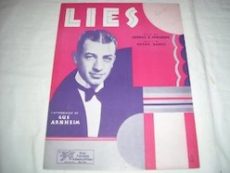
In 1930, The Rhythm Boys left Whiteman and joined Gus Arnheim’s Cocoanut Grove Orchestra. They made one more recording together, Them There Eyes but the boys decided to quit in 1931 agoing their separate ways. Harry however, changed his mind and returned to the Cocoanut Grove to complete his contract. Joining Arnheim’s singing group The Three Ambassadors.
Barris appeared in 57 films between 1931 and 1950, usually as a band member, pianist or singer. Seven of those films had Bing Crosby as the star. In 1932, Barris signed a contract to star in six shorts for Educational Pictures.
During World War II, along with Joe E. Brown, he went overseas to entertain troops. Having a lifelong drinking problem, sustaining a fall that fractured his hip in 1961, and despite a series of operations, he developed a cancerous tumor. Vocalist, pianist, and composer Harry Barris, who was one of the earliest to utilize scat singing in recordings passed away on December 13, 1962 at the age of 57 in Burbank, California.
Share a dose of a New York City composer to inspire inquisitive minds to learn about musicians whose legacy lends their genius to the jazz catalog…
More Posts: composer,history,instrumental,jazz,music,piano,vocal