

Daily Dose Of Jazz…
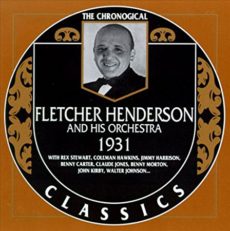
Walter Johnson was born on February 18, 1904 in New York City, New York. He was influenced by Kaiser Marshall and became one of the top big band drummers of the 1920’s and 30’s swing era. He worked with Freddy Johnson in 1924, Bobby Brown, Elmer Snowden between 1925 to 1928, and Te Roy Williams in 1927.
He became best-known for his playing with Fletcher Henderson’s Orchestra off and on from 1929 to 1942. After his third stint with Henderson ended, Johnson freelanced for the remainder of his career,Through the Thirties, he performed with other swing era big bands including Sam Wooding, LeRoy Smith, Lucky Millinder, Claude Hopkins, Edgar Hayes and Coleman Hawkins.
Though Walter sometimes worked outside of music as a bank guard, he could often be heard playing with Tab Smith during a period spanning a decade from 1944 to 1954. He would also appear with a variety of swing and mainstream combos into the Sixties. Though Drummer Walter Johnson never led his own record date, he did record frequently during his prime years, passed away on April 26, 1977 in New York City.
Sponsored By


#preserving genius
More Posts: drums
Daily Dose Of Jazz…
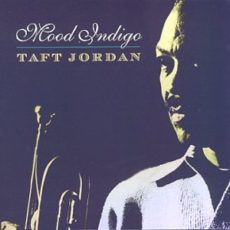
Taft Jordan was born on February 15, 1915 in Florence, South Carolina and as a trumpeter was heavily influenced by Louis Armstrong. Early in his career he played with the Washboard Rhythm Kings before joining Chick Webb’s orchestra from 1933 to 1942. He remained with Webb after Ella Fitzgerald became its frontwoman, trading duties with Bobby Stark as the orchestra’s main trumpet soloist.
From 1943 to 1947 Taft played with Duke Ellington, then with Lucille Dixon at the Savannah Club in New York City from 1949 to 1953. After this stint he played less often, though he toured with Benny Goodman in 1958, played on the Miles Davis album Sketches of Spain, and worked with the New York Jazz Repertory Company.
In 1935 Jordan recorded four tunes, Night Wind, If the Moon Turns Green, Devil in the Moon, and Louisiana Fairy Tale as a leader, with Ward Silloway on trombone, Johnny Mince on clarinet, tenor saxophonist Elmer Williams, pianist Teddy Wilson, guitarist Bobby Johnson, John Kirby on string bass and drummer Eddie Dougherty. He would go on to lead his own band in 1960 and ‘61, recording LPs for Mercury, Aamco Records, and Moodsville labels, as well as with Ruth Brown on Atlantic Records and Dizzy Gillespie on the Norgran label.
Trumpeter Taft Jordan passed away on December 1, 1981 in New Orleans, Louisiana.
Sponsored By

#preserving genius
More Posts: trumpet
Daily Dose Of Jazz…
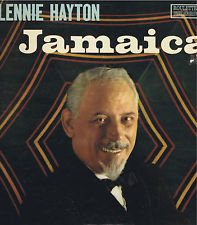
Lennie Hayton was born Leonard George Hayton on February 14, 1908 in New York City, New York and developed a penchant for the piano when six years old, showing unusual interest in the early classics from the rolls of the family player piano. His parents were keen followers of the concert hall and took their son to many concerts, however, disliking jazz, it was not until he was 16 that he really discovered it. He left high school to become pianist with the Broadway Hotel Orchestra of Cass Hagen, a boyhood friend.
In 1928 while playing at the Park Central, Hayton was heard by Paul Whiteman who immediately engaged by him as second pianist, playing piano and celeste as well as acting as a part-time arranger. He played alongside Frankie Trumbauer, Bix Beiderbecke, Red Nichols and Joe Venuti, and became friendly with Bing Crosby. With the ongoing Depression in 1930, theatre audiences fell to the economic problems and he and Eddie Lang were let go as Whiteman streamlined the band. He then joined the Charles Previn Orchestra, which had a weekly assignment on radio in the Camel Pleasure Hour.
Re-joining Bing Crosby who was enjoying tremendous success on record, radio and the stage, in 1932 they embarked on a tour of Paramount-Publix theatres, working across the country to Hollywood where he was to make the film The Big Broadcast. At each location, he continued to broadcast his radio show until he reached the West Coast. He and Lang provided the musical support to Crosby on his theatre appearances and on his radio shows.
His long relationship with Crosby leading his orchestra rendered the singer’s first hit recordings Cabin in the Cotton, Love Me Tonight and Some of These Days and Brother, Can You Spare a Dime? his most famous recordings. which went to the top of the charts of the day. Hayton became the musical director for the Chesterfield radio series Music That Satisfies, again featuring Crosby. He would go on to be musical director for the singer’s film Going Hollywood in 1933, and continue to work with Crosby until he became a musical director for Metro-Goldwyn-Mayer in 1940 and guided it through its prime years as forerunner of the movie musical.
He would be nominated for six Oscars for Best Original Music and won two for On The Town and Hello Dolly!, the latter co-composed with Lionel Newman. He arranged the music for 1952’s Singin’ in the Rain, arranged Frank Sinatra’s first attempt at the Beatles tune Something. Lennie composed Apple Blossoms with Joe Venuti, Frankie Trumbauer and Eddie Lang; as well as Flying Fingers, The Stage is Set, Mood Hollywood with Jimmy Dorsey, and Midnight Mood, and co-arranged the Hoagy Carmichael composition Stardust with Artie Shaw, for a 1940 recording on the Bluebird label.
Hayton met Lena Horne when both were under contract to MGM and married her in 1947 in Paris, France. Throughout their marriage he was her music director but the pressures of an interracial relationship made it tumultuous, and they were separated for most of the Sixties. Always a heavy drinker and smoker, pianist, composer, arranger, musical director and bandleader Lennie Hayton passed away of heart disease while separated from Horne, in Palm Springs, California on April 24, 1971.

#preserving genius
More Posts: piano
Daily Dose Of Jazz…
Irving Cottler was born on February 13, 1918 in New York City, New York. Learning to play the drums, at age 14, he falsified his age to acquire a musician’s union card, and honed his chops playing the Catskills resort circuit. After stints with Red Norvo and Mildred Bailey, he toured California behind Claude Thornhill, vowing to ultimately relocate cross-country.
Stints with Larry Clinton, Tommy Dorsey, and Les Brown followed, but in 1947, finally retiring from the road, Irv settled in Los Angeles, California. He became a first-call session drummer renowned for his impeccable timekeeping, he was a sometime member of The Wrecking Crew, recording behind Nat King Cole, Louis Armstrong, Bing Crosby, Ella Fitzgerald and numerous others.
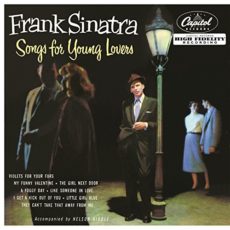
A personal favorite of arranger Nelson Riddle, he was summoned by Riddle in 1953 to play on what would become Frank Sinatra’s first LP for Capitol Records, the now-classic Songs for Young Lovers. Cottler quickly emerged as Sinatra’s drummer of choice and bandleader, remaining with Ol’ Blue Eyes in various studio and tour incarnations for more than 30 years. Crooners Sammy Davis, Jr., Dean Martin, Mel Tormé, and Bobby Darin sought out his services as well, and for the Somerset label he headlined the exotica cult classic Around the World in Percussion.
A staple of film and television, Irv highlighted his career in the medium with a 12-year stint with The Dinah Shore Show’s house band. He authored a book, I’ve Got You Under My Skins, which is a unique publication that features the original drum charts for all of the popular Frank Sinatra tunes on the CD. The charts were reprinted as a book, adding performance hints and in-studio photos.
Drummer and bandleader Irv Cottler, who also recorded with Count Basie, Hoagy Carmichael, Stan Kenton and Barney Kessel, passed away on August 8, 1989 in Rancho Mirage, California.
Sponsored By

Voices From The Community
#preserving genius
More Posts: drums
Daily Dose Of Jazz…
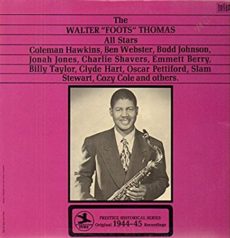
Walter Purl “Foots” Thomas was born on February 10, 1907 in Muskogee, Oklahoma, elder brother tos alto saxophonist and songwriter Joe Thomas. Moving to St. Louis, Missouri he played in Ed Allen’s Whispering Band of Gold in the early 1920s and in 1924 recorded with Fate Marable’s Society Orchestra.
1927 saw Foots, as he was affectionately known, in New York City, where he played with the New Orleans pianist and composer Jelly Roll Morton and Joe Steele. He then joined The Missourians in 1929, just before Cab Calloway took the band over. Among his arrangements was the 1931 hit song, Minnie the Moocher.
Leaving Calloway’s orchestra in 1943 he went to work with saxophonist and composer Don Redman. He went on to lead a 1944 recording session with sidemen including Coleman Hawkins, Hilton Jefferson, Eddie Barefield and Jonah Jones, as well as another session that year featuring Ben Webster, Budd Johnson, and Emmett Berry.
During the mid-1940s he taught at a studio on West 48th Street in New York City and among his students was the hard bop alto saxophonist Jackie McLean. In the 1950s he became a manager and booking agent; he worked for the Shaw Artists Corporation and for a time one of his clients was the trumpeter Dizzy Gillespie.
Tenor saxophonist, flautist and arranger Foots Thomas, who played in one of the most famous orchestras of the Swing era, passed away from cancer on August 26, 1981. He was posthumously inducted into the Oklahoma Jazz Hall of Fame in 1996.
Sponsored By

#preserving genius