

Daily Dose Of Jazz…
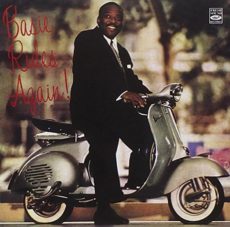
Henry Coker was born December 24, 1919 in Dallas, Texas. He studied music at Wellesley College before making his professional debut with John White in 1935. From 1937 to 1939 he played with the Nat Towles territory band, then moved to Hawaii to play with Monk McFay.
Following Pearl Harbor, Coker settled in Los Angeles, California and played with Benny Carter from 1944 to 1946. He did a stint with Illinois Jacquet in 1945, then performed with Eddie Heywood between 1946 – 1947, and with Charles Mingus in the late ’40s.
Falling ill from 1949 to 1951 Henry played little, but after recovering he worked with Sonny Rollins and then joined Count Basie’s band, playing and recording with him from 1952 to 1963.
Working as a studio musician in the Sixties, he then toured with Ray Charles from 1966 to 1971. He did freelance and film/television studio work in the mid-1970s, rejoining Basie briefly in 1973 and Charles in 1976. Osie Johnson wrote a tribute to him entitled Cokernut Tree in 1955. Coker recorded on J.J. Johnson’s Trombones Incorporated session, featuring ten trombonists.
Trombonist Henry Coker passed away in Los Angeles at the age of 59 on November 23, 1979.

Put A Dose In Your Pocket

More Posts: trombone
Daily Dose Of Jazz…
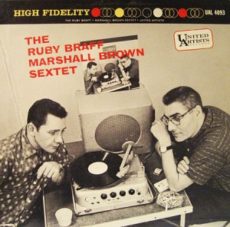
Marshall Brown was born on December 21, 1920 in Framingham, Massachusetts. Little recorded, he devoted most of his career to education, earning a music degree from New York University, as a member of the Zeta Psi Fraternity.
He was also a high school band director leading the Farmingdale New York Daler Band from the early 1950s through 1957. Brown was the first high school band director to initiate a jazz education program, which he did in his tenure at Farmingdale High. By 1956 his stage band, the Daler Dance Band, a jazz big band with an average age of 14 years old, was so formidable and impressive, boasted future jazz stars pianist Michael Abene, saxophonist Andrew Marsala, and whiz drummer Larry Ramsden. One night at the 1957 Newport Jazz Festival, Count Basie, who was late for his appearance as he entered the festival grounds heard the Daler Band performing their set and exclaimed, “Damn, they started already”, mistaking the Dalers for his band.
Marshall received some attention for performing and recording in a quartet with Pee Wee Russell in the early 1960s. While Russell was most often associated with Dixieland or swing, their quartet performed more adventurous, free jazz-oriented pieces, including pieces by Ornette Coleman and John Coltrane.
During the Sixties he was the resident trombonist at Jimmy Ryan’s, a noted dixieland venue. He also club dated with Luke O’Malley’s Irish band during this time. Brown also performed or recorded at one time or another with Ruby Braff, Beaver Harris, Lee Konitz, George Wein and Basie.
Conductor, arranger and educator Marshall Brown, who also played the valve trombone, trumpet, euphonium, electric bass and the banjo, passed away on December 13, 1983 in New York City.
Uplift Someone’s World
More Posts: banjo,bass,euphonium,trombone,trumpet,valve trombone

Daily Dose Of Jazz…
Viola Wells was born Viola Gertrude Wells Evans on December 14, 1902 in Newark, New Jersey, the first child of Robert Olivia Simmons and Earle Henry Wells, who had moved to Newark from Surry County, Virginia. When her mother died from giving birth to her sister Estelle, she briefly went to live with her maternal grandparents Rev. Morgan and Annie Simmons in Virginia, who only liked to listen to secular music. In contrast, his son “Uncle Charlie” was popular locally for his song and dance routines.
Returning to Newark in 1910 after her father remarried, she started to sing in her church’s Salika Johnson choir under the direction of her music and piano teacher, Ruth Reid. This choir performed in cities outside of New Jersey and WOR Radio in Newark invited her to sing on air to raise money for the first Black YMCA. Wells also sang in her high school glee club and competed in talent shows. At nineteen she married her first husband, tap dancer Howard Nicholas.
Her career began singing in traveling shows, once filled in for Mamie Smith and was on the Theater Owners Booking Association (TOBA) circuit by 1921. Viola frequently sang at local Newark jazz clubs, eventually moving to Harlem and finding singing engagements in nightclubs there. The Twenties saw her touring throughout the US with different bands and in the 1930s, her first big break came while touring with the Banjo Bernie Band from Baltimore and then with Ida Cox.
As the 30s came to a close she moved to Kansas City, where she ran a nightclub and headed a band. Moving back to Newark in the Forties, she met and married guitarist Harold Underhill and began singing at various New York City clubs, sometimes under her married name. She replaced Helen Humes as a singer in the Count Basie Orchestra. During that period in her career she was often billed as The Ebony Stick Of Dynamite and sang at United Service Organizations (USO) shows on military bases.
She retired from music in 1946 due to diabetes and in an effort to spend more time with her family after her father was murdered. Brought out of retirement by blues historian Sheldon Harris who helped revive her career in the 1960s, Viola recorded on the album Encore For The Chicago Blues released in 1968 by Spivey Records. She also produced a blues album in 1972 called Miss Rhapsody and toured with the Harlem Blues and Jazz Band in the 1970s.
Vocalist Viola Wells received many honors in her later years, including the key to Newark. She passed away on December 22, 1984 in Belleville, New Jersey. The book Swing City: Newark Nightlife, 1925-50 by Barbara J. Kukla is dedicated to her.
Take A Dose On The Road
More Posts: vocal
Daily Dose Of Jazz…
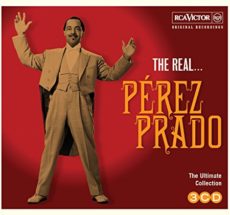
Dámaso Pérez Prado was born on December 11, 1916 in Matanzas, Cuba to a school teacher and a journalist. He studied classical piano in his early childhood, later playing organ and piano in local clubs. For a time, he was pianist and arranger for the popular Cuban band Sonora Matancera and worked with Havana casino orchestras for most of the 1940s.
In 1949 he moved to Mexico to form his own band and record for RCA Victor. Specializing in mambos, the upbeat adaptation of the Cuban danzón, Perez stood out with their fiery brass riffs, strong saxophone counterpoints and his signature grunt ¡Dilo! (Say it!). In 1950 arranger Sonny Burke heard Qué Rico El Mambo while on vacation in Mexico and recorded it back in the United States as Mambo Jambo. The single was a hit, which caused Pérez to launch a US tour, his appearances were 1951 sell-outs and he began recording US releases for RCA Victor.
Prado composed several famous songs Caballo Negro, Lupita, and Mambo no.8 among others, reached #1 with a cha-cha-chá arrangement of Cherry Pink and Apple Blossom White, held the spot for ten consecutive weeks and sold a million copies. The song went on to be danced to by Jane Russell in the 1954 movie Underwater!, and in 1958 his final #1 hit Patricia scaled the Jockeys and Top 100 charts and was introduced onto the Billboard Hot 100.
His popularity outside the Latino communities in the United States came with the peak of the first wave of interest in Latin music during the 1940s, 1950s and early 1960s. He performed in films in the United States, Europe and Mexico until his success waned, his association with RCA ended and music made way for rock and roll and pop music.
The early Seventies saw Prado returning to Mexico City to continue a healthy career in Latin America. He toured and continued to record material released in Mexico, South America and Japan. Revered as one of the reigning giants of the music industry he was a regular performer on Mexican television, was featured in a musical revue titled Sun, and his final United States concert to a pack house was in Hollywood in 1987.
During his lifetime, at one time or another, Ollie Mitchel, Alex Acuña, Maynard Ferguson, Pete Candoli, Beny Moré, Johnny Pacheco, Armando Peraza, Mongo Santamaría, Luisito Jorge Ballan Garay lll performed as part of his orchestra. His music has appeared in the films La Dolce Vita, Goodbye Columbus, Space Cowboys and on television shows The Simpsons, and HBO’s Real Sex series.
With persistent ill health plaguing him for the next two years, pianist, composer, arranger and bandleader Pérez Prado passed away of a stroke in Mexico City, Mexico on September 14, 1989, aged 72.
Put A Dose In Your Pocket
More Posts: piano
Daily Dose Of Jazz…
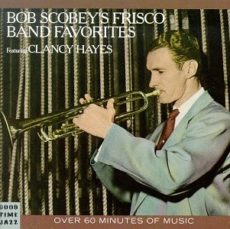
Robert Alexander Scobey, Jr. was born on December 9, 1916 in Tucumcari, New Mexico. He began his career playing in dance orchestras and nightclubs in the 1930s and by 1938 was working as second trumpeter for Lu Watters in the Yerba Buena Jazz Band. 1949 saw him leading his own band under the name Bob Scobey’s Frisco Band and the following year secured a three-year residency at the Victor & Roxie’s, which expanded their popularity.
Clancy Hayes joined the band to sing, play banjo bringing his own compositions such as Huggin’ and a Chalkin‘. The collaboration recorded over two hundred tracks until he left in 1959 to follow a solo career. The Frisco Band broadcasted in 1952 and 1953 on Rusty Draper’s television show. In 1953 Louis Armstrong sang with the band and the following year blues singer Lizzie Miles began recording and touring with the band, a relationship that lasted three years.
Beginning in 1955 Scobey and his band played San Quentin Prison, the roadhouse Rancho Grande, recorded for Verve Records and RCA Victor,. and toured colleges and universities, recorded many student favorites on the album College Classics.
Bob opened the Club Bourbon Street in Chicago, Illinois in 1959, and began suffering with stomach issues while touring in 1960. Trumpeter Bob Scobey passed away of cancer on June 12, 1963. His wife produced a biography titled He Rambled!, arranged for his band to form again and record some blues songs, and saw to the reissuing of his albums.

More Posts: trumpet