


Daily Dose Of Jazz…
Russell Jacquet was born on December 4, 1917 in Saint Martinville, Louisiana, the elder brother of tenor saxophonist Illinois Jacquet. He had stints with Floyd Ray and Milt Larkin before he studying music at Wiley College and Texas Southern University.
Moving west he played with his brother’s band for a time, later forming his own group, that became the house band at the Cotton Club from 1945 to 1949. After that residency ended Russell rejoined his brother’s group. He would later play with several small groups in Oakland, California, as well as in Houston, Texas with Arnett Cobb. He also performed with his brother on a few dates in New York City.
Trumpeter Russell Jacquet passed away on February 28, 1990 in Los Angeles, California. He left a small catalogue of recordings as a leader during his Cotton Club years and four as a sideman with his brother, recorded between 1951 and 1969 on Clef, Argo and Prestige record labels.

Inspire A Young Mind

#preserving genius
More Posts: trumpet

Daily Dose Of Jazz…
Paul Lingle was born on December 3, 1902 in Denver, Colorado and began learning to play the piano at age six. He first played professionally in the San Francisco, California area in the 1920s. He often accompanied Al Jolson in the late Twenties, including for his film soundtracks.
In the 1930s Paul worked mainly on radio, and also played with the Al Zohn band. He tuned pianos early in the 1940s and worked as a soloist in local San Francisco clubs, accompanying visiting musicians such as Lead Belly and Bunk Johnson.
Lingle released almost no recorded material during his lifetime, doing only one session for Good Time Jazz in 1952. This session for Good Time Jazz produced eight recorded numbers. After his death, Euphonic Records released several volumes of private recordings which were critically acclaimed.
Pianist Paul Lingle performed locally until his death on October 30, 1963 in Honolulu, Hawaii, relocating there in 1952.
Sponsored By

www.whatissuitetabu.com
More Posts: piano
Daily Dose Of Jazz…
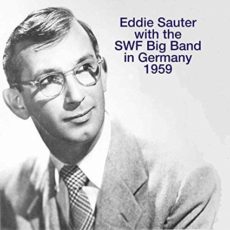
Edward Ernest Sauter was born December 2, 1914 in Brooklyn, New York and studied music at Columbia University and the Juilliard School. He began as a drummer and then played trumpet professionally, most notably with Red Norvo’s orchestra, eventually becoming Norvo’s full-time arranger.
Eddie went on to arrange and compose for Artie Shaw, Tommy Dorsey, Woody Herman and Benny Goodman, earning a reputation for intricate, complex, and carefully crafted works such as Benny Rides Again, Moonlight on the Ganges and Clarinet a la King.
From 1952 to 1958 he co-led the Sauter-Finegan Orchestra and between 1957 and 1959 he was Kurt Edelhagen’s successor as leader of the SWF Orchestra in Baden-Baden, Germany. By 1961, he was working with tenor saxophonist Stan Getz on Focus, a unique collaboration of string compositions, and featuring drummer Roy Haynes on I’m Late, I’m Late, the only selection to feature a non-string instrument other than Getz. They collaborated again during Sauter’s work composing the score for the 1965 film Mickey One, starring Warren Beatty.
He would venture into composing for television including the third season theme to Rod Serling’s Night Gallery. He also orchestrated a number of Broadway musicals, most notably 1776, but also The Apple Tree and It’s a Bird…It’s a Plane…It’s Superman. His composition World Without Time is used as the theme music for the public affairs show The Open Mind.
Composer, arranger, drummer and trumpeter Eddie Sauter, who was prominent during the swing era, passed away of a heart attack in New York City on April 21, 1981.
Dose A Day-Blues Away
Daily Dose Of Jazz…
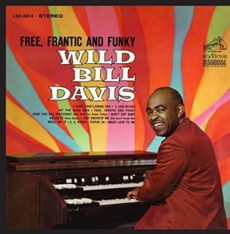
Wild Bill Davis was born November 24, 1918 in Glasgow, Missouri and originally played guitar and wrote arrangements for Milt Larkin’s Texas-based big band during 1939–1942. The band included Arnett Cobb, Illinois Jacquet, and Tom Archia on horns. After leaving the Larkin orchestra, he worked in Chicago, Illinois as a pianist, recording with Buster Bennett in 1945. He played a crucial role as the pianist-arranger in Louis Jordan’s Tympany Five from 1945 to 1947 at the peak of their success.
Leaving Jordan and Harlem, he returned to Chicago for a time, recording again with Bennett, working with Claude McLin and after switching from piano to organ, Davis moved back to the East Coast. In 1950, he began recording for Okeh Records, leading an influential trio of organ, guitar, and drums. Originally slated to record April in Paris with the Count Basie Orchestra in 1955 but could not make the session, Basie used his arrangement for the full band and had a major hit.
During the Sixties, in addition to working with his own groups, Wild Bill recorded several albums with his friend Johnny Hodges, leading to tours during 1969–1971 with Duke Ellington. In the 1970s he recorded for the Black & Blue Records label with a variety of swing all-stars, and he also played with Lionel Hampton, appearing at festivals through the early 1990s.
Pianist, organist and arranger William Strethen Davis, whose stage name was Wild Bill, passed away in Moorestown, New Jersey on August 17, 1995. He recorded some four-dozen albums as a leader and co-leader and another dozen as a sideman with Ray Brown, Sonny Stitt, Gene “Mighty Flea” Conners, Billy Butler, Floyd Smith and Eddie “Lockjaw” Davis among others. Prior to the emergence of Jimmy Smith in 1956, he was the pacesetter among organists and best known for his pioneering jazz electronic organ recordings.
Uplift Someone’s World

Daily Dose Of Jazz…
Alvin Burroughs was born on November 21, 1911 in Pittsburgh, Pennsylvania. He played in Kansas City, Missouri with Walter Page’s Blue Devils in 1928-29 and then joined Alphonse Trent’s territory band before moving to Chicago, Illinois around 1930.
Through the Thirties he went on to play with Hal Draper’s Arcadians, Horace Henderson and Earl Hines with whom he recorded extensively. By the 1940s Burroughs worked with Bill Harris, Milt Larkin, Benny Carter and Red Allen, in addition to leading his own groups. He was in George Dixon’s quartet in 1950 when he died of a heart attack.
Swing drummer Alvin Burroughs, who never recorded as a leader, passed away on August 1, 1950.
Give A Gift Of Jazz – Share
More Posts: drums