

Daily Dose Of Jazz..
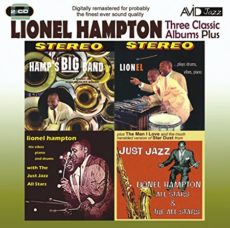
Fred Lee Beckett was born on January 23, 1917 in Nettleton, Mississippi and began playing horn in high school. He began playing the trombone professionally in Kansas City, Missouri in the 1930s. Soon after beginning his career he landed a job with Eddie Johnson’s Crackerjacks in St. Louis, Missouri.
He went on to play with Duke Wright, Tommy Douglas, Buster Smith and Andy Kirk over the next few years. Beckett spent time as well in a territory band with Prince Stewart and played a gig in Omaha, Nebraska with Nat Towles. Towards the end of the Thirties he played with Harlan Leonard.
The early 1940s saw Fred performing and recording extensively with Lionel Hampton, and providing trombone support behind Dinah Washington recordings. Serving in the Army during World War II he contracted tuberculosis and passed away of the illness on January 30, 1946. He was twenty-nine years old.
Sponsored By


#preserving genius
More Posts: trombone
Daily Dose Of Jazz…
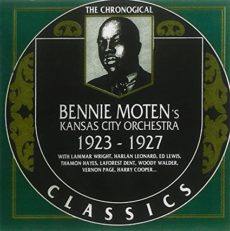
Ed Lewis was born on January 22, 1909 in Eagle City, Oklahoma. His early career saw him in Kansas City, Missouri playing with Jerry Westbrook as a baritone saxophonist, but in 1925 he switched to trumpet He played with Paul Banks and Laura Rucker before joining the Bennie Moten Orchestra, where he was the primary trumpet soloist from 1926-1932 until Hot Lips Page joined the outfit.
In the 1932 he worked with Thamon Hayes for two years followed by a three year stint with Harlan Leonard, the in 1937 played for a short time with Jay McShann. That same year Ed joined the Count Basie Orchestra, remaining until 1948 and though he recorded frequently with the orchestra, he almost never soloed.
In the 1950s Lewis led his own band in New York City for strictly local gigs, and worked for a period as a taxicab driver. He returned to play with The Countsmen in Europe in 1984, shortly before his death.
Harry “Sweets” Edison considered Lewis and Snooky Young the two greatest first trumpet players he ever played with. Trumpeter Ed Lewis, who never led his own recording session, passed away on September 18, 1985.

Give The Gift Of Knowledge
#preserving genius
More Posts: trumpet
Daily Dose Of Jazz…
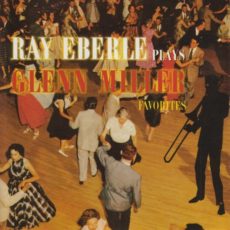
Raymond Eberle was born January 19, 1919 in Mechanicville, New York and followed in his elder brother Bob’s footsteps who fronted Jimmy Dorsey’s orchestra as a Big Band singer. With no formal training he started singing in his teens and in 1938, when Glenn Miller, looking for a male vocalist asked Bob if he had any siblings at home who could sing, he answered yes, and Ray was hired on the spot.
Ray went on to find success with Miller deeming the songs for the 1942 film Orchestra Wives, such as the jazz standard At Last, to be among his favorites. He also appeared in the Twentieth Century Fox movies, Sun Valley Serenade in 1941. From 1940-43 he did well on Billboard’s College Poll for male vocalist.
Miller ran a tight ship and often fired people after one negative incident. When stuck in traffic one day during a Chicago engagement, Ray was late for a rehearsal and Miller fired him on the spot, and replaced him in 1942 with Skip Nelson. After his departure from Miller, Eberle briefly joined Gene Krupa’s band before launching a solo career. He appeared on numerous television variety shows in the 1950s and 1960s, and later joined former Miller bandmate Tex Beneke’s orchestra in 1970 for a national tour, and reformed his own orchestra later in the decade.
He made several Universal films, including Mister Big, making a cameo appearance as himself. Eberle mostly sang ballads. He led his own orchestra called, The Ray Eberle Orchestra as well as the Serenade In Blue Orchestra from 1943 and maintained his band until his death.
Vocalist and bandleader Ray Eberle died of a heart attack in Douglasville, Georgia on August 25, 1979, aged 60.

#preserving genius
More Posts: vocal

Daily Dose Of Jazz…
Quentin “Butter” Jackson was born January 13, 1909 in Springfield, Ohio. His brother-in-law Claude Jones, who played with McKinney’s Cotton Pickers taught him to play the trombone. During the Thirties he played with Zack White, McKinney’s Cotton Pickers and the Don Redman Orchestra.
The Forties saw Butter, as he was affectionately known, working with Cab Calloway and then Lucky Millinder, taking occasional solos with those groups, and in the early days was a ballad singer. In 1949 he became a fixture in the Duke Ellington Orchestra, becoming his best wa-wa trombonist utilizing the plunger mute. This relationship, that included recordings, lasted until 1960, both as a soloist and in the ensembles.
Jackson went on to tour of Europe and recorded with Quincy Jones, then performed and recorded with Count Basie for two years and recorded notable work with Charles Mingus in 1962-63, followed by a return to Ellington and worked with the big bands of Louie Bellson and Gerald Wilson. By the 1970s he was working with the Mel Lewis/Thad Jones Orchestra until near the end of his life.
A consummate sideman he recorded with Dorothy Ashby, Kenny Burrell, Ella Fitzgerald, Johnny Hodges, Leon Thomas, Dizzy Gillespie, Ray Charles, Aretha Franklin, Louis Armstrong, Milt Jackson, Herbie Mann, Freddie McCoy, Wes Montgomery, Shirley Scott, Jimmy Smith, Clark Terry, Billy Strayhorn, Randy Weston and Dinah Washington, who did a version of Bessie Smith’s Trombone Cholly on her album Dinah Sings Bessie Smith, enlisting Jackson on the horn, under the title “Trombone Butter”.
Trombonist Quentin Jackson, whose only session as a leader resulted in four titles in 1959 that were reissued by Swing, passed away on October 2, 1976 in New York City.
Sponsored By

www.whatissuitetabu.com
#preserving genius
More Posts: trombone
Daily Dose Of Jazz…
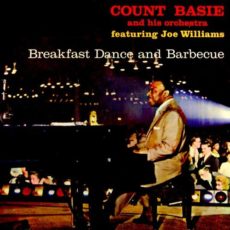
Wendell Philips Culley was born on January 8, 1906 in Worcester, Massachusetts. He performed locally in Boston, then moved to New York City in 1931 and found early work playing with Horace Henderson and Cab Calloway.
He then spent eleven years in the employ of Noble Sissle, recording with him extensively. Following this he played with Lionel Hampton from 1944 to 1949, and then briefly worked again with Sissle.
In 1951 he joined the Count Basie Orchestra and until 1959 he recorded twenty albums with the man and toured the world. After his tenure with Basie, he retired from music and pursued a career in insurance. Trumpeter Wendell Culley, who never led a session of his own, passed away on May 8, 1983 in Los Angeles, California. He was seventy-seven years old.
Give The Gift Of Knowledge
#preserving genius
More Posts: trumpet