

Daily Dose Of Jazz…
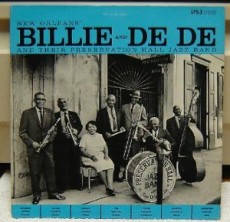
Billie Pierce was born Wilhelmina Goodson on June 8, 1907 in Marianna, Florida. She was born into a family of pianists with both parents and seven-sisters playing, notably her sister Ida Goodson.
Early in the 1920s, Billie played with Bessie Smith and later in the decade played in the bands of Alphonse Picou, Emile Barnes and George Lewis. By the 1930s she was playing the Blue Jay Club, where she met trumpeter De De Pierce; the two fell in love, married, and co-led their own ensemble, which served as the house band at Luthjen’s Dance Hall in the 1950s.
She played in the Preservation Hall Jazz Band and was a regular on the New Orleans jazz scene in the 1950s through the early Seventies. Pianist and singer Billie Goodson died on September 29, 1974 in New Orleans, Louisiana at the age of 67.

Give The Gift Of Knowledge
More Posts: vocal
Daily Dose Of Jazz…
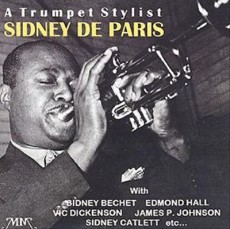
Sidney De Paris was born on May 30, 1905 in Crawfordsville, Indiana, the younger brother of trombonist Wilbur De Paris. A distinctive trumpeter who fit into both New Orleans jazz and swing settings, he was particularly expert with mutes. He was also a versatile musician, playing tuba, cornet, flugelhorn and singing from time to time.
From 1926 on into the Sixties, Sidney worked with Charlie Johnson’s Paradise Ten, Don Redman, Zutty Singleton, Benny Carter, Art Hodes, Jelly Roll Morton and Sidney Bechet. He recorded on the famed Panassie sessions of 1938 and as a leader recorded some highly enjoyable and freewheeling sessions in the Forties for Commodore and Blue Note.
He played with his brother Wilbur’s New New Orleans Jazz Band through the ’50s before ill health forced his retirement in the 1960s. Trumpeter Sidney De Paris passed away on September 13, 1967 in New York City.
Give The Gift Of Knowledge
More Posts: trumpet
Daily Dose Of Jazz…
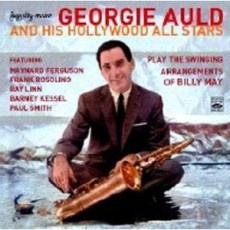
George Auld was born John Altwerger on May 19, 1919 in Toronto, Canada but lived in the U.S. from the late 1920s. He was most noteworthy for his tenor saxophone work Bunny Berigan, Artie Shaw, Benny Goodman, Erroll Garner, Dizzy Gillespie, Al Porcino, Billy Eckstine, Tiny Kahn, Frank Rosolino and many others.
Primarily a swing saxophonist, he did many big band stints in his career, and led several big bands, including Georgie Auld and His Orchestra and Georgie Auld and His Hollywood All Stars. Auld also played some rock´n roll working for Alan Freed in 1959.
George can be heard playing sax on the 1968 Ella Fitzgerald album “30 by Ella” and in 1977 he played a bandleader in “New York, New York” starring Liza Minelli and Robert DeNiro and also acted as a technical consultant for the film. The tenor saxophonist, clarinetist and bandleader George Auld died in Palm Springs, California at the age of 71 on January 8, 1990.
Give A Gift Of Jazz – Share
More Posts: bandleader,clarinet,saxophone
Daily Dose Of Jazz…
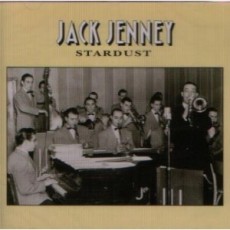
Jack Jenney was born Truman Eliot Jenney May 12, 1910 in Mason City, Iowa and started playing in his father’s band from the age of 11. The trombonist’s first professional work began with Austin Wylie in 1928 but he would go on to work with Isham James, Red Norvo, Artie Shaw, Mal Hallett and Waring’s Pennsylvanians.
Jack led his own band for a year in 1939-40, which included Peanuts Hucko, Paul Fredricks and Hugo Winterhalter. Although this band received good reviews it was a financial failure. Best known for instrumental versions of the song Stardust, he won the Down Beat Reader’s Poll for trombone in 1940 and would appear in the 1942 film “Syncopation”.
After his return from being drafted into the United States Navy, trombonist Jack Jenney died of complications related to appendicitis in Los Angeles, California on December 16, 1945.
Give A Gift Of Jazz – Share
More Posts: trombone
Daily Dose Of Jazz…
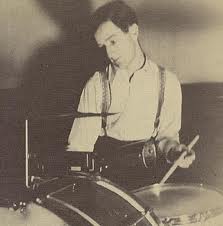
George Thomas Simon was born on May 9, 1912 in New York City into a wealthy and talented family, with his brother co-founding the publishing house Simon & Schuster and also his niece, singer Carly Simon. He began as a drummer and was an early drummer in Glenn Miller’s orchestra.
After graduating from Harvard University in 1934 he began working for the Metronome magazine the following year, then became editor-in-chief from 1939 to 1955and shifted it, from writing technical articles, to being a chronicler of the swing era. Simon was probably the most influential jazz commentator during the swing era and with his inside connections in the jazz world, he was able to report information about bands and their personnel with great accuracy.
Leaving Metronome he went to the Jazztone Society, consulted for the Timex Jazz Shows, wrote about jazz for the New York Herald Tribune and the New York Post newspapers. He also did liner notes for a variety of jazz musicians including Thelonious Monk who was stylistically quite different from the swing-era musicians Simon championed.
In 1978, he won a Grammy Award for Best Album Notes, was inducted into the Big Band and Jazz Hall of Fame and on February 13, 2001 after years of suffering from Parkinson’s disease, he died of pneumonia in New York City.
Give The Gift Of Knowledge
More Posts: commentator,editor,writer