

Daily Dose Of Jazz…
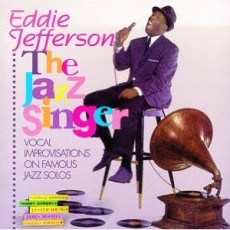
Eddie Jefferson was born on August 3, 1918 in Pittsburgh, Pennsylvania and started his career in show business as a tap dancer. By the late Forties, he was singing and writing lyrics to tunes like “Parker’s Mood” and “I Cover The Waterfront”. He is credited with pioneering vocalese, a musical style in which lyrics are set to an instrumental composition or solo. Perhaps his best-known song is “Moody’s Mood for Love”, though first recorded by King Pleasure, who cited Jefferson as an influence.
One of Jefferson’s most notable recordings “So What” combined the lyrics of artist Christopher Acemandese Hall with the music of Miles Davis to create a masterwork that highlighted his prolific skills, and ability to majestically turn a phrase, into his jazz vocalese.
Jefferson’s last recorded performance was at the Joe Segal’s Jazz Showcase in Chicago and released on video by Rhapsody Films. He shared the stand with fellow bandleader and alto saxophonist Richie Cole. The performance was part of a tour that Jefferson and Cole led together that took them to their opening night in Detroit at the legendary Baker’s Keyboard Lounge, a jazz club built in the 1930’s whose stage graced musicians from the genre as diverse as Dexter Gordon and Sonny Stitt.
Vocalist Eddie Jefferson was shot and killed while leaving Baker’s on May 8, 1979 by a suspected disgruntled dancer who had been fired by Jefferson. She was later acquitted of the murder charge. He was 60. A previously unreleased 1976 live album, Eddie Jefferson at Ali’s Alley, with drummer Rashied Ali, was finally posthumously released in 2009.
More Posts: vocal
Daily Dose Of Jazz…
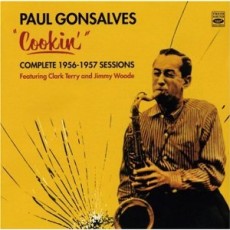
Paul Gonsalves was born July 12, 1920 in Brockton, Massachusetts to Cape Verdean parents. His first instrument was the guitar, and as a child he was regularly asked to play Portuguese folk songs for his family. Growing up in New Bedford, Massachusetts he was a member of the Sabby Lewis Orchestra.
His first professional engagement in Boston was with the same group on tenor saxophone, that he had learned to play prior to and during World War II military service. After the war he played in Count Basie and Dizzy Gillespie’s big bands before joining the Duke Ellington Orchestra in 1950.
At the 1956 Newport Jazz Festival, Gonsalves’ solo in Ellington’s song “Diminuendo and Crescendo in Blue” contained 27 choruses and the publicity from which is credited with reviving Ellington’s career. This performance is captured on the album Ellington at Newport. He was a featured soloist in numerous Ellingtonian settings and received the nickname “The Strolling Violins” from Ellington for playing solos while walking through the crowd.
Tenor saxophonist Paul Gonsalves died on May 15, 1974 in London just a few days before Duke Ellington’s death. Gonsalves and Ellington, along with trombonist Tyree Glenn, lay side-by-side in the same New York funeral home for a period of time.
More Posts: saxophone
Daily Dose Of Jazz…
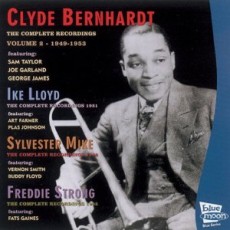
Clyde Bernhardt, born July 11, 1905 in Gold Hill, North Carolina, grew up in Harrisburg, Pennsylvania. He started playing trombone at 17 and in the Twenties performed in a series of lesser-known ensembles such as Bill Eady’s Ellwood Syncopators, Tillie Vennie, Odie Cromwell’s Wolverine Syncopators and The Whitman Sisters to name a few. In 1931 he worked with King Oliver and throughout the thirties played with Alex Hill, The Alabamians, Billy Fowler, Ira Coffey’s Walkathonians and Vernon Andrade.
In 1937 he joined the orchestra of Edgar Haye until 1942 then worked with Jay McShann, Cecil Scott, Luis Russell, Leonard Feather, Pete Johnson, Wynonie Harris, Claude Hopkins and the Bascomb brothers. He led his own ensemble, called the Blue Blazers, before returning to play with Russell from 1948-51. He recorded as a leader between 1946 and 1953, and on some of the recordings he sings under the pseudonym Ed Barron.
From 1952 to 1970 he played part-time with Joe Garland’s Society Orchestra followed with his leading the Harlem Blues and Jazz Band from 1972 and 1979 with sidemen Doc Cheatham, Charlie Holmes, Happy Caldwell, Tommy Benford and Miss Rhapsody. Shortly before his death he published his autobiography “I Remember” co-written with Sheldon Harris. As Bernhardt’s health began to fail in 1979, he gave up band leadership but played in Barry Martyn’s Legends of Jazz until his death on May 20, 1986 in Newark, New Jersey.
More Posts: trombone
Daily Dose Of Jazz…
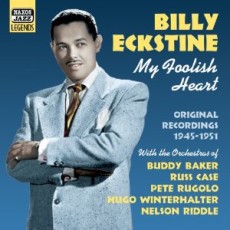
William Clarence Eckstine was born on July 8, 1914 in Pittsburgh, Pennsylvania but grew up in Washington, DC of Prussian and African American heritage. He began singing at the age of seven, entering amateur talent shows while dreaming of a football career that was sidelined when he broke his collarbone. Focusing on music he worked his way west to Chicago, joining Earl Hines’ Grand Terrace Orchestra as vocalist and occasionally trumpeter from1939 – 1943. During his tenure he made a name for himself through the Hines band’s radio shows with such jukebox hits as “Stormy Monday Blues” and his own “Jelly Jelly”.
Eckstine formed the first bop big band in 1944 making it a fountainhead for young musicians who would reshape jazz by the end of the decade, including Dizzy Gillespie, Dexter Gordon, Miles Davis, Art Blakey, Charlie Parker, Fats Navarro and Sarah Vaughn, with Tadd Dameron and Gil Fuller were among the band’s arrangers. Billy hit the charts often during the mid-’40s, with Top Ten entries including “A Cottage For Sale” and “Prisoner of Love”.
Breaking down barriers throughout the Forties as a leader of the original bop big band and as the first romantic black male in popular music, Mr. B, as he was affectionately known, went solo in 1947. His seamless transition to string-filled balladry saw him recording more than a dozen hits by the end of the decade and winning numerous awards from Esquire, Down Beat and Metronome magazines. His 1950 appearance at New York’s Paramount Theatre greatly surpassed Sinatra’s audience draw at the same venue.
Over the course of the next two decades Billy appeared on every major television variety show from Ed Sullivan to Nat King Cole, Jack Paar, Steve Allen, Joey Bishop, Flip Wilson and Playboy After Dark. After a long series of hit tunes and recordings by the 70’s Billy’s recordings came sparingly although he still performed before adoring audiences throughout the world. He made his final Grammy-nominated recording singing with Benny Carter in 1986.
Billy Eckstine, vocalist, bandleader, trumpeter, valve trombonist and guitarist passed away on March 8, 1993, at age 78, in his hometown of Pittsburgh.
More Posts: bandleader,guitar,trombone,trumpet,vocal
Daily Dose Of Jazz…
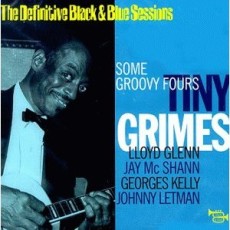
Lloyd “Tiny” Grimes was born on July 7, 1916 in Newport News, Virginia and began his career playing drums and one-fingered piano. In 1938 he took up the electric 4-string tenor guitar and two years later joined the Cats and a Fiddle as guitarist and singer. 1943 saw him as part of the Art Tatum Trio making a number of recordings and this early configuration recorded some of the more interesting early examples of Tiny Grimes’ guitar work.
After leaving Tatum, Grimes recorded with his own groups in New York and he recorded with a long list of leading musicians, including Billie Holiday. He made four recordings with Charlie Parker that are considered excellent examples of early bebop jazz: “Tiny’s Tempo”, “Red Cross”, “Romance Without Finance” and “I’ll Always Love You”. He was to become one of the 52nd Street regulars during this period.
Towards the end of the decade Tiny scored a hit on a jazzed up version of “Loch Lomond”. His band was billed as Tiny “Mac” Grimes and the Rocking Highlanders, appearing in kilts and included top tenor sax man Red Prysock and big-voiced baritone singer Screaming Jay Hawkins. Grimes continued to lead his own groups into the later 1970’s recording for Prestige in a series of strong blues-based performances with Coleman Hawkins, Illinois Jacquet, Pepper Adams, Roy Eldridge, Earl Hines and others of note.
With Paul Williams he co-headlined the first “Moondog Coronation Ball”, promoted by Alan Freed in Cleveland, Ohio on March 21, 1952, often claimed as the first rock and roll concert. It is also generally considered he played on the first rock and roll record with a group called The Crows one-hit wonder “Gee”.
Tiny Grimes, a jazz and R&B guitarist most noted for playing a four-string electric tenor guitar, passed away on March 4, 1989.
More Posts: guitar