

Daily Dose Of Jazz…
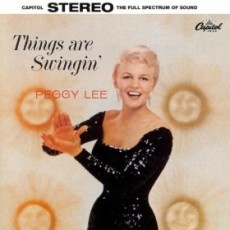
Peggy Lee was born Norma Deloris Egstrom on May 26, 1920 in Jamestown, North Dakota. The seventh of eight children of Norwegian and Swedish ancestry, her mother died when she was four. She began singing on a local radio station during her high school years, and then ventured to Fargo where Ken Kennedy of WDAY changed her name to Peggy Lee. At 17 she left home for Los Angeles.
Making her way to Chicago’s Buttery Room, Lee caught the attention of Lady Alice Duckworth who was so impressed brought her fiancé Benny Goodman the next night. That chance encounter landed her a gig with Goodman for two years, replacing Helen Forrest in 1941.
Peggy had her first #1 hit with “Somebody Else Is Taking My Place” in1942 followed by the million record seller “Why Don’t You Do Right” that made her famous by 1943. Her signature song became “Fever” to which she added some lyrics. In 1948 she joined Perry Como and Jo Stafford as one of the rotating host of NBC’s Chesterfield Supper Club. As a composer she collaborated with Laurindo Almeida, Duke Ellington, Quincy Jones, Johnny Mandel, Marian McPartland, Dave Grusin and Lalo Schifrin among others.
Lee played opposite Danny Thomas in the 1952 remake of the Jazz Singer, in 1955 played a despondent, alcoholic blues singer in Pete Kelly’s Blues that garnered her an Oscar nomination for Best Supporting Actress, and voiced several characters in Disney’s Lady and the Tramp for which she later had to sue Disney for video royalties.
From her humble beginnings as a vocalist on local radio she forged her own sophisticated persona, evolving into a multi-faceted artist and performer, receiving 12 Grammy nominations, three wins including a Lifetime Achievement Award and induction into the Songwriters Hall of Fame among other awards and accolades. Peggy Lee, whose career as a jazz and pop singer, songwriter, composer and actress spanned nearly seven decades passed away due to complications from diabetes and a heart attack on January 21, 2002.

More Posts: vocal
Daily Dose Of Jazz…
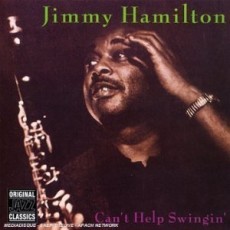
Jimmy Hamilton was born on May 25, 1917 in Dillon, South Carolina but grew up in Philadelphia. He learned to play piano and brass instruments and by the thirties he was playing the latter in local bands. He switched to clarinet and saxophone and by 1939 was playing with Lucky Millinder, Jimmy Mundy and Bill Doggett, then going to work for Teddy Wilson in 1940.
After a two-year stay with Wilson he played with Eddie Heywood and Yank Porter before replacing Barney Bigard in Duke Ellington’s orchestra in 1943. Over the next twenty-five years with Ellington his sound on saxophone had an R&B style while his clarinet was more precise, correct and fluent and it was during this time that he wrote some of his own material.
Leaving the Ellington orchestra, Hamilton played and arranged on a freelance basis, before spending the 1970s and 1980s in the Virgin Islands teaching music, occasionally returning to the U.S. for performances with John Carter’s Clarinet Summit. He retired from teaching but continued to perform with his own groups from 1989 to 1990.
The clarinetist, saxophonist, arranger, composer and music educator Jimmy Hamilton died in St. Croix, Virgin Islands at the age of seventy-seven on September 20, 1994.
Daily Dose Of Jazz…
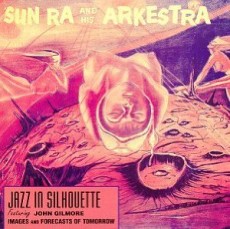
Sun Ra was born Herman Poole Blount in Birmingham, Alabama on May 22, 1914 and as a child was a skilled pianist. By twelve he was writing original songs and could sight read sheet music. With Birmingham being an important stop for touring musicians, during his childhood he was able to see famed musicians like Fletcher Henderson, Duke Ellington and Fats Waller.
By his teenage years he was producing from memory full transcriptions of big band songs he had heard and began playing semi-professional solo piano in ad hoc jazz bands. Attending Birmingham Industrial High School he took lessons the tutelage of John T. “Fess” Whatley, a demanding disciplinarian and producer of many professional musicians.
Claiming that he was of the “Angel Race” and not from Earth, but from Saturn, Sun Ra developed a complex persona of “cosmic” philosophies and lyrical poetry that made him a pioneer of “afro-futurism” as he preached awareness and peace above all. He abandoned his birth name and took on the name and persona of Sun Ra (Ra being the ancient Egyptian god of the sun).
From the mid-1950s to his death, Sun Ra led “The Arkestra”, an ensemble with an ever-changing lineup and names, asserting that the ever-changing name of his ensemble reflected the ever-changing nature of his music. His mainstream success was limited, but Sun Ra was a prolific recording artist and frequent live performer with music ranged from keyboard solos to big bands of over 30 musicians and music touching on virtually the entire history of jazz, from ragtime, swing, bebop, free improvisation, electronic and space music.
Sun Ra had several music periods during his lifetime – late 30s creating a conservatory workshop in his family home, conscientious objector during the war years, Chicago playing blues and jazz with Fletcher Henderson, Coleman Hawkins and Stuff Smith, New York Monday night gig at Slug’s Saloon and praise from Dizzy Gillespie and Thelonious Monk, and Philadelphia that would be the base of operations for the Arkestra until his death.
Sun Ra known for his “cosmic philosophy, musical compositions and performances was inducted into the Alabama Jazz Hall of Fame in 1979. The prolific Jazz composer, bandleader, piano and synthesizer player, poet and philosopher passed away on May 30, 1993, at 79.
Daily Dose Of Jazz…
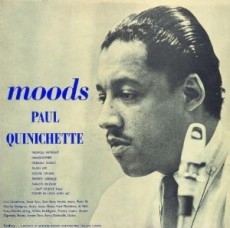
Paul Quinichette was born on May 17, 1916 in Denver, Colorado. Known as the Vice President or Vice Prez for his emulation of the breathy style of Lester Young a.k.a. Prez, but Quinichette was also capable of a gruffer style of playing.
The young Paul started playing the saxophone and clarinet, first on alto and then switching to tenor as R&B work started rolling in. Gaining experience playing with Nat Towles, Lloyd Sherock and Ernie Fields he became a feature in Jay Mcshann’s band from 42-46. He followed with stints on the west coast with Johnny Otis, and in New York with Louis Jordan, Lucky Millinder, Red Allen and Hot Lips Page.
Quinichette’s big break came when Basie hired him to play solos like Lester Young. His success with Basie garnered him an Emarcy record contract, the release of several albums and a modicum of fame. Over the course of his career Quinichette worked with Benny Goodman, recorded with Lester Young, John Coltrane, Billie Holiday, Sammy Price and Buddy Tate but mainly led his own group sessions.
In the late 50s he left music to become an electrical engineer only to return briefly in the Seventies. Poor health forced retirement for tenor saxophonist Paul Quinichette who passed away on May 25, 1983 in New York City.
More Posts: saxophone
Daily Dose Of Jazz…
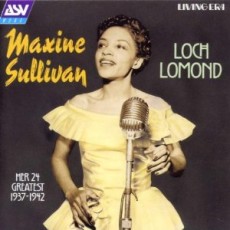
Maxine Sullivan was born Marietta Williams on May 13, 1911 in Homestead, Pennsylvania who developed a subtle and lightly swinging jazz style. Maxine possessed an affable delivery that slighted no lyric.
Over the course of her long career Sullivan first moved to New York and sang during intermissions at the Onyx Club. It was here she was discovered by Claude Thornhill who recorded her in front of a septet singing standards and a couple of Scottish tunes in swinging fashion. One of those tunes “Loch Lomond” would become her big hit and her career signature song.
During the forties Maxine appeared in movies opposite Louis Armstrong, on Broadway in Swingin’ The Dream, with then husband John Kirby and his sextet, and starred a radio show “Flow Gently Sweet Rhythm” for two years receiving reasonable success with a solo career.
By the 50s she became trained as a nurse and over the next several years was absent from music. However, 1968 saw Sullivan’s comeback performing at festivals and even playing a little valve trombone and flugelhorn.
During the later years of her career she intermittently appeared with the World’s Greatest Jazz Band, sang with mainstream jazz groups and recorded in concert her first hit Loch Lomond. Passing away on April 7, 1987 in New York City, vocalist Maxine Sullivan was inducted into the Big Band Hall of Fame in 1998.
More Posts: vocal