

Daily Dose Of Jazz…
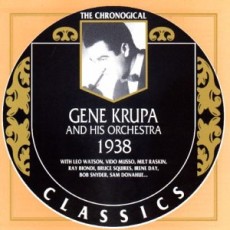
Ray Biondi was born Remo Biondi on July5, 1905 in Cicero, Illinois. As a child, he started with violin and down a road that was not supposed to lead to ditties with suggestive titles. His early training was classical at the American Conservatory of Chicago. Mandolin was a natural double at age 12 and a gateway into the world of string bands. He remained focused mostly on violin but added guitar and then trumpet into his musical arsenal as he began thinking outside the classical idiom.
In 1926 Ray began playing professionally with the Blanche Jaros Orchestra, and the following year started an eight-year period of heavy freelancing in Chicago, enjoying sets with trumpeter Wingy Manone and reedman Bud Freeman and many others. He joined Earl Burtnett’s band as a violin and trumpet double, ending up on the road gigging in Kansas City, Cincinnati, New York and distant destinations.
He played violin and trumpet with clarinetist Joe Marsala, often adding guitar when Eddie Condon double-booked himself. This relationship continued until 1938, when Gene Krupa hired Biondi to work solely as a guitarist. He left Krupa a year later and went on his own in a series of small groupings. He opened a short-lived club, rejoined Krupa on the road in the early ‘50s and became a guitar and mandolin session player outside straight jazz.
By 1961 Ray began made a serious shift to teaching all of his instruments except the trumpet, while continuing to perform with groups both large and small, including the Dick Schory orchestra and stride pianist Art Hodes in the latter. Multi-string instrumentalist Ray Biondi passed away on January 28, 1981 in Chicago, Illinois.
Daily Dose Of Jazz…
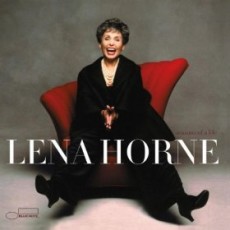
Lena Mary Calhoun Horne was born June 30, 1917 in the Bedford-Stuyvesant neighborhood in Brooklyn, New York. Descended from African, European and Native American heritage, her family belonged to what W.E.B. DuBois called “The Talented Tenth”, the upper stratum of middle-class, well-educated blacks.
Her father, Edwin “Teddy” Horne, a numbers kingpin, left the family when she was three and moved to the Hill District in Pittsburgh while her actress mother, Edna Scottron, travelled extensively with a black theatre troupe leaving Lena to be mainly raised by her grandparents. Throughout her formative years she travelled with her mother, lived in Fort Valley and Atlanta, Georgia with a final move back to New York in her teens.
Horne joined the mike chorus of the Cotton Club at 16 becoming a nightclub performer before moving to Hollywood, where she had small parts in numerous movies, and more substantial parts in the films “Cabin in the Sky” and “Stormy Weather. Due to the Red Scare and her left-leaning political views, Horne found herself blacklisted and unable to get work in Hollywood.
Returning to her roots as a nightclub performer, Horne took part in the March of Washington in August 1963, and continued to work as a performer, both in nightclubs and on television, while releasing well-received record albums. She announced her retirement in March 1980, but the next year starred in a one-woman show, “Lena Horne: The Lady and Her Music”, which ran for more than three hundred performances on Broadway and earned her numerous awards and accolades. She continued recording and performing sporadically into the 1990s, disappearing from the public eye in 2000. Lena Horne died on May 9, 2010 in New York City of heart failure.

More Posts: vocal
Daily Dose Of Jazz…
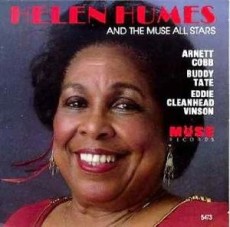
Jazz and blues singer Helen Humes was born on June 23, 1913 in Louisville, Kentucky. As a teenager she was a blues singer, band vocalist with Count Basie, a saucy R&B diva and a mature interpreter of the classy pop song.
Humes made her gramophone record debut in 1927 after being spotted by guitarist Sylvester Weaver. Moving to New York City in 1937 she became a recording vocalist with Harry James’ big band, then replaced Billie Holiday as the voice of the Count Basie Orchestra in 1938. During the 1940s and 1950s, she turned solo performer and worked with different bands and other vocalists including Nat King Cole.
In 1950 Helen recorded Benny Carter’s “Rock Me to Sleep”. She managed to bridge the gap between big band jazz swing and rhythm and blues. She appeared at the 1960 Monterey Jazz Festival with a styling reminiscent of Dinah Washington. Moving to Hawaii, then to Australia in 1964, she returned to the U.S. in 1967 to care for her ailing mother leaving the music industry for several years.
Vocalist Helen Humes received the key to the city of Louisville, the Music Industry of France Award and made a full comeback in 1973 at the Newport Jazz Festival and stayed busy until her passing from cancer at age 68 on September 9, 1981 in Santa Monica, California.
More Posts: vocal
Daily Dose Of Jazz…
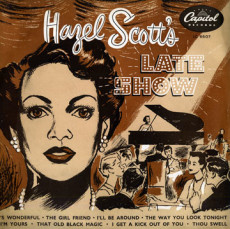
Hazel Dorothy Scott was born on June 11, 1920 in Port of Spain, Trinidad but was raised in New York City from age four. Performing extensively as a child pianist, she trained at Julliard and appeared in the 1942 production of Priorities and performed numerous times at Carnegie Hall.
A jazz and classical pianist and singer, Scott was known for improvising on classical themes and also played boogie-woogie, blues, and ballads. She was the first woman of color to have her own television series “The Hazel Scott Show” that premiered on the Dumont Television Network on July 3, 1950. However, due to her public opposition to McCarthyism and racial segregation the show was canceled in 1950 when she was accused of being a Communist sympathizer; the final broadcast was September 29, 1950.
The talented Hazel went on to have a brief motion picture career included films Something To Shout About, I Dood It, Broadway Rhythm, The Heat’s On and Rhapsody In Blue. Her album Relaxed Piano Moods on the Debut Record label with Charles Mingus and Max Roach is the album critics hold in high regard.
She married U.S. Congressman Adam Clayton Jr., a union that lasted from 1945 to 1956 and produced one child, Adam III. Pianist and vocalist Hazel Scott passed away of pancreatic cancer in New York City on October 2, 1981. She was 61 years old.
Daily Dose Of Jazz…
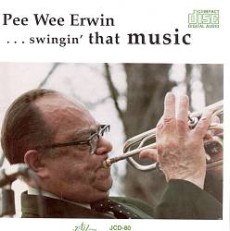
Pee Wee Erwin was born on May 30, 1913 in Falls City, Nebraska. Erwin started on trumpet at age four. He played in several territory bands before joining the groups of Joe Haymes from 1931-1933 and Isham Jones from 1933 to 1934.
By 1934 Pee Wee moved to New York City where he became a prolific studio musician, performing on radio and in recording sessions. He played with Benny Goodman in 1934-35, then with Ray Noble in 1935. The next year he joined Goodman again, taking Bunny Berigan’s empty chair. In 1937 he again followed Berigan, this time in Tommy’s Dorsey’s orchestra, where he remained until 1939.
Erwin led his own big band in 1941-42 and 1946. In the 1950s he played Dixieland in New Orleans, and in the 1960s formed his own trumpet school with Chris Griffin; among its graduates was Warren Vache. Erwin played up until the year of his death, recording as a leader for United Artists in the 1950s and issuing six albums in 1980 and ’81, the last two years of his life.
Trumpeter Pee Wee Erwin passed away on June 20, 1981 in Teaneck, New Jersey.
More Posts: trumpet