

Daily Dose Of Jazz…
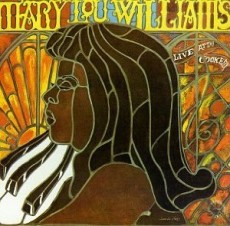
Mary Lou Williams was born Mary Elfrieda Scruggs in Atlanta, Georgia on May 8, 1910 but grew up in the East Liberty neighborhood of Pittsburgh, PA. As a very young child she taught herself to play the piano and one of her greatest influences was Lovie Austin. She had her first public performance at the age of six and went on to help support her ten half-brothers and sisters playing for parties. Mary Lou began performing publicly at the age of seven becoming admiringly known as “the little piano girl of East Liberty”.
In 1924 at age 14 she was taken on the Orpheum Circuit. The following year she played with Duke Ellington and his early small band, the Washingtonians. A year later she was jamming with McKinney’s Cotton Pickers at Harlem’s Rhythm Club and Louis Armstrong stopped in, listened to her picked her up and gave her a kiss. By 1929 she was married to John Williams and composing, arranging and playing piano for Andy Kirk’s Twelve Clouds of Joy, an association that would last until 1942.
Returning to Pittsburgh she put together a group that included Art Blakey, went on the road with Duke Ellington, moved to New York taking a job at Café Society and became closely associated with the bebop generation. She lived in Europe for two years in the fifties and upon her return took a hiatus from performing and began composing religious jazz music.
Throughout the seventies her career flourished recording both group and solo settings and commentating The History of Jazz. She toured extensively playing concerts and festivals, accepting an artist-in-residence appointment at Duke University and performed at the White House in 1978.
Mary Lou Williams was much more than a pianist. She was a composer and arranger who wrote hundreds of compositions and arrangements and recorded more than a hundred records. She wrote and arranged for Duke Ellington and Benny Goodman, and was friend, mentor and teacher to Thelonious Monk, Charlie Parker and Dizzy Gillespie.
Mary Lou Williams died of bladder cancer on May 28, 1981 in Durham, North Carolina at the age of 71. Looking back over her career at the end of her life Mary Lou Williams was known to have said, “I did it, didn’t I? Through muck and mud.”
Daily Dose Of Jazz…
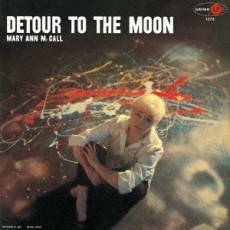
Mary Ann McCall was born on May 4, 1919 in Philadelphia, Pennsylvania and started her music career singing middle-of-the-road pop but quickly grew into a respected jazz singer. She started out singing and dancing in Philly with Buddy Morrow’s Orchestra followed by brief stints with Tommy Dorsey and Woody Herman in 1938 and ’39 respectively, and then Charlie Barnett until 1940.
During the forties Mary Ann reconnected with Woody Herman and recorded notable tunes “Wrap Your Troubles In Dreams” and “Detour Ahead”. She went on to work with the Ralph Burns Orchestra, Tommy Reynolds and Teddy Powell and in 1949 she won the Down Beat Readers Poll for Girl Singer (with Band).
In the 50’s McCall she recorded several albums as a leader working with Charlie Ventura, Teddy Charles, Phil Moore and Ernie Wilkins. By the end of the decade her flame had started to fade singing in Detroit and then relocating to Los Angeles where she performed intermittently. In the seventies she re-emerged to record with Jake Hanna and Nat Pierce and in 1987 she came out of retirement to perform at a Woody Herman tribute concert a few days before his death.
Vocalist Mary Ann McCall passed away on December 14, 1994 in Los Angeles, California.

More Posts: vocal
Daily Dose Of Jazz…
Hayes Alvis was born on May 1, 1907 in Chicago, Illinois. He started his career playing drums but switched to tuba and bass after playing with Jelly Roll Morton in 1927-28. He played tuba and arranged for Earl Hines from 1928 to 1930.
Moving to New York City in 1931 Hayes played with Jimmie Noone in the Mills Blue Rhythm Band from 1931-34 and 1936. A very early double-bass solo can be heard on his 1932 recording “Rhythm Spasm”. He also occasionally played baritone saxophone in this ensemble as well, and was the group’s tour manager. From 1935 to 1938 Alvis played with Duke Ellington, working with fellow bassist/tubist Billy Taylor.
After his stint with Ellington, Alvis played with Benny Carter, Joe Sullivan and Louis Armstrong, replacing Pops Foster. From 1942 to 1945 he played in the Army band led by Sy Oliver. After the war, he played with Dave Martin until 1947, and then took a longstanding run as a house musician at the Cafe Society in New York City.
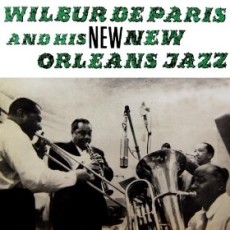
In the 1950s, he played in various swing and Dixieland revival groups, including Wilbur De Paris’s New Orleans Jazz. In the early seventies he played in a trio with Jay McShann and Tiny Grimes.
Never recording as a leader, bassist, tubist and sideman Alvis Hayes died in New York City on December 30, 1972 at the age of 65.

Daily Dose Of Jazz…
Mario Bauzá was born on April 28, 1911 in Havana, Cuba and was classically trained. By age nine he was playing clarinet in the Havana Philharmonic Orchestra and would stay there for the next three years. In 1925 he ventured to New York to record with Maestro Antonio Maria Romeu’s band “Charanga Francesca”. He was fourteen. Five years later he returned to New York and reputedly learned to play trumpet in two weeks to become a part of the Don Azpiazu Orchestra.
Bauzá became lead trumpeter and musical director for Chick Webb’s Orchestra by 1933, and it was during his time with Webb that Bauzá both met fellow trumpeter Dizzy Gillespie and discovered and brought into the band singer Ella Fitzgerald. 1938 saw Bauzá joining Cab Calloway’s band, later convincing Calloway to hire Dizzy as well, with whom Bauzá would continue to collaborate even several years after he left Calloway’s band in 1940. The fusion of Bauzá’s Cuban musical heritage and Gillespie’s advancements in bebop eventually culminated in the development of cubop, one of the first forms of what is commonly referred to as Latin jazz.
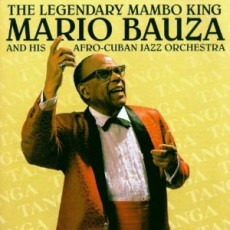
Bauzá became musical director of Machito and his Afro-Cubans in 1941, a band led by his brother-in-law, Frank Grillo, also known as Machito, and in 1942 he brought a young timbales player named Tito Puente into the fold. For the next 30 years Bauzá remained director of the band up until 1976 where he began working sparingly leading his own Afro-Cuban orchestra through the eighties and into the early 90s, where his last band made a guest appearance on The Cosby Show.
Mario Bauzá, who died in New York City on July 11, 1993, was one of the first musicians to introduce Latin music to the United States by bringing Cuban musical styles into the New York jazz scene. He was one of the most influential figures in the development of Afro-Cuban music, and his innovative work and musical contributions have many jazz historians to call him the “Founding Father of Latin Jazz”.

More Posts: bandleader,clarinet,trumpet
Daily Dose Of Jazz…
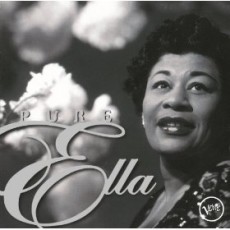
Ella Jane Fitzgerald was born on April 25, 1917 in Newport News, Virginia, the child of common law parents who separated shortly after her birth. Her mother moved her to Yonkers, New York and as a child she wanted to be a dancer but loved listening to the jazz of Louis Armstrong, Bing Crosby and The Boswell Sisters.
However, losing her mother to a heart attack in 1932 and the subsequent trauma caused her grades to drop, skip school, become a bordello lookout, and become involved with a Mafia affiliated numbers runner. This trouble led to reform school, ultimate escape, homelessness, and apprehension and sent to the Colored Orphan Asylum in the Bronx.
Ella made her singing debut at age 17 on November 21, 1934 at the Apollo Theatre. Pulling in a weekly audience won her the opportunity to compete in the Amateur Nights where she won first prize. Her winning spirit led her to perform with the Tiny Bradshaw band at the Harlem Opera House in 1935, and then to meet Chick Webb who offered her an opportunity to test with the band at a Yale University dance. This led to a regular gig with Webb at the Savoy Ballroom and in 1938 her rendition of the nursery rhyme A-Tisket, A-Tasket that she co-wrote, brought her wide public acclaim. When Webb died in 1939, Ella became the bandleader renaming it Ella Fitzgerald and Her Famous Orchestra, and went on to record nearly 150 songs during this tenure.
Pursuing a solo career she left the band, signed with Decca Records, began working with Norman Granz’s Jazz At The Philharmonic, and saw the demise of swing and the big touring bands. With Granz as her manager creating Verve Records around her and the advent of bebop, Fitzgerald changed her style of singing evident in her work with Dizzy Gillespie. She included scat in her repertoire and her rendition of Flying Home became one of the most influential vocal jazz records. Other songs like Oh, Lady Be Good would enhance her reputation as an important jazz vocalist.
Over the course of a career spanning nearly 60 years she recorded her now famous songbooks, recorded for a host of labels, performed all over the world. Fitzgerald appeared on film in Pete Kelly’s Blues, St. Louis Blues, and Let No Man Write My Epitaph. On television her most famous commercial was with Memorex in which her singing of a note and the subsequent playback shatters a glass – “Is it live or is it Memorex?”
Ella Fitzgerald, the three-octave vocalist noted for her purity of tone, impeccable diction, phrasing, intonation and horn-like improvisation ability is considered one of the supreme interpreters of the Great American Songbook. She has been photographed by Annie Liebovitz, won 14 Grammy awards, received the National Medal of Art by President Ronald Reagan and the Presidential Medal Of Freedom from George H.W. Bush.
After a long battle with diabetes Ella Fitzgerald passed away on June 15, 1996 at the age of 79 in Beverly Hills, California. So important was her contribution to the genre that her career history and archival material are housed at the Archives Center at the Smithsonian’s National Museum of American History; her personal music arrangements are at The Library of Congress; her extensive cookbook collection was donated to the Schlesinger Library at Harvard University; and her published sheet music collection is at the Schoenberg Library at UCLA.

More Posts: vocal