


Daily Dose Of Jazz…
Russell Procope was born on August 11, 1908 in New York City and grew up in San Juan Hill, attending school with Benny Carter. His first instrument was the violin, but he switched to clarinet and alto saxophone. He began his professional career in 1926 as a member of Billy Freeman’s orchestra. At the age of twenty he recorded with Jelly Roll Morton and went on to play with bands led by Benny Carter, Chick Webb, Fletcher Henderson, Tiny Bradshaw, Teddy Hill, King Oliver and Willie Bryant by the mid-Thirties.
Procope would play with Roy Eldridge, Bill Coleman, Frank Newton, Dizzy Gillespie, Dickie Wells and Chu Berry. He made his first trip to Europe in 1937 as part of Teddy Hill’s band with “The Cotton Club Revue,” an all-Black show, which during its European tour appeared at the London Palladium.
In 1938 Russell replaced Pete Brown in John Kirby’s sextet and made a name for himself until 1945 with a three-year interruption in the Armed Services during World War II. He joined the reed section of the Ellington orchestra in ’46 as an alto saxophonist but made his name and reputation as a clarinetist. During the summer of 1950 the band returned to Europe bringing him back once again as a member and he stayed until the bandleader’s death in 1974,
Playing alto saxophone he recorded the 1956 album “The Persuasive Sax of Russ Procope” under the London Records label. Although his early playing reflected the influence of Benny Carter, alto saxophonist and clarinetist Russell Procope, most highly regarded for his woody, understated clarinet solos, lyrical approach and forceful swinging attack, passed away on January 21, 1981.
More Posts: saxophone
Daily Dose Of Jazz…
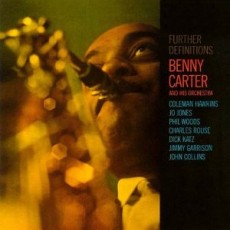
Benny Carter was born Bennett Lester Carter on August 8, 1907 in New York City. He received his first piano lessons from his mother but was largely self-taught. Growing up in Harlem under the influence of trumpeter Bubber Miley and was inspired to buy his own. Unable to play like Miley, he switched to saxophone.
By age fifteen he was sitting in at Harlem night spots and from 1924 to 1928, Carter gained valuable professional experience as a sideman in some of New York’s top bands. For the next two years he played with such jazz greats as cornetist Rex Stewart, Sidney Bechet, Earl Hines, Willie “The Lion” Smith, Fats Waller, James P. Johnson, Duke Ellington and others.
His first recordings of a prolific catalogue were made in 1928 with the Charlie Johnson’s Orchestra and he formed his first big band the following year. In the early 30s he played with Fletcher Henderson, led the McKinney’s Cotton Pickers in Detroit, then returned to New York to once again lead his own band. He would work with Sid Catlett, Chu Berry, Teddy Wilson and Dicky Wells.
Benny’s name first appeared on records with a 1932 Crown label, then on Columbia, Okeh and Vocalion. In 1935 he moved to Europe to play trumpet with Willie Lewis’s orchestra, became staff arranger for the BBC dance orchestra, made several records, returned home in 1938, formed another orchestra and spent much of 1939 and 1940 at Harlem’s Savoy Ballroom. He relocated to Los Angeles in 1943, moved increasingly into studio work and arrange for dozens of feature films and television productions, influencing and mentoring Quincy Jones, as well as arranging for Billie Holiday, Sarah Vaughan, Billy Eckstine, Pearl Bailey, Ray Charles, Peggy Lee, Lou Rawls, Louis Armstrong and Mel Torme among others over the course of his career.
Carter has been honored as a jazz master by the National Endowment for the Arts, received the National Medal of Arts from President Clinton, was a Kennedy Center honoree, was awarded the Grammy Lifetime Achievement Award, won six Grammy Awards, has a star on the Hollywood Walk of Fame and was inducted into the Downbeat Jazz Hall of Fame.
Alto saxophonist, clarinetist, trumpeter, composer, arranger and bandleader Benny Carter, who was a major figure known as “King” in the jazz community and the only musician to record in eight different decades, passed away on July 12, 2003 in Los Angeles, California at age 95.
More Posts: saxophone
Daily Dose Of jazz…
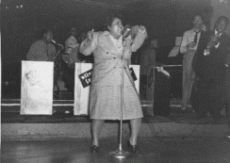
Ernestine Davis was born on August 5, 1907 in Memphis Tennessee. Little is known about her early life but along the way to becoming a vocalist and trumpeter. In 1937, the Piney Woods Country Life School of Mississippi founded to educate black children, created a 16-piece band known as The International Sweethearts of Rhythm to financially support the school.
In 1941, the International Sweethearts of Rhythm severed their ties with the school, moved to Virginia and recruited seasoned professionals of all ethnicities to join their band such as singer Anna Mae Winburn, Ernestine “Tiny” Davis, and alto saxophonist Roz Cron.
Holding their own during the Swing Era, the ladies toured the United States extensively up until 1945 with the end of the war and opportunities dried up as the men returned home. Their high points of touring were the Apollo Theater in New York, the Regal Theater in Chicago, and the Howard Theater in Washington, D. C., where their debut set a box office record of 35,000 patrons in one week.
One such engagement was at The Apollo where the audience was on their feet, Louis Armstrong and Eddie Durham stood in the wings, smiling broadly as Ernestine “Tiny” Davis took off in a riveting solo. The band pushed the fevered audience to new levels as Edna Williams, Willie Mae Wong, and Ruby Lucas upped the ante on the song “Swing Shift.”
Admired by the likes of Count Basie and Louis Armstrong, the later unsuccessfully attempted to lure Davis away at ten times her salary when she was at the height of notoriety. They recorded “The Jubilee Sessions” for radio broadcasts aimed toward America’s black soldiers serving during 1943 to 1946. However, because of the racial makeup of the Sweethearts, they did not get as much exposure to mainstream audiences in the South.
While their exposure to white audiences was somewhat limited, they were extremely popular with black audiences. Tiny and her partner Ruby Lucas owned Tiny and Ruby’s Gay Spot in Chicago during the 1950s.
In 1988, a short film titled “Tiny & Ruby: Hell Divin’ Women” was made as a tribute to Davis, and her lesbian partner of 40 years, drummer Ruby Lucas. Trumpeter and vocalist Ernestine “Tiny” Davis died in 1994.
Daily Dose Of Jazz…
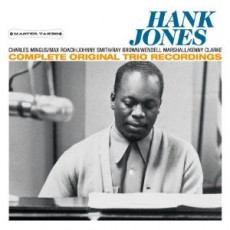
Hank Jones was born Henry Jones on July 31, 1918 in Vicksburg, Mississippi but grew up in Pontiac, Michigan. Raised in a musical family, his mother sang, his two older sisters studied piano and his two younger brothers— Thad played trumpet and Elvin, drums. He studied piano at an early age and came under the influence of Earl Hines, Fats Waller, Teddy Wilson and Art Tatum.
By age 13 Jones was performing locally in Michigan and Ohio and while playing with territory bands in Grand Rapids and Lansing in 1944 he met Lucky Thompson who invited Jones to work in New York City at the Onyx Club with Hot Lips Page.
In New York he mastered the bop style and worked with John Kirby, Howard McGhee, Coleman Hawkins, Andy Kirk, and Billy Eckstine. In 1947 he began touring with Jazz at the Philharmonic and from 1948 to 1953 he was accompanist for Ella Fitzgerald. During this period he made several historically important recordings with Charlie Parker that included “The Song Is You”, from the Now’s the Time album.
This led to engagements with Artie Shaw, Benny Goodman, Lester Young, Cannonball Adderley and Wes Montgomery. In addition to being the “house pianist” at one time on the Savoy label, Hank was the staff pianist for CBS studios from 1959 through 1975 backing such artists as Frank Sinatra, and for Marilyn Monroe when she sang her famous Happy Birthday for President Kennedy, and pianist and conductor for the Broadway musical Ain’t Misbehavin’.
During the late 1970s and the 1980s, Jones continued to record prolifically with John Lewis, Tommy Flanagan, Ron Carter, Tony Williams, Buster Williams, Eddie Gomez, Al Foster, Jimmy Cobb, Art Farmer, Benny Golson and Nancy Wilson to name a few as his list of jazz collaborators is extensive.
Jones has racked up an impressive catalogue of recordings numbering over sixty as a leader and more as a sideman, worked with Roberta Gambarini at the Monterey Jazz Festival, with Diana Krall on the compilation “We All Love Ella”, was nominated for five Grammys and was honored with a Lifetime Achievement Award, was inducted into the society of NEA Jazz Masters, and was awarded the National Medal of Arts among other accolades. Pianist Hank Jones passed away at a hospice in Manhattan, New York, on May 16, 2010.
More Posts: piano
Daily Dose Of Jazz…
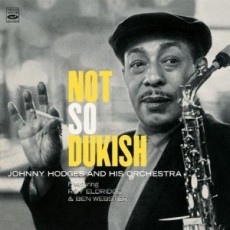
Johnny Hodges was born John Keith Hodges on July 25, 1906 in Cambridge, Massachusetts but soon after the family moved to Boston. Growing up with baritone saxophonist Harry Carney and saxophonists Charlie Holmes and Howard E. Johnson, he started out on drums and piano and was mostly self-taught. He became good enough to play the piano at dances in private homes. By the time he was a teenager, he took up the soprano saxophone and around this time he picked up the nickname “Rabbit”, either for his ability to outrun truant officers or his nibbling on lettuce and tomato sandwiches.
When Hodges was 14 he saw Sidney Bechet, introduced himself, played a tune, received encouragement to continue to play and grew a name for himself in the Boston area till he moved to New York in 1924, able to play both the alto and soprano saxophone.
Hodges started playing with Lloyd Scott, Sidney Bechet, Lucky Roberts and Chick Webb. In 1928 he joined the Ellington orchestra and became one of the identifying voices on both alto and soprano sax. Leaving Duke in 1951 to lead his own band, he returned four years later shortly before Ellington’s 1956 performance at the Newport Jazz Festival. Ellington would write pieces like “Confab with Rab”, “Jeep’s Blues”, “Sultry Sunset”, “Hodge Podge” and “Prelude To A Kiss” among many others that featured Hodge.
Johnny’s pure tone and economy of melody on both the blues and ballads won him admiration from musicians of all eras and styles, from Ben Webster to John Coltrane, who both played with him when he had his own orchestra in the 1950s, to Lawrence Welk, who featured him in an album of standards.
Alto saxophonist Johnny Hodges’ last recordings are featured on the New Orleans Suite album and his final performances were at the Imperial Room in Toronto, less than a week before his death from a heart attack on May 11, 1970. He is considered one of the definitive alto saxophones players of swing in the Big Band Era and of mainstream jazz.
More Posts: saxophone