


Daily Dose Of Jazz…
Cliff Jackson was born Clifton Luther Jackson on July 19, 1902 in Culpepper, Virginia. Learning to play stride piano he played in Atlantic City until moving to New York City in 1923. He played with Lionel Howard’s Musical Aces in 1924, recorded with Bob Fuller and Elmer Snowden, led his own ensemble, the Krazy Kats, for recordings in 1930, and following this group’s dissolution he played extensively as a solo pianist in several New York nightclubs.
During this time Jackson accompanied singers such as Viola McCoy, Lena Wilson, Sara Martin and Clara Smith. He recorded with Sidney Bechet in the early Forties and would record as a soloist or leader by mid-decade and again in the Sixties. His greatest success came as house pianist at Cafe Society from 1943-5; but he also toured with Eddie Condon, and played with Garvin Bushell, J.C. Higginbotham and Joe Thomas.
Cliff married singer Maxine Sullivan, had his powerful stride piano style showcased on such solo recordings as “Limehouse Blues”, and his left-hand techniques highlighted and explained in detail in books Ricardo Scivales’ method Jazz Piano: Left Hand. Stride pianist Cliff Jackson passed away of heart failure on May 24, 1970 in New York City.
More Posts: piano
Daily Dose Of Jazz…
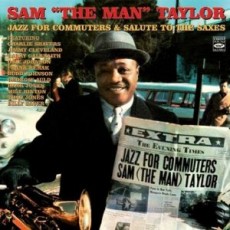
Sam Taylor was born on July 12, 1916 in Lexington, Tennessee. Playing tenor saxophone he attended Alabama State University and was a part of the Bama State Collegians. Picking up the moniker “The Man”, Taylor would go on to work with Scatman Crothers, Cootie Williams, Lucky Millinder, Cab Calloway, Ray Charles, Buddy Johnson, Louis Jordan and Big Joe Turner.
He was one of the most requested session players in the New York recording studios in the 1950s and replaced Count Basie as the house bandleader on Alan Freed’s ‘Camel Rock ‘n Roll Dance Party’ radio series over CBS.
Venturing into rhythm and blues, Taylor’s saxophone solo appeared on Turner’s “Shake, Rattle and Roll”, Clyde McPhatter and The Drifters “Money Honey” and “Sh-Boom” by The Chords. During the 1960s, Sam led a five-piece band called the Blues Chasers and in the 1970s frequently played and recorded in Japan.
Tenor saxophonist Sam “The Man” Taylor died on October 5, 1990 in Lexington, Kentucky. He left a discography of fifteen albums as a leader across the MGM, Moodsville, Decca, Pony Canyon, Epic and Japanese labels.
More Posts: saxophone
Daily Dose Of Jazz…
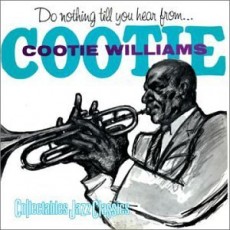
Cootie Williams was born Charles Melvin Williams on July 10, 1911 in Mobile, Alabama and began his professional career with the Young Family band, which included saxophonist Lester Young, when he was 14 years old. In 1928, he made his first recordings with pianist James P. Johnson in New York, where he also worked briefly in the bands of Chick Webb and Fletcher Henderson.
Williams rose to prominence as a member of Duke Ellington’s orchestra, with whom he performed from 1929 to 1940. He recorded his own sessions during this time, both freelance and with other Ellington sidemen. In 1940 he joined Benny Goodman’s orchestra, then a year later formed his own orchestra. Over the years he employed Charlie Parker, Eddie “Lockjaw” Davis, Bud Powell, Eddie Vinson and other important young players.
In 1947, Williams wrote the song “Cowpox Boogie” while recuperating from a bout with smallpox; began playing more rhythm and blues in the late 1940s, in the Fifties he toured with small groups and fell into obscurity. By 1962, he rejoined Ellington, stayed with the orchestra until 1974, after Ellington’s death, and in 1975, and performed during the Super Bowl IX halftime show.
Trumpeter Cootie Williams, who was noted for his occasional singing, renowned for his growling “jungle” style trumpet playing, reputed to have inspired Wynton Marsalis, and was inducted into the Alabama Jazz Hall of Fame, passed away in New York on September 15, 1985, at age 74.
More Posts: trumpet

Daily Dose Of Jazz…
June Richmond was born July 9, 1915 in Chicago, Illinois. She became one of the very first black singers to be featured regularly with a white band when she performed with Jimmy Dorsey’s Orchestra in 1938.
An enthusiastic vocalist who was excellent on blues but also effective on ballads, June was a popular attraction during the swing era although never a major name. She worked with Les Hite early on in California, toured with Jimmy Dorsey, was with Cab Calloway in 1938 and then became best known for her association with Andy Kirk’s Orchestra during 1939-42.
Richmond became a solo act after leaving Kirk and then from 1948 on mostly worked in Europe, at first based in France and then later on in Scandinavia. Her only recordings as a leader were a self-titled album on the Barclay label, four numbers in 1951 with Svend Asmussen and four songs on the album “Jazz In Paris” with the Quincy Jones Orchestra in 1957.
Vocalist June Richmond, who gained fame during the swing era, died of a heart attack at the age of 47 on August 14, 1962 in Gothenburg, Sweden.
>
More Posts: vocal

Daily Dose Of Jazz…
Alvino Rey was born Alvin McBurney on July 1, 1908 in Oakland, California but grew up in Cleveland, Ohio. Showing very early signs of his mechanical and musical aptitude, he built his first radio at the age of 8, becoming one of the youngest licensed ham operators in the country. Received a banjo at 10, he began studying guitar at age 12 and by 15 he invented an electrical amplifier for the guitar.
In 1927, Rey played banjo with Cleveland bandleader Ev Jones while still in high school. After graduation Rey went to New York and signed with Phil Spitalny Orchestra, playing electric guitar. He changed his name to Alvino Rey to coincide with the Latin music craze in the late Twenties.
Two years later he was in California playing with Horace Heidt in San Francisco. From 1932 to 1939, Alvino played steel and Spanish guitar and in Horace Heidt and His Musical Knights, pioneering the instrument, as well as becoming known for his unique sound and one of the best-known and best-paid sidemen in the country,
Rey formed his own group with the King Sisters and Frank DeVol, that became the Mutual Broadcasting house band that had Johnny Mandel, Neal Hefti, Mel Lewis, Al Cohn, Zoot Sims playing and Nelson Riddle, Billy May and Ray Conniff arranging among others.
Alvino performed well into his eighties after moving to Salt Lake City, Utah and retired from music in 1994 but retained his interests in music and electronics into his mid-nineties. Alvino Rey, swing era musician, pioneer and father of the pedal steel guitar, passed away on February 2, 2004.
More Posts: guitar