


Daily Dose Of Jazz…
Curtis Sylvester Lowe, Sr. was born on November 15, 1919 in Chicago, Illinois and raised in Oakland, California. He first learned to play soprano saxophone as a youth and studied briefly in Alabama before deciding to take up music full-time. Best known professionally as a tenor and baritone saxophonist, he played in traveling bands before the outbreak of World War II. Enlisting in the United States Navy in 1942, his unit band was full of noteworthy jazz musicians, including Vernon Alley, Wilbert Baranco, Buddy Collette, Jerome Richardson, Ernie Royal, and Marshall Royal.
In the 1950s Curtis worked extensively with Lionel Hampton and also played with Dave Brubeck, Little Esther, Johnny Otis, and Gerald Wilson. He led his own five-piece ensemble in 1952-1953. In 1958 he began a decade-long association with Earl Hines.
He was active locally in San Francisco, California and the Bay Area into the 1980s. Saxophonist Curtis Lowe Sr., who never recorded as a leader, transitioned at the age of 73 on October 29, 1993.

More Posts: bandleader,history,instrumental,jazz,music,saxophone
Daily Dose Of Jazz…
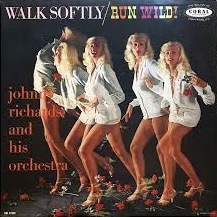
Johnny Richards was born Juan Manuel Cascales on November 2, 1911 in Toluca, Mexico to a Spanish father and a Mexican mother. He came to the United States in 1919 through Laredo, Texas along with his mother, three brothers and a sister. The family first lived in Los Angeles, California and then in San Fernando, California, where he and two brothers attended and graduated from San Fernando High School.
1930 saw Richards living in Fullerton, California where he attended Fullerton College. Working in Los Angeles from the late 1930s to 1952, before moving to New York City. He had been arranging for Stan Kenton since 1950 and continued to do so through the mid-1960s. He also arranged for Charlie Barnet and Harry James.
He led his own bands throughout his career and composed the music for the popular song Young at Heart in 1953. The song was made famous by Frank Sinatra and was covered by numerous others.
Arranger and composer Johnny Richards transitioned on October 7, 1968 in New York City of a brain tumor.
More Posts: arranger,bandleader,composer,history,instrumental,jazz,music
Daily Dose Of Jazz…
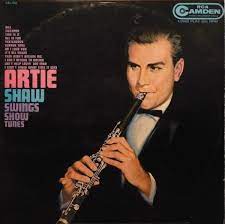
Johnny McClanian Best, Jr. was born in Shelby, North Carolina on October 20, 1913. He played piano as a child and learned trumpet from age 13. In the 1930s he worked with Les Brown, Charlie Barnet, and Artie Shaw from 1937 to 1939, then joined Glenn Miller’s orchestra for three years in 1939.
Before serving in the Navy during World War II as a lifeguard he spent a short time with Bob Crosby. During his service he played in Shaw’s military band and Sam Donahue’s band. Following a stint with Benny Goodman after the war, then he relocated to Hollywood, California where he worked with Crosby again on radio and played in numerous studio big bands in the 1940s and 1950s.
Touring with Billy May in 1953, later in the decade he led his own group locally. His trumpet can be heard along with Ella Fitzgerald on her album Get Happy. In 1964 he toured Japan with Crosby, and joined Ray Conniff for worldwide tours in the 1970s.
In 1982, he broke his back while working in his avocado orchard and used a wheelchair late in life, but was active into the 1980s. He played the trumpet solo on the Glenn Miller recording At Last, which was featured in the film Orchestra Wives.
Trumpeter Johnny Best, who played on Begin the Beguine which put Artie Shaw in business, transitioned on September 19, 2003.
More Posts: bandleader,history,instrumental,jazz,music,trumpet
Daily Dose Of Jazz…
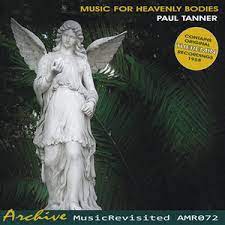
Paul Tanner was born on October 15, 1917 in Skunk Hollow, Campbell County, Kentucky. One of six brothers, each could play an instrument and he learned to play the trombone at a reform school where his father was employed as superintendent. The brothers were playing in what he described as a strip joint when Glenn Miller heard him and offered him a position in his band.
He gained fame as a trombonist, playing with Glenn Miller and His Orchestra from 1938 to 1942, the group’s entire duration. When it disbanded, Paul joined the U.S. Army Air Force, becoming a part of the 378th Army Service Forces Band at Ft Slocum, New York. He later worked as a studio musician in Hollywood.
Tanner earned bachelor, master and doctorate degrees at the University of California, Los Angeles between 1958 and 1975. He was influential in launching UCLA’s highly regarded jazz education program in 1958. He became a professor at UCLA and authored or co-authored several academic and popular histories related to jazz.
He developed and played the Electro-Theremin, an electronic musical instrument that mimics the sound of the theremin. He can be heard performing on the opening title theme music of My Favorite Martian, on several 1966-1967 Beach Boys recordings, Good Vibrations, Wild Honey, I Just Wasn’t Made For These Times, and Tune L.
Trombonist, educator and inventor Paul Tanner transitioned from pneumonia on February 5, 2013 at the age of 95. Of all the members of the Glenn Miller Orchestra, only trumpeter Ray Anthony is still living.
More Posts: educator,history,instrumental,inventer,jazz,music,trombone
Daily Dose Of Jazz…
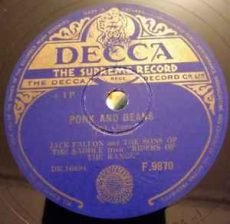
Jack Patrick Fallon was born on October 13, 1915 in London, Ontario, Canada and played violin and studied with London Symphony Orchestra founder Bruce Sharpe. In 1935 when he was 20 years old he made double bass his primary instrument.
During World War II he played in a dance band in the Royal Canadian Air Force, and settled in Britain after his discharge. Fallon joined Ted Heath’s band in 1946, and played bebop in London, England clubs in his spare time. In 1947 he played with Ronnie Scott and Tommy Whittle at the Melody Maker/Columbia Jazz Rally. Following this through the late Forties he worked with Jack Jackson, George Shearing, Duke Ellington, and Django Reinhardt.
He went on to play in a Count Basie ensemble which also included Malcolm Mitchell and Tony Crombie. Jack played with both of them after leaving Basie, working together with Hoagy Carmichael and Maxine Sullivan and touring in Sweden together with Reinhardt and Stéphane Grappelli.
Fallon worked in the 1950s as an accompanist to Mary Lou Williams, Sarah Vaughan, and Lena Horne. He served as a sideman in the ensembles of Humphrey Lyttelton, Kenny Baker, and Ralph Sharon and was the house bassist at Lansdowne Studios.
Outside of jazz he worked with blues musicians such as Big Bill Broonzy, Josh White and played with Johnny Duncan’s Blue Grass Boys. As the bass guitar became more popular, Jack became a champion of its use, and played both instruments in the latter part of his career.
Fallon was also involved in the industry as a booker/promoter, having established the booking agency Cana Variety in 1952. He booked primarily jazz artists in its early stages but expanded to rock acts in the 1960s, including The Beatles and The Rolling Stones. Because of this connection, Fallon was asked by the Beatles to play violin fiddle style on the song Don’t Pass Me By in 1968.
He continued to play jazz locally in London and in the studios into the 1990s but retired from performing in 1998 due to ill health. In 2002, he was awarded the Freedom of the City of London and published a memoir titled From the Top in 2005.
Double bassist Jack Fallon transitioned on May 22, 2006 at age 90. He was posthumously inducted into the London Music Hall of Fame in his hometown.
More Posts: bass,history,instrumental,jazz,music