

Daily Dose O fJazz…
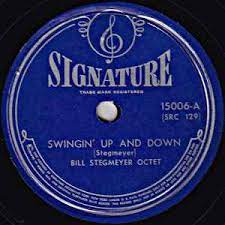
Bill Stegmeyer was born October 8, 1916 in Detroit, Michigan. He attended Transylvania College in Lexington, Kentucky from 1934 to 1936, and following his studies he played through the rest of the decade with Austin Wylie, Glenn Miller, and Bob Crosby.
In the 1940s, he did arrangement work and played clarinet and occasionally, saxophone with Billy Butterfield, Yank Lawson, Bobby Hackett, Will Bradley, and Billie Holiday from 1945 to 1947. He arranged for WXYZ, a Detroit radio station, for two years starting in 1948, then followed this with arranging Your Hit Parade for eight years.
In the 1950s he also continued to play jazz with Lawson, Butterfield, Bob Haggart, Jimmy McPartland, and Ruby Braff. He went to work for CBS in the early 1960s.
Clarinetist and arranger Bill Stegmeyer, whose only recordings as a leader were five tunes for Signature Records in 1945 and some V-Discs, transitioned from cancer in Long Island, New York on August 19, 1968 at the age of 51.

More Posts: arranger,bandleader,clarinet,history,instrumental,jazz,music
Daily Dose Of Jazz…
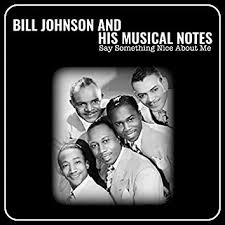
William Luther Johnson was born on September 30, 1912 in Jacksonville, Florida and studied piano as a child and began playing the alto saxophone at the age of 16. After working with lesser-known bands he studied in conservatories in Wisconsin and Illinois before attending Marquette University.
While in Milwaukee, Wisconsin he played with Jabbo Smith and others. He worked with Baron Lee and Tiny Bradshaw, and in 1936 joined Erskine Hawkins, with whom he performed into the early 1940s, recording with him from 1939 to 1942. He composed Tuxedo Junction with Hawkins and appeared with the band in the short film Deviled Hams in 1937.
Around mid-1946 he recorded under Bill Johnson and Orchestra, with several of the members becoming the Musical Notes. Bill Johnson and the Musical Notes recorded for Harlem, RCA, King, Regal, Tru-Blue.He recorded for Ronnex as the Bill Johnson Quartet, and the Bill Johnson Quintet for Baton. Over the years, there were many personnel changes, but Bill and Gus Gordon were on all the recordings.
In the Fifties failing health caused the breakup of the group, although he re-formed it on a couple of occasions. Alto saxophonist, clarinetist, and arranger Bill Johnson, who was diagnosed with lung cancer in 1957, transitioned on July 5, 1960 at 47 years old in New York City.

More Posts: arranger,bandleader,clarinet,history,instrumental,jazz,music,saxophone
Daily Dose Of Jazz…
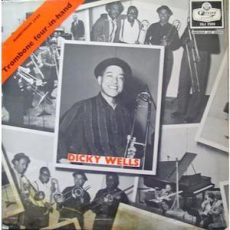
George Matthews was born on September 23, 1912 in Dominica, British West Indies and received classical training in New York City and played with local dance and jazz bands. In the early 1930s he joined Tiny Bradshaw’s group, being adept on tuba, trumpet, and trombone.
Later in the decade he worked with Willie Bryant, Louis Armstrong, Chick Webb, and in the Forties he recorded with Ella Fitzgerald, Lucky Millinder, and Sister Rosetta Tharpe. After World War II, Matthews worked extensively with Count Basie, then joined Erskine Hawkins’s group in the early 1950s, while recording with Dizzy Gillespie, and Dicky Wells. In the 1960s he played with Lucille Dixon, Clark Terry, and recorded with Cannonball Adderley and Ray Charles in the Sixties.
Trombonist George Matthews, who never led a recording session, transitioned on June 28, 1982.
More Posts: bandleader,history,instrumental,jazz,music,trombone
Daily Dose Of Jazz…
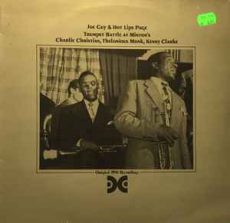
Joseph Luke Guy was born in Birmingham, Alabama on September 20, 1920 but much of his early personal life is obscured. He began his professional music career performing in New York City, and joined Fats Waller’s backup band in the late 1930s. Following that, in 1938, he succeeded Dizzy Gillespie in Teddy Hill’s orchestra.
Patterning his playing style after his musical role model, Roy Eldridge, despite his range, speed, and potential, Joe never managed to surpass Eldridge’s abilities, though he was considered a musical talent when taking into account his young age.
In 1940 he became a key soloist in Coleman Hawkins’ short-lived big band. 1941–42 saw Guy as a regular performer as a member of the after-hours band at Minton’s Playhouse alongside Nick Fenton, Kenny Clarke, and Thelonious Monk in jam sessions with early bop music. During this period he was actively involved in numerous recordings by Jerry Newman, and also appeared on songs by Charlie Christian, Hot Lips Page, Roy Eldridge, and Don Byas.
Incorporating Gillespie’s influences into his playing, Joe’s performance on Monk’s 1942 song Epistrophy is arguably the highlight of his recording career. Much of his appearances as an instrumentalist are marked by his enthusiasm and tempo, however, on occasions would over exert himself and consequently sound erratic.
Struggling with a heroin addiction throughout the majority of his brief career, in 1945–46 Guy was involved with Billie Holiday both professionally and intimately. When they were both busted for drug possession, the two cut ties thereafter. Afterwards, sidelined him from further success, he moved back to his hometown and fell into relative obscurity among the music industry.
Trumpeter Joe Guy, who performed locally in his hometown and advised others about the dangers of his addiction, transitioned on June 1, 1962, at the age of 41.
More Posts: history,instrumental,jazz,music,trumpet
Daily Dose Of Jazz…
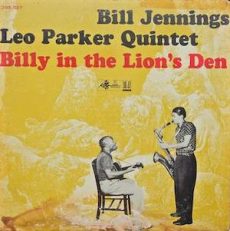
Bill Jennings was born September 12, 1919 in Indianapolis, Indiana and started out with his twin brother, Albert, in a trio called The Three Spades. He would later work with Louis Jordan and his Tympany Five, Wild Bill Davis Trio, Jack McDuff, Willis “Gator” Jackson, Bill Doggett, Louis Armstrong, Chris Powell And His Five Blue Flames, Hot Lips Page and others.
Recording as both a leader and a sideman, Bill has influenced numerous musicians in the genres of jazz, soul, R&B, and blues guitar. B.B. King often mentioned Jennings as one of his biggest influences. He recorded with such artists as Leo Parker, King Curtis, Ella Fitzgerald, Jerry Daniels of the Inkspots, Kenny Burrell, Betty Roche and Stuff Smith.
His unique ability to play in many styles included swing, bop, jump blues, R&B, and pop. Jennings played on Fever by Little Willie John, which made the Billboard R&B chart in the U.S. and peaked at number 24 on the Billboard Hot 100.
A left-handed player, Bill played guitar upside down, with the high strings at the top, which gave him a different approach to phrasing and bending the strings. Later in his career, he lost a finger on his fretting hand and began playing bass guitar.
Guitarist and composer Bill Jennings, who was described as “The Architect Of Soul Jazz”, transitioned at Veterans Hospital in Indianapolis on November 29, 1978 at the age of 59.
More Posts: bandleader,composer,guitar,history,instrumental,jazz,music