

Daily Dose Of Jazz…
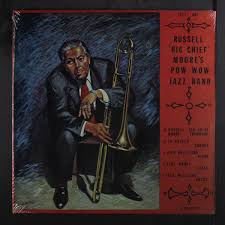
Big Chief Russell Moore was a Pima American Indian born on August 13, 1912 in Komatke, Arizona and lived in Blue Island, Illinois from age twelve, where he studied trumpet, piano, drums, French horn, and trombone. Moving to Los Angeles, California in the early 1930s, he worked freelance with Lionel Hampton, Eddie Barefield, and others. Departing Los Angeles for New Orleans, Louisiana in 1939, he worked with Oscar Celestin, Kid Rena, A.J. Piron, Paul Barbarin, Ernie Fields, Harlan Leonard, and Noble Sissle.
He played with Louis Armstrong’s last big band from 1944 to ‘47, then worked freelance on the Dixieland jazz circuit. The 1950s saw him playing with Ruby Braff, Pee Wee Russell, Eddie Condon, Wild Bill Davison, Jimmy McPartland, Tony Parenti, Mezz Mezzrow, Sidney Bechet, and Buck Clayton. He returned to play in the Louis Armstrong All-Stars in 1964–65, but fell ill and had to leave the group. After recovering he led a Dixieland group of his own, which toured Canada repeatedly.
He worked with pianist Eddie Wilcox shortly before Wilcox died in 1968, then played with Cozy Cole in 1977 and Keith Smith in 1981. Trombonist Big Chief Russell Moore, who recorded as a leader for Vogue, Trutone, and Jazz Art record labels, passed away in Nyack, New York on December 15, 1983.
More Posts: bandleader,history,instrumental,jazz,music,trombone
Daily Dose Of Jazz…
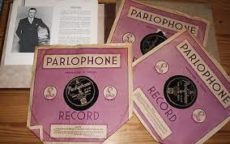
Max Abrams was born on August 11, 1907 in Glasgow, Scotland and began playing drums with dance bands in his teens, often in his hometown area. In the late Twenties, he headed to London, England and was soon active with a number of bands there.
Touring South Africa before returning to London, in 1932, he joined Jack Hylton’s orchestra. During the next few years, Max played with several leading UK dance bands, including Sydney Lipton’s and Carroll Gibbons’ Savoy Orpheans. He was in demand for numerous recording sessions with many leaders as well as recording with his own band in 1935. He also made a series of tuition records for aspiring drummers.
In the early 40s, Abrams drummed with Ambrose, Jack Payne, and Stéphane Grappelli, then, in 1945, joined Sid Phillips for an engagement that lasted well into the next decade. During this period he often worked with small bands, including Humphrey Lyttelton’s, and appeared regularly on the radio. Technically gifted as a percussionist, he played several instruments including vibraphone, xylophone, and timpani.
As an educator, he was much sought after and founded his own School for Drum Tuition. His admired ability drew many eager and gifted drummers to him, among them Jack Parnell. Drummer Max Abrams, who actively performed from the 1930s through the 1950s, passed away on November 5, 1995.
More Posts: bandleader,drums,history,instrumental,jazz,music
Daily Dose Of Jazz…
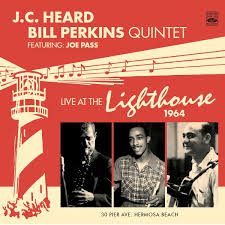
James Charles Heard, known as J. C. Heard was born on August 10, 1917 in Dayton, Ohio and grew up in Detroit, Michigan. As a young child, he performed as a tap dancer in amateur contests and vaudeville shows. He began to switch his focus to drumming around age 11 and started out teaching himself to play, then took lessons as a student at Cass Technical High School. Supporting his interest, his parents brought him to see major performers who toured to Detroit’s famous music venues, however, it was Chick Webb play in 1937 as a formative experience.
Becoming a protege of the drummer Jo Jones, through him he met and sat in with Count Basie. With Jones’s help, Heard got his first professional job with Teddy Wilson’s band in 1939. They played the Golden Gate Ballroom in Harlem and the Roseland Ballroom and recorded for Columbia Records. After the Wilson band’s breakup, he went on to perform in bands led by Benny Carter, Louis Jordan, Louis Armstrong, Benny Goodman, Duke Ellington, Woody Herman, and Dizzy Gillespie. He also performed at major jazz festivals and played alongside Roy Eldridge and Charlier Parker.
Heard’s style was a hybrid of swing and bop and was known for his innovative techniques and the hard swing he would bring to both large and small bands. He recorded with Charles Mingus, Ray Brown, Billie Holiday, Ray Charles, Nat King Cole, Dinah Washington, Lena Horne, and Sarah Vaughan. He also led his own bands, including a quintet that played at Cafe Society and a trio with Erroll Garner and Oscar Pettiford. Performing as a featured member of Cab Calloway’s band from 1942-1945, he appeared in several Hollywood films, including Stormy Weather.
During the Fifties Heard toured with Norman Granz’s Jazz at the Philharmonic in the 1950s and after a successful engagement in Japan in 1953, stayed for many years performing and teaching. Returning to New York in 1957, J.C. played with the Coleman Hawkins-Roy Eldridge Quintet and with Teddy Wilson’s trio. In 1966 he moved back to Detroit where he was influential as a bandleader and a mentor to younger musicians. In 1983, he again recorded an album as a leader, accompanied by saxophonist George Benson, pianist Claude Black, and Dave Young on bass. In 1981, Heard started a 13 piece big band which played around the state and at festivals, often featuring Dizzy Gillespie and other colleagues. This group recorded in 1986 and continued performing regularly until his death.
Drummer J. C. Heard passed away from a heart attack on September 27, 1988 at the age of 71 in Royal Oak, Michigan. His legacy is honored with a yearly jazz drumming competition held as part of the Detroit Jazz Festival.
More Posts: bandleader,drums,history,instrumental,jazz,music
Daily Dose Of Jazz…
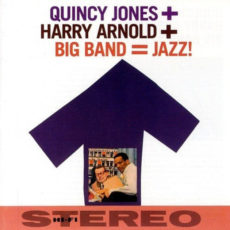
Harry Arnold Persson was born on August 7, 1920, in Helsingborg, Sweden and led his first big band in 1942, playing the saxophone initially but eventually ceased to perform, concentrating on arranging.
From 1949-52 he played and arranged for Thore Ehrling’s band and worked extensively as a studio musician, particularly writing film scores through much of the 1950s. From 1956 to 1965 Arnold led the Swedish Radio Big Band, which included Arne Domnérus, Bengt Hallberg, and Åke Persson.
American trumpeter Benny Bailey played with the band for a time, Quincy Jones arranged and briefly led the group, and they recorded with Ernestine Anderson, Lucky Thompson, Coleman Hawkins, Toots Thielemans, Tony Scott, and Stan Getz.
Disbanding the group in 1965, Arnold continued working as an arranger and led big bands in Europe. Saxophonist and bandleader Harry Arnold passed away on February 11, 1971 at the age of 51 in Stockholm, Sweden.
More Posts: arranger,bandleader,history,instrumental,jazz,music,saxophone
Daily Dose Of Jazz…
Don Albert was born Albert Anité Dominique, on August 5, 1908 in New Orleans, Louisiana. His uncle was Natty Dominique, and he was also a relative of Barney Bigard. He got his start playing in parade brass bands in New Orleans at the beginning of the 1920s. He toured with the territory band of Alphonse Trent through the Southwest United States in 1925, then played with Troy Floyd at the Shadowland Ballroom in San Antonio from 1926 to 1929.
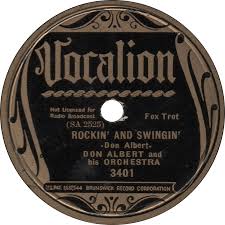
Leading his own territory bands out of Texas in the 1930s and 1940s, Albert had in his band sidemen that included Alvin Alcorn, Louis Cottrell, Jr., and Herb Hall. After 1932 he acted more in a manager’s capacity than as a performer. His bands played in Mexico, Canada, and New York City in 1937 and won rave reviews from newspapers, but the band only recorded eight sides for Vocalion Records.
Disbanding this group around 1939 due to economic conditions, Don found work in civil service and managing a San Antonio nightclub in the early to mid-1940s, only to be shut down in 1948 by local authorities. By 1949 his group played the Palace Theater in New York.
The 1950s saw him returning to active performance, playing with Buddy Tate in 1966, the New Orleans Jazz Festival in ‘69, and in small groups through the 1970s. Trumpeter and bandleader Don Albert passed away on March 4, 1980 in San Antonio, Texas.
More Posts: bandleader,history,instrumental,jazz,music,trumpet