


Daily Dose Of Jazz…
Jan Savitt was born Jacob Savetnick on September 4, 1907 in Shumsk, U.S.S.R. (now Ukraine) and reared in Philadelphia, Pennsylvania. He exhibited musical ability at an early age and began winning conservatory scholarships in the study of the violin. He was offered the position of concertmaster in Leopold Stokowski’s Philadelphia Symphony Orchestra, but turned it down, preferring to continue his studies at Curtis Institute. A year later, believing himself ready, he joined Stokowski and the association continued for seven years, during which time Savitt gained further laurels as a concert soloist and leader of a string quartet.
In 1938, Jan Savitt & His Top Hatters broadcast from 5–5:30 pm every Tuesday, thru Friday as the KYW staff orchestra at KYW/NBC in Philadelphia. Saturday’s weekly broadcast was one hour, coast-to-coast. The group also played at the Earl Theatre and performed with The Andrews Sisters and The Three Stooges.
He got his start in popular music sometime later as music director of KYW, Philadelphia, where he evolved the unique “shuffle rhythm” which remained his trademark. Numerous sustaining programs created such a demand for the “shuffle rhythm” that Savitt left KYW to form his own dance crew.
His band was notable for including George “Bon Bon” Tunnell,[3] one of the first Black singers to perform with a white band. Tunnell’s recording with Jan included Vol Vistu Gaily Star, co-composed by Slim Gaillard, and Rose of the Rio Grande. Helen Englert Blaum, known at the time as Helen Warren, also sang with him during the war years.
In the 1940s Savitt recorded short pieces used a filler before network shows for the National Broadcasting System’s Thesaurus series. Some of the pieces he created were I’m Afraid the Masquerade Is Over; If I Didn’t Care; Ring Dem Bells; and Romance Runs in the Family.
Violinist, bandleader and arranger Jan Savitt, known as “The Stokowski of Swing” from having played violin in Leopold Stokowski’s orchestra, passed away on October 4, 1948.

More Posts: arranger,bandleader,history,instrumental,jazz,music,violin
Daily Dose Of Jazz…
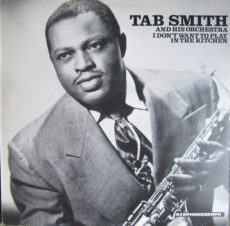
Frank Galbreath was born on September 2, 1913 in Robeson County, North Carolina. He got his start with local groups such as the Domino Five of Washington and Kelly’s Jazz Hounds of Fayetteville. He then found work with groups in other regions such as the Florida Blossoms minstrel show and the Kingston Nighthawks, a territory band. He was with Smiling Billy Steward’s Floridians when they played the 1933 World’s Fair in Chicago, Illinois.
The mid~1930s saw Galbreath moving to Chicago, and playing with Fletcher Henderson, Jelly Roll Morton, Edgar Hayes, and Willie Bryant. Around 1937 he joined Lonnie Slappey’s Swingers in Philadelphia, Pennsylvania but was called back to New York by Lucky Millinder, with whom he played for some time. Following this he joined the Louis Armstrong Orchestra until its dissolution in 1943, then he went on to play with Charlie Barnet for a few weeks before serving in the Army. After his discharge, he worked in the second half of the decade with Luis Russell, Tab Smith, Billy Eckstine, and Sy Oliver, then returned to play with Millinder from 1948 to 1952.
From 1952 he played in USO tours, first with Snub Mosley and then with various other ensembles over the course of the next decade. Frank led his own band during the decade, then played in the bands of Arthur Prysock and Benny Goodman. During the Sixties, he played with Ray Charles, Fats Domino, and Sammy Davis, Jr.
In 1963 he moved to Atlantic City, New Jersey and played locally until his failing health forced his retirement in 1969. Trumpeter Frank Galbreath passed away in November 1971.
More Posts: history,instrumental,jazz,music,trumpet
Daily Dose Of Jazz…
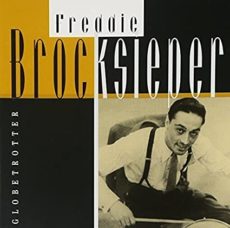
Fritz “Freddie” Brocksieper was born in Istanbul, Turkey on August 24, 1912, the son of a Greek-speaking Jewish woman and a German engineer, who was able to get through National-Socialism as an essential swing musician. His playing style on the drums was influenced above all by Gene Krupa and by 1930, he was playing professionally in Germany working in Nuremberg and Berlin throughout the decade. During World War II he played with the Golden Seven, Benny De Weille, Willy Berking, and the radio orchestra of Lutz Templin.
He recorded with his own ensembles, both large and small, in the later 1940s, and performed for American GIs in Stuttgart, Munich, and Berlin. An essential swing musician, Freddie was considered a leading figure of early European big-band jazz. With his bands, he made it to the front page of Stars and Stripes. Beginning in 1957 Bavarian radio regularly broadcast live concerts from his studio in Munich.
He continued performing in the 1960s and 1970s and was awarded a Deutscher Schallplattenpreis in 1980. From 1964 he played mainly in trios, and often with American soloists in Europe. Drummer Freddie Brocksieper passed away on January 17, 1990.

More Posts: bandleader,drums,history,instrumental,jazz,music
Daily Dose Of Jazz…
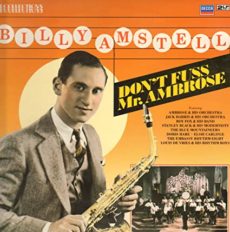
Billy Amstell was born on August 20, 1911 in London, England. At ten he played piano and at thirteen was teaching himself how to play the alto saxophone. He performed in Glasgow before moving to London in 1930, working with violinist Jack Harris.
During the next year, Billy recorded with Roy Fox and Spike Hughes and became a member of the Bert Ambrose Orchestra in which he played tenor saxophone. In the 1940s he worked for bandleader Geraldo and in the 1950s for the BBC Dance Orchestra, and in the 1960s while a studio musician he worked with George Chisholm.
The 1980s saw Amstell playing clarinet, releasing a solo album, Session After Midnight on the Zodiac label, and wrote his autobiography, Don’t Fuss, Mr. Ambrose. Saxophonist and clarinetist Billy Amstell, who continued to perform into his nineties, passed away on December 19, 2005 at the age of 94.
More Posts: bandleader,clarinet,history,instrumental,jazz,music,saxophone
Daily Dose Of Jazz…
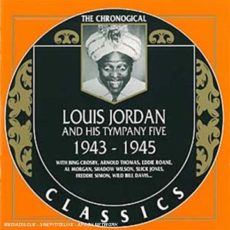
Albert Morgan was born on August 19, 1908 in New Orleans, Louisiana into a musical family. He started on clarinet, then learned baritone saxophone, tuba, and bass. After taking lessons with Simon Marrero around 1919, he played with his brother Isaiah. Relocated briefly to Pensacola, Florida he played with Mack Thomas and Lee Collins.
Returning to New Orleans to play on riverboats with Fate Marable and Sidney Desvigne. Al went on to play with Davey Jones and Cecil Scott and recorded with the Jones & Collins Astoria Hot Eight.
In the 1930s, Morgan led his own band and played as a sideman with Fats Waller, Les Hite, Zutty Singleton, Louis Jordan, and Sabby Lewis. This period saw him performing with Otto Hardwick and then spent four years with Cab Calloway from 1932 to 1936.
After leaving the Calloway orchestra, Al settled in California, playing live, on record, and on film. His film appearances include a feature on “Reefer Man” with the Calloway band in International House, Cab Calloway’s Hi-De-Ho, with Louis Armstrong in Going Places, and in The Gene Krupa Story.
From the 1950s to the 1970s, Morgan played extensively with Buddy Banks in a duo. Morgan recorded with Chu Berry, Coleman Hawkins, Don Byas, Jack Teagarden, Jay McShann, Red Allen, and T-Bone Walker.
Double bassist Al Morgan passed away on April 14, 1974 in Los Angeles, California.
More Posts: bandleader,bass,history,instrumental,jazz,music