

Daily Dose Of Jazz…
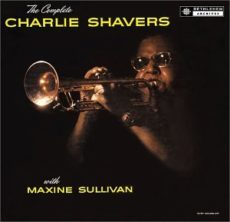
Charles James Shavers was born on August 3, 1920 in New York City and took up piano and banjo before switching to trumpet. In the mid-Thirties he performed with Tiny Bradshaw and Lucky Millinder. In 1935 he joined the trumpet section with Dizzy Gillespie and Carl “Bama” Warwick in Frankie Fairfax’s Campus Club Orchestra.
1936 saw him as a member of John Kirby’s Sextet as trumpet soloist and arranger. Only 16 at the time he gave his birth date as 1917 to avoid child labor laws, Charlie’s arrangements and solos helped make the band one of the most commercially successful and imitated of its day. In 1937, he performed with Midge Williams and her Jazz Jesters. By 1944 he began playing sessions in Raymond Scott’s CBS staff orchestra.
Leaving John Kirby’s band In 1945 he joined Tommy Dorsey’s Orchestra, with whom he toured and recorded, off and on, until Dorsey’s passing in 1956. In 1949, he sang and played the hit The Hucklebuck with Dorsey. He was a member of Dorsey’s Orchestra on numerous Stage Show telecasts for CBS, including early Elvis Presley appearances. During this time he continued to play at CBS while also appearing with the Metronome All-Stars and making a number of recordings as trumpet soloist with Billie Holiday.
From 1953 to 1954 he worked with Benny Goodman and toured Europe with Norman Granz’s popular Jazz at the Philharmonic series, where he was a crowd favorite. He formed his own band with Terry Gibbs and Louie Bellson.
Swing era trumpeter Charlie Shavers passed away from throat cancer in New York City on July 8, 1971 at the age of 50. While on his deathbed his close friend Louis Armstrong passed away, and his last request was that his trumpet mouthpiece be buried with Armstrong.

More Posts: bandleader,composer,history,instrumental,jazz,music,trumpet
Daily Dose Of Jazz…
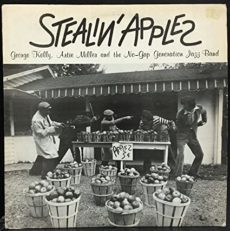
George Kelly was born on July 31, 1915 in Miami, Florida. In the 1930s Panama Francis was a sideman in Kelly’s band. During the Forties, he played in Al Cooper’s band.
Kelly played in Francis’s Savoy Sultans band in the 1970s, and had played of the same name in the 1940s. Leading his own bands he was also a sideman who worked with Tiny Grimes, Rex Stewart, and Cozy Cole.
Tenor saxophonist, vocalist, bandleader, and arranger George Kelly, who recorded seven albums as a leader, passed away at the age of 82 on May 24, 1998.

More Posts: arranger,bandleader,history,instrumental,jazz,music,saxophone,vocal
Daily Dose Of Jazz…
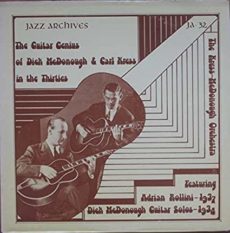
Richard Tobin McDonough was born on July 30, 1904 in New York City and began playing banjo and mandolin in high school. While matriculating through Georgetown University, he performed professionally at weekend dances and two years later started a band. Attending Columbia Law School he played with bands in New York City.
McDonough played with Red Nichols in 1927 as a banjoist, and soon after played with Paul Whiteman. He began studying the guitar and eventually was in demand for session work, recording with The Dorsey Brothers, Red Nichols, and Miff Mole. In the 1930s, he performed in a duo with jazz guitarist Carl Kress and cut several sessions with an orchestra under his own name, in addition to backing numerous other recording artists.
His session work with Mildred Bailey, Smith Ballew, The Boswell Sisters, Rube Bloom, Chick Bullock, The Charleston Chasers, Cliff Edwards, Gene Gifford, Benny Goodman, Adelaide Hall, Annette Hanshaw, Billie Holiday, Baby Rose Marie, Glenn Miller, Irving Mills, Red McKenzie, Johnny Mercer, Red Norvo, Fred Rich, Adrian Rollini, Pee Wee Russell, Ben Selvin, Artie Shaw, Frank Signorelli, Jack Teagarden, Claude Thornhill, Frankie Trumbauer, Joe Venuti, Don Voorhees, and Ethel Waters. He played in the Jam Session at Victor with Fats Waller, Bunny Berigan, and George Wettling.
Struggling with alcohol abuse during his adult life and guitarist Dick McDonough passed away of pneumonia on May 25, 1938 in New York City.
More Posts: bandleader,guitar,history,instrumental,jazz,music,tenor banjo

Daily Dose Of Jazz…
Paul Moer was born Paul Moerschbacher on July 22, 1916 in Meadville, Pennsylvania. He attended the University of Miami, graduating in 1951, and following this moved to the West Coast. There he frequently played on the jazz scene with Benny Carter, Vido Musso, Zoot Sims, Stan Getz, Bill Holman, and Shorty Rogers.
He did extensive work in Los Angeles, California studios as a pianist and an arranger. In the late 1950s, Paul led his own trio with Jimmy Bond and Frank Butler. In 1960 he toured Australia with Benny Carter and also recorded with Charles Mingus, Jack Montrose, John Graas, Paul Horn from 1960 to ‘63, then with Ruth Price, and Buddy DeFranco.
As a sideman he recorded with Jack Montrose, John Graas, Paul Horn, Jimmy Witherspoon, Dave Pell, Jack Sheldon, Emil Richards, Paul Whiteman, Rosemary Clooney, and Maynard Ferguson. Playing little after the 1960s, he made a comeback with a release in 1991 of Elmo Hope tunes and released his final album, Get Swinging, in 2005. Pianist Paul Moer passed away on June 9, 2010.
More Posts: bandleader,history,instrumental,jazz,music,piano
Daily Dose Of Jazz…
Arnold Fishkind, sometimes credited as Arnold Fishkin was born July 20, 1919 in Bayonne, New Jersey. Growing up in Freeport, Long Island, he met and began a lifelong friendship with Chubby Jackson. At age 7, he began learning the violin, and played in The Musical Aces, a local band of budding musicians. By age 14 he was playing bass.
His first professional gig with Bunny Berigan in 1937. In the early Forties, he played with Jack Teagarden, Van Alexander, and Les Brown, however, his career was interrupted by three years of military service during World War II.
The mid-1946 saw Arnold meeting and playing with pianist Lennie Tristano in New York City, but by the fall he left to go to Hollywood to play with Charlie Barnet. During this experience, he played alongside Stan Getz. In 1947 he returned to New York City, where for the next two years he again played with Tristano, and from 1949 to 1951 he recorded with Lee Konitz and on Johnny Smith’s Moonlight in Vermont. He also continued to play with Barnet and played with Benny Goodman.
In the 1950s he became a successful session musician, for radio on Across the Board, television on The Steve Allen Show, and pop musicians including Frankie Laine. His career at ABC lasted fifteen years and included appearances in the Andy Williams Show in 1961. Fishkind became well known enough during this time to be mentioned by Jack Kerouac in his novel Visions of Cody.
With rock and roll decimating the market for jazz musicians in New York City, he moved from New York City back to California, where he found work with Dean Martin and Bob Hope television shows. He also had a few jobs substituting on the Tonight and Merv Griffin television shows, as well as some recording and film work. He toured with Les Brown and Lena Horne. He continued to record into the 1980s, playing with, among others, Frank Scott.
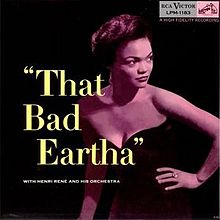
During his career, he performed swing and bebop jazz, television, jingles, and even western-themed music, working with Eartha Kitt, Ella Fitzgerald, Stan Hasselgard, Peanuts Hucko, Charlie Parker, Shorty Rogers, Coleman Hawkins, Hank Jones, Howard McGhee, Miles Davis, Butch Stone, and Jerry Wald. Although there is no mention in the record from whom he learned bass, he gave as his primary influence Jimmy Blanton. Bassist Arnold Fishkind, who never recorded as a leader, passed away on September 6, 1999 in Palm Desert, California.
More Posts: bass,history,instrumental,jazz,music