

Daily Dose Of Jazz…
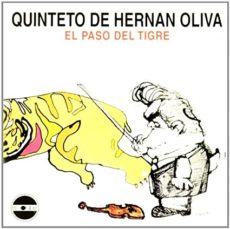
Hernán Oliva was born in Valparaíso, Chile on July 4, 1913 and began his violin studies at age 8 under a dominating mother. Around 1927 at the age of fourteen, he joined the Ernesto Davagnino Orchestra. Bohemian in character and dedicating himself to music over his father choice of law, his father disinherited and expelled from the home.
Around 1935 he crossed to Mendoza, Argentina and worked a few months on the LV10 radio in Cuyo, with his orchestra. Migrating to Buenos Aires, Argentina where Luis Davagnino, Ernesto’s brother, also a musician, lived, and after finding him whistling from corner to corner of Calle Alsina a tune that he knew Luis would recognize received him at his home after. Getting him a job as a companion to Betty Caruso and Fanny Loy on Radio Belgrano, then joined the René Cóspito Orchestra.
He played at the Boite La Chaumiere, with Enrique “Mono” Villegas on piano, David Washington on trumpet, and the English Phillips on sax. The following year Hernán joined the Oscar Alemán orchestra and by 1944 he began working with Ahmed Ratip’s Cotton Pickers, then with Tito Alberti and José Finkel they formed the Jazz Casino in 1951 with singer Lorna Warren.
His later years were spent hanging around the bars of San Telmo playing for whoever asked, sometimes for a glass of whiskey and for many who never appreciated his enormous talent. Violinist Hernán Oliva, who recorded six albums as a leader, passed away in the early morning of June 17, 1988 in Buenos Aires, Argentina lying on a sidewalk in the Palermo neighborhood, hugging his violin case.

More Posts: bandleader,history,instrumental,jazz,music,violin
Daily Dose Of Jazz…
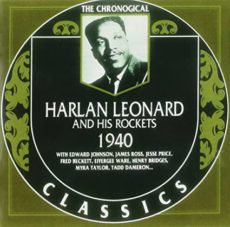
Harlan Leonard was born on July 2, 1905 in Kansas City, Missouri. He started his career in the Territory Band of George E. Lee in 1923, then moved to Benny Moten in 1924 and joined Thamon Hayes ‘ Kansas City Rockets in 1931 with several other musicians from the band. Disbanded in 1934, they formed the basis of the new Moten Orchestra. After Moten’s death in 1935, Leonard founded his own group, bringing several Moten musicians which became Harlan Leonard and his Rockets, and soon was one of the most famous bands in Kansas City.
After Count Basie’s departure for new YorkCity, he and Jay McShann were the strongest rivals. When the first Leonard band fell apart in 1936, he then took over the musicians of the Jimmy Keith band in 1937/38. In 1938 the young Charlie Parker also belonged to the band for five weeks but was dismissed because of unreliability.
In Chicago, Illinois in 1940, the band along with singer Myra Taylor recorded sessions for Victor Records. Returning to Kansas City in 1941, they toured the Midwest, then went to New York City but were unsuccessful so they returned home. Early 1943 Leonard went on a West Coast tour, playing one-nighters and a year engagement in Los Angeles, California.
After the band’s disbandment, Leonard remained in the Los Angeles area, performing occasionally in local clubs until retiring from the music business and working for the Internal Revenue Service.
Clarinetist, saxophonist, and Swing bandleader Harlan Leonard, who was one of the leaders of Kansas City Jazz with Jay McShann, and one of the links between the swing and the subsequent bebop, passed away on November 10, 1983.
More Posts: bandleader,clarinet,history,instrumental,jazz,saxophone
Daily Dose Of Jazz…
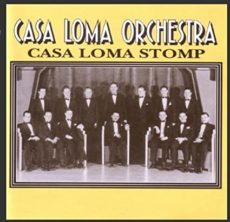
Grady Watts was born in Texarkana, Texas on June 30, 1908 and after attending the Allen Military Academy and the University of Oklahoma, he played in local jazz bands in Louisiana during the late 1920s. By 1931 he had joined the Casa Loma Orchestra, where he became a featured soloist and a composer.
Grady recorded copiously with the ensemble and remained with it until 1942. Among his compositions for the Orchestra was Rhythm Man, You Ain’t Been Livin’ Right, I Remember, and Touch and Go.
The mid-1940s saw Watts abandoning his full-time career as a performer and took jobs in artist & repertoire and as an executive in the chemical engineering industry. Trumpeter and composer Grady Watts passed away in Vero Beach, Florida in January 1986.
More Posts: composer,history,instrumental,jazz,music,trumpet
Daily Dose Of Jazz…
Joe “Fox” Smith was born Joseph Emory Smith on June 28, 1902 in Ripley, Ohio into a family of musicians. His father was a bandleader and his six brothers played trumpet or trombone.
Known throughout his childhood as “Toots”, he originally started as a drummer but was convinced by Ethel Waters that he was a far better trumpeter. By the time he reached New York in 1920, he had his own style, which achieved “the vocalized sound, the blues spirit, and the swing.
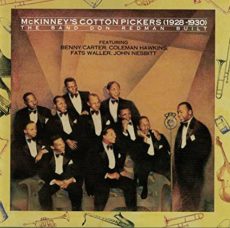
In 1921, Smith joined the Black Swan Jazz Masters in Chicago, Illinois directed at the time by Fletcher Henderson. He went on to work with the Jazz Hounds, the Broadway Syncopators, and finally with McKinney’s Cotton Pickers throughout the 1920s. He became famous from his work accompanying Bessie Smith, recording over 30 records. Some of the other artists he worked with include Billy Paige, Noble Sissle, Eubie Blake, and Allie Ross.
Trumpeter and cornetist Joe “Fox” Smith passed away from complications related to tuberculosis on December 2, 1937 in a Central Islip, New York asylum.
Daily Dose Of Jazz…
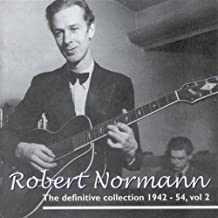
Robert Uno Normann was born on June 27, 1916 in Borge, Østfold, Norway. An autodidact performer on the banjo, accordion and tenor saxophone, he would eventually make the guitar as his main instrument. He was one of the swing era’s most sought after guitar soloists in Norway and was also a pioneer of the electric guitar.
He began his musical career as a wandering street and backyard musician at age 12 and became a professional musician in 1937. As a part of the Oslo jazz scene, he performed in several swing jazz groups, Freddy Valier, String Swing, and Gunnar Due. He simultaneously led his own quartet. During this period he played tenor saxophone with the Pete Brown Big Band from 1945 and various random jazz groups such as Frank Ottersen, and Willy Andresen. He got several career offers from international artists, including from Benny Goodman and Barney Kessel, that he turned down.
He never listened to recordings by Django Reinhardt but got his inspiration from listening to Teddy Wilson and Leon Chu Berry, and various accordionists. From 1955, he was less active in the jazz context because of significant alcohol problems. As a studio musician, Robert participated in close to 1300 productions, composed music to multiple folk texts, film, theater, and small pieces of music inspired by jazz and traditional Norwegian folk music.
Normann retired as an active musician in 1982 and devoted his time to small scale farming and inventions. Guitarist and jazz guitar pioneer Robert Normann, who made his first electric guitar in 1939 by constructing a pickup of copper wire, magnets and pitch stolen from public phones, passed away at the age of 81 on May 20, 1998 in Kvastebyen, Sarpsborg, Østfold, Norway.
More Posts: accordion,bandleader,banjo,guitar,history,instrumental,jazz,music,tenor saxophone