

Daily Dose Of Jazz…
Rudy Collins was born on July 24, 1934 in New York City, New York. He played trombone in high school and started on drums at that time as well. From 1953 to 1057 he studied with drummer Sam Ulano.
He began gigging in New York City, playing with Hot Lips Page, Cootie Williams, Eddie Bonnemere, Dizzy Gillespie, Johnny Smith, Carmen McRae, Cab Calloway, and Roy Eldridge. At the Newport Jazz Festival, Rudy performed with J.J. Johnson and Kai Winding.
Later in the 1950s, Collins became increasingly interested in the budding free jazz scene, in addition to playing with more traditional ensembles. He worked with Herbie Mann from 1959 and later with Cecil Taylor, Quincy Jones, Dave Pike, and Lalo Schifrin.
He recorded with Ahmed Abdul-Malik, Gene Ammons, Ray Bryant, Billy Butler, Junior Mance, James Moody, the Jimmy Owens-Kenny Barron Quintet, Randy Weston, and Leo Wright. Drummer Rudy Collins, whose last recordings were in 1981, passed away on August 15, 1988.

More Posts: drums,history,instrumental,jazz,music
Daily Dose Of Jazz…
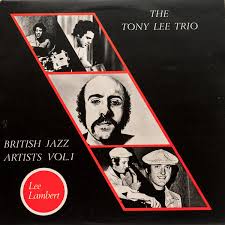
Tony Lee, born Anthony Leedham Lee on July 23, 1934 in Whitechapel, London, England. He learned the rudiments of the piano from his elder brother, Arthur, who was self-taught and preferred to use the black keys rather than the white. As a consequence, he became fluent in keys such as G flat and B natural, before moving on to more standard keys, leaving him with the ability to transpose effortlessly his entire repertoire into any key.
He played as a regular for many years with his trio comprising bassist Tony Archer and drummer Martin Drew or Terry Jenkins at The Bull’s Head in Barnes, South West London, a few miles from his home in Kingston upon Thames, Surrey.
During a visit by tenor saxophonist Billy Mitchell who came to play at the Bull’s Head, both Mitchell and Lee got on so well together that the Bull’s Dan Fleming organized for both of them a 1984 U.S. tour. Despite his sketchy knowledge of musical theory, he was a complete master of his instrument, and blessed with large hands, stretching an 11th with ease, all played in a lyrical style, and swinging like a garden gate. He was arguably the greatest British exponent of the Erroll Garner piano style, though his playing embraced a much wider compass.
He appeared on at least two recordings with Phil Seamen, a live recording featuring U.S. bassist Eddie Gómez, and a solo debut, Electric Piano, earned many comparisons to the works of Burt Bacharach. Lee led at least four other album sessions, including Tony Lee Trio, probably the quintessential album of his career.
His 40-year association with bassist Tony Archer in the Tony Lee Trio, also had them playing together in the sextet The Best of British Jazz formed in the early 1970s with drummer Jack Parnell, trumpeter Kenny Baker, trombonist Don Lusher and tenor saxophonist Betty Smith.
Pianist Tony Lee, influenced by Errol Garner, Oscar Peterson, and Art Tatum, passed away on March 2, 2004 in Esher, Surrey, England.
More Posts: bandleader,history,instrumental,jazz,music,piano
Three Wishes
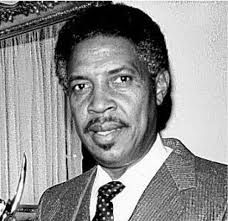
Three wishes were requested of Walter Perkins and he replied to Pannonica with:
-
-
“Happiness for my brothers. All of them.”
-
“To get a sound out of those drums that has never been heard before. ”
- “More cooperation between our brothers.”
-
*Excerpt from Three Wishes: An Intimate Look at Jazz Greats ~ Compiled and Photographed by Pannonica de Koenigswarter

More Posts: baroness,drums,history,instrumental,jazz,music,pannonica,three,wishes
Daily Dose Of Jazz…
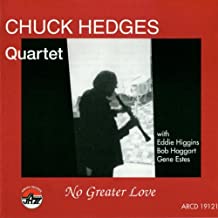
Chuck Hedges was born in Chicago, Illinois on July 21, 1932 and began playing clarinet while attending a military school. He received formal training under Claude Bordy and learned to play jazz on his own.
After studying at Northwestern University, Chuck joined George Brunis’s ensemble in 1953, remaining with Brunis through the end of the decade. He was active on the Dixieland revival scene in the 1960s, playing regularly at clubs in Chicago and Milwaukee, Wisconsin into the 1990s.
Working with Wild Bill Davison for most of the 1980s, he also worked with Alan Vaché and Johnny Varro. He with Ray Leatherwood, Gene Estes, Eddie Higgins, Bob Haggart, Duane Thamm, John Bany, Dave Baney, Charles Braugham, Howard Elkins, Jack Wyatt, Jim Vaughn, John Sheridan, Henry “Bucky” Buckwalter, Gary Meisner, Dave Sullivan, Mike Britz, and Andy LoDuca.
Clarinetist Chuck Hedges released several albums as a leader in the 1990s and 2000s before passing away on June 24, 2010.
More Posts: bandleader,clarinet,history,instrumental,jazz,music
Daily Dose Of Jazz…
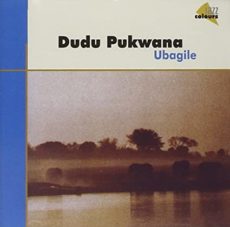
Mthutuzeli Dudu Pukwana was born on July 18, 1938 in Walmer Township, Port Elizabeth, South Africa. He grew up studying piano in his family, but in 1956 he switched to alto saxophone after meeting tenor saxophone player Nikele Miyake In 1962, Pukwana won first prize at the Johannesburg Jazz Festival with Moyake’s Jazz Giants. In his early days, he also played with Kippie Moeketsi. Chris McGregor then invited him to join the pioneering Blue Notes, a sextet, where he was the principal composer and played along with Mongezi Feza, Nikele Moyake, Johnny Dyani and Louis Moholo.
As mixed-race groups were illegal under apartheid, the Blue Notes, increasingly harassed by authorities, emigrated to Europe in 1964, playing in France and Zürich, Switzerland before settling in London, England. After they split in the late 1960s, Pukwana joined McGregor’s Brotherhood of Breath Big Band, which featured his soloing and composing. He wrote Mra, one of the best-loved tunes by the Brotherhood.
1967 saw Dudu receiving his first mention of success with the Bob Stuckey Trio in America’s DownBeat magazine, which later expanded to a quartet when Phil Lee joined on guitar. He went on to form two groups with Feza and Moholo. One was the afro rock band Assagai, the other Spear, with whom he recorded the seminal afro-jazz album In The Townships in 1973 for Virgin Records at The Manor Studio.
His fiery voice was heard in many diverse settings including recordings of Mike Heron, Centipede and Toots and the Maytals. In 1978, Pukwana founded Jika Records and formed his own band, Zila, featuring South Africans Lucky Ranku on guitar and powerful vocalist Miss Pinise Saul. In duo with John Stevens, he recorded the free session They Shoot To Kill in 1987, dedicated to Johnny Dyani. In 1990, Pukwana took part in the Nelson Mandela Tribute held at Wembley Stadium.
Alto saxophonist, pianist, and composer Dudu Pukwana, who was not known for his piano playing, passed away in London, England of liver failure on June 30, 1990, not long after the death of his longtime friend and colleague McGregor.
More Posts: bandleader,composer,history,instrumental,jazz,music,piano,saxophone