

Daily Dose Of Jazz…
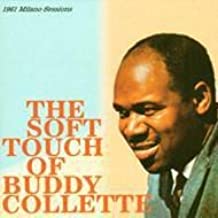
William Marcel “Buddy” Collette was born in Los Angeles, California on August 6, 1921. Raised in the Central Gardens area of Watts in a house his father built, he was surrounded by people of all different ethnicities. His father played piano, his mother sang and the melting pot of Watts framed the way he saw his position as a black man in the future.
He began playing piano at age ten, in middle school, the saxophone. That same year, he formed his first band with Charlie Martin, Vernon Slater, Crosby Lewis, and Minor Robinson. The following year, Collette started a band with Ralph Bledsoe and Raleigh Bledsoe, then started a third group which eventually included bassist Charles Mingus. Becoming very good friends, Collette helped Mingus find his less wild, more reserved side. When he was fifteen, Collette became a part of the Woodman brothers’ band, along with Joe Comfort, George Reed, and Jessie Sailes.
While in high school, Buddy began traveling to Los Angeles, competed in a battle of the band and lost to a band that included Jackie Kelson, Chico Hamilton, and Al Adams. However, afterward, he was asked to join the winning band, and later, Charles Mingus joined this band. By 19, he started taking music lessons from Lloyd Reese, who taught him and the other musicians how to manage themselves in the music world.
After serving as a U.S. Navy band leader, he played with the Stars of Swing with Woodman, Mingus, Lucky Thompson, Louis Jordan, and Benny Carter. In 1949, he was the only black member of the band for You Bet Your Life, a TV and radio show hosted by Groucho Marx. In the 1950s, he worked as a studio musician with Frank Sinatra, Ella Fitzgerald, Duke Ellington, Count Basie, Nat King Cole, and Nelson Riddle.
In 1955 he was a founding member of the Chico Hamilton Quintet, playing chamber jazz flute with guitarist Jim Hall, cellist Fred Katz, and bassist Carson Smith. He was also an educator teaching Mingus, James Newton, Eric Dolphy, Charles Lloyd, and Frank Morgan. He helped merge an all-black musicians’ union with an all-white musicians’ union.
Flutist, saxophonist, and clarinetist Buddy Collette, 1994 co-founder of the JazzAmerica program, a non-profit organization that aims at bringing jazz into classrooms in middle school and high schools in the greater Los Angeles area tuition-free, passed away in his beloved hometown on September 19, 2010.

More Posts: bandleader,history,instrumental,jazz,music,trumpet

Daily Dose Of Jazz…
Huey “Sonny” Simmons was born on August 4, 1933 in Sicily Island, Louisiana and grew up in Oakland, California, where he began playing the English horn. At age 16 he took up the alto saxophone, which became his primary instrument, playing primarily in an avant-garde style, often delving into free jazz.
His then-wife, Barbara Donald, played trumpet on several of his early records, Staying on the Watch and Music from the Spheres; Arhoolie Manhattan Egos, and Contemporary titles Rumasuma and the double album Burning Spirits.
Partnering with Prince Lasha on several recordings, two of which, The Cry! and Firebirds were also released by Contemporary.
Personal problems derailed both his music career and home life, leading to divorce and homelessness. He busked on the streets of San Francisco for many years, until he resurrected his career in the early 1990s and began playing in night clubs again.
His resurgence in the mid-1990s was marked by two albums, Ancient Ritual and American Jungle, for Quincy Jones’ Qwest Records. Along with appearances in European jazz festivals, Sonny has since remained a regular performer at European festivals.
Since 2000 he has been co-leader of The Cosmosamatics with reed player Michael Marcus and is among the few musicians to play the English Horn in a jazz context. Alto saxophone Sonny Simmons died on April 6, 2021 in New York.
More Posts: bandleader,english horn,history,instrumental,jazz,music,saxophone
Three Wishes
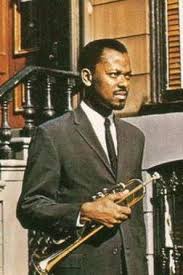
Richard Williams was queried by Nica of his three wishes and his answers were this:
-
-
“More gigs.”
-
“More understanding from the public. I don’t want anything else right now. ”
-
*Excerpt from Three Wishes: An Intimate Look at Jazz Greats ~ Compiled and Photographed by Pannonica de Koenigswarter
More Posts: baroness,history,instrumental,jazz,music,pannonica,three,trumpet,wishes
Daily Dose Of Jazz…
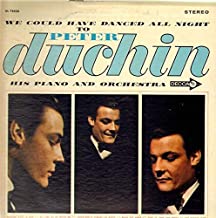
Peter Oelrichs Duchin was born in New York City on July 28, 1937, the son of pianist and bandleader Eddy Duchin and Newport, Rhode Island, and New York City socialite Marjorie Oelrichs, who died unexpectedly when he was just five days old. After the death of both of his parents, he was raised by close family friends, statesman W. Averell Harriman and his wife, Marie Norton Harriman.
Educated at Eaglebrook School, he studied piano with Carrie Barbour Swift and The Hotchkiss School prep schools in New England. He spent time in Paris, France, studied at the Sorbonne, then returned home and graduated from Yale University.
Duchin formed his first professional band, played the St. Regis Hotel in New York City in 1962 thanks in part to his family name and the networking it had made possible. His music was heard on the radio in the late 1960s and early ’70s from albums and singles released on the Decca, Bell, and Capitol labels.
From 1985 to 1989, Peter had a professional partnership with Jimmy Maxwell, leader of the traditional society jazz band in New Orleans, Louisiana. By 2009, his band had played at an estimated 6,000 performances. Duchin has served on a variety of arts boards not limited to Carnegie Hall, Spoleto Festival and the National Jazz Service Organization, the World Policy Institute, and The Center for Arts Education.
In 1996 he published his memoir, Ghost of a Chance. Pianist and bandleader Peter Duchin continues to perform and record at 82.

More Posts: bandleader,history,instrumental,jazz,piano
Daily Dose Of Jazz…
Einar Iversen was born on July 27, 1930 in Mandal Municipality, Norway and was raised in Oslo, Norway where he studied classical piano under Inge Rolf Ringnes, Artur Schnabel, and Finn Mortensen. He quickly established himself on the Oslo jazz scene in 1949 and released his first album with Rowland Greenberg’s orchestra in 1953.
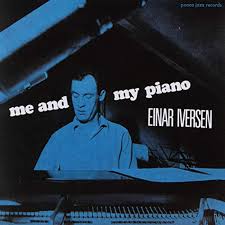
In the 1950s he played with Dizzy Gillespie, Anthony Ortega, and the Modern_Jazz_Quartet”>Modern Jazz Quartet. He was a regular pianist at Metropol Jazz Club in the Sixties, where he played with Dexter Gordon, Coleman Hawkins, Johnny Griffin, Svend Asmussen, and Stuff Smith in Sweden. As a leader, Einar recorded an album in 1967 leading his own E. I. Trio, Me and My Piano, plus five more. His sideman duties had him performing with Swedish Putte Wickman, Monica Zetterlund, and Povel Ramel on tour in 1978. In Norway, he participated in a number of releases with Bjarne Nerem, Egil Johansen, Totti Bergh, Nora Brockstedt, and Ditlef Eckhoff.
Pianist and composer Einar Iverson, who became one of the most respected Norwegian jazz musicians, awarded Buddyprisen and the Knight of First Class of the Order of the St. Olavs, passed away on April 3, 2019 in Oslo, Norway at the age of 88.
More Posts: bandleader,composer,history,instrumental,jazz,music,piano