

Three Wishes
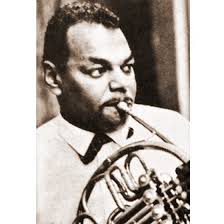
What Julius Watkins said to Pannnica when she inquired of him what his three wishes were was:
-
-
“To be three nice young ladies.”
-
“Three more.”
-
“To put the six of them to work.”
-
*Excerpt from Three Wishes: An Intimate Look at Jazz Greats ~ Compiled and Photographed by Pannonica de Koenigswarter

More Posts: baroness,french horn,history,instrumental,jazz,music,pannonica,three,wishes
Daily Dose Of Jazz…
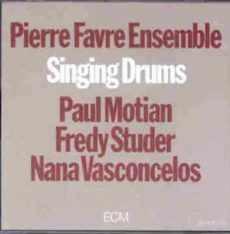
Pierre Favre was born June 2, 1937 in Le Locle, Switzerland and originally was a self-taught drummer. He went on to study classical composition and immersed himself in the diverse percussion music of the wider world, particularly those of India, Africa, and Brazil. Gradually he consolidated all of this new information in the “sound-color poems” he was writing for his Singing Drums group.
He recorded the album Singing Drums for ECM in 1984 with Paul Motian, Fredy Studer, and Nana Vasconcelos. Over the course of his career, Pierre has recorded twenty-nine as a sideman working with John Surman, Tamia, Michel Godard, Mal Waldron, Paul Giger, Jiří Stivín, Michel Portal, Samuel Blaser, the ARTE Quartett, Barre Phillips, Irene Schweizer, Philipp Schaufelberger, Manfred Schoof, Joe McPhee, Dino Saluzzi, London Jazz Composers Orchestra, Stefano Battaglia, Furio Di Castri, Paolo Fresu, Jon Balke, Denis Levaillant, Yang Jing, and Andrea Centazzo.
As a leader, drummer and percussionist Pierre Favre has recorded seven albums and continues to perform and record.

More Posts: bandleader,drums,history,instrumental,jazz,music
Daily Dose Of Jazz…
Shake Keane was born Ellsworth McGranahan Keane on May 30, 1927 in Kingstown, St. Vincent, West Indies into a family that loved music and books. He attended Kingstown Methodist School and St. Vincent Grammar School. He was taught to play the trumpet by his father Charles and gave his first public recital at the age of six. When he was 14 years old, Keane led a musical band made up of his brothers. In the 1940s, with his mother Dorcas working to raise six children, the teenager joined one of the island’s leading bands, Ted Lawrence and His Silvertone Orchestra.
During his early adulthood in St. Vincent, his principal interest was literature, rather than the music for which he would become better known. Dubbed “Shakespeare” by his school friends, on account of his love of prose and poetry. This nickname was subsequently shortened to “Shake”, which name he came to use throughout his adult life. He published two books of poetry in the early Fifties L’Oubili and Ixion, while still in St. Vincent.
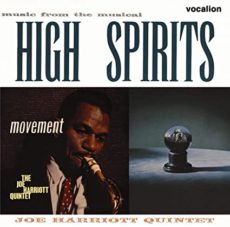
Emigrating to Great Britain in 1952 he worked on BBC Radio’s Caribbean Voices, reading poetry and interviewing fellow writers and musicians. He also began playing the trumpet in London nightclubs, working in a number of styles including cabaret, highlife, soca, mento, calypso, and jazz. From 1959 he committed more fully to jazz, spending six years as a member of pioneering alto saxophonist Joe Harriott’s band. The group was the first in Europe and one of the first worldwide, to play free jazz, and Keane contributed mightily to the band’s artistic success, thanks to his fleet and powerful improvisatory skills on trumpet and flugelhorn.
He also made a small handful of records under his own name, but these were usually light jazz. In 1966 he left Britain to settle in Germany and became a featured soloist with the Kurt Edelhagen Radio Orchestra, and also joined the Kenny Clarke-Francy Boland Big Band.
Setting aside his musical career, he returned to St. Vincent in 1972 taking up a government position as director of culture, where he remained in the post until 1975. He then became an educator as his main profession, while continuing to write poetry. In the early 1980s, Shake moved to New York City, settling the Bedford-Stuyvesant section of Brooklyn which became his base but found a second home in Norway.
He returned full-time to music in 1989 when he rejoined Michael Garrick and his old bandmates Coleridge Goode and Bobby Orr for a tour in honor of Joe Harriott. In 1991 Keane appeared in a BBC Arena documentary with the Jamaican poet Linton Kwesi Johnson.
In the 1990s, he remained based in Brooklyn, but found a second home in Norway, where he worked most extensively. He contributed music to Norwegian television and stage productions for the next few years, also touring the country playing jazz. It was while preparing for one such tour that he became ill, and subsequently, trumpeter and poet Shake Keane passed away from stomach cancer on November 11, 1997 in Oslo, Norway.

More Posts: bandleader,flugelhorn,history,instrumental,jazz,music,trumpet
Daily Dose Of Jazz…
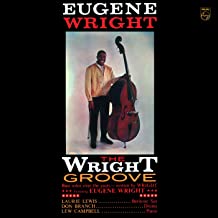
Eugene Joseph Wright was born May 29, 1923 in Chicago, Illinois. Mostly self-taught but took a few lessons late in his career from Paul Gregory. He studied cornet in high school. He played with the Lonnie Simmons group and led his own 16-piece band, the Dukes of Swing in the Forties. He played with Gene Ammons, Count Basie, and Arnett Cobb in the late ’40s and early ’50s, then worked with Buddy DeFranco from 1952 to 1955, touring Europe with him.
He played in the Red Norvo trio in 1955, toured Australia with them, and was featured in a film short with Charlie Barnet. His biggest opportunity came when he was hired by pianist Dave Brubeck, remaining until 1968. He led his own ensemble on a tour of Black colleges in 1969 and 1970, then played with Monty Alexander’s trio from 1971 to 1974.
During the ’70s working in television studios found him film soundtrack work as well as play in clubs. He also did private teaching and became head of the advisory board in the jazz division of the International Society of Bassists, and head of the University of Cincinnati’s jazz department.
Over the course of his lengthy career Wright has worked with Charlie Parker, Billie Holiday, Carmen McRae, Buddy DeFranco, Cal Tjader, Kai Winding, Sonny Stitt, Paul Desmond, Kenny Drew, Dottie Dodgion, Lee Shaw, Buddy Collette, Gerry Wiggins and Dorothy Donegan among others, participating on more than five dozen recordings, thirty-two of which were with Brubeck.
With the death of Brubeck on December 5, 2012, he became the last surviving member of the quartet. Cool and swing bassist Eugene Wright, who has recorded once as a leader, The Wright Groove, is presently still active on the jazz scene at age 96.
More Posts: bandleader,bass,history,instrumental,jazz,music
Daily Dose Of Jazz…
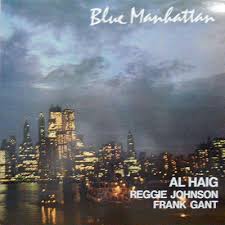
Frank Gant was born on May 26, 1931 in Detroit, Michigan. His first gigs were with Billy Mitchell and Pepper Adams, and after working with Little John Wilson and his Merry Men at the Madison Ballroom, including four days backing Billie Holiday, he went on to join Alvin Jackson’s house band at the Blue Bird..
Gant recorded with Donald Byrd, Sonny Stitt, and extensively with Yusef Lateef in the late 1950s and then Red Garland before becoming a member of Ahmad Jamal’s trio from 1966 to 1976. As the house drummer at Detroit’s Club 12, with Jackson’s band, he backed Thelonious Monk and Charlie Rouse in September 1959. In the 1970s, he accompanied Jamil Nasser and Harold Mabern as the rhythm section for workshops run by Cobi Narita.
From 1955 to 1986 he recorded as a sideman or group member on twenty albums with the above-mentioned musicians, as well as several with Al Haig. There is no more information following this recording period about the drummer as he has never been a leader, however, at eighty-nine he may still be occasionally performing.
More Posts: drums,history,instrumental,jazz,music