

Daily Dose Of Jazz…
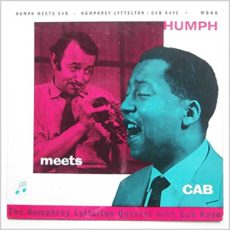
Cab Kaye was born Nii-lante Augustus Kwamlah Quaye on September 3, 1921 on St. Giles High Street in Camden, London to a musical family of Ghanaian ancestry. After his father’s death when he was four months they moved to Portsmouth where he was introduced to the timpani by a soldier who taught him how to count and use the mallets. At fourteen, he began visiting nightclubs where Black musicians were welcome, and where he eventually won first prize in a song contest and a tour with the Billy Cotton band. In 1936, he recorded his first song Shoe Shine Boy under the name Cab Quay.
During 1937 Kaye played drums and percussion with Doug Swallow and his band, the Hal Swain Band and Alan Green’s band. Until 1940 he sang and drummed with the Ivor Kirchin Band, with Steve Race on piano, in the Paramount Dance Hall on Tottenham Court Road. When a guest was refused entrance because of their skin colour, Kaye refused to perform, the incident led to the regular acceptance of black people and the venue grew into a sort of Harlem of London.
He would go on to play with Britain’s first black swing bandleader Ken “Snakehips” Johnson and His Rhythm Swingers, play in several radio broadcasts and joined the British Merchant Navy before his mother and Johnson were killed in bombings during World War II. A move to New York saw him playing in Harlem and Greenwich Village with Roy Eldridge, Sandy Williams, Slam Stewart, Pete Brown, Charlie Parker, Dizzy Gillespie and Willie “The Lion” Smith. Returning to London in 1943 he sang with clarinetist Harry Parry, then formed a band that included 16-year-old saxophonist Ronnie Schatt (Ronnie Scott), Ralph Sharon and Dick Katz on piano. Following this he sang with Vic Lewis, Ted Heath, Tito Burns and Jazz In The Town. Leading his own bands Ronnie Scott, Johnny Dankworth and Denis Rose. Throughout his career he formed several bands that included Mary Lou Williams, Dizzy Reece, Dennis Rose, Denny Coffey, Dave Smallman, Pat Burke and performed with Billy Daniels, Benny Payne Eartha Kitt, and 16 year old Shirley Bassey among numerous others
Opening his own club in Amsterdam he performed with visiting musicians such as Rosa King, Slide Hampton, Aart Gisolf, Dirk-Jan “Bubblin” Toorop, David Mayer, Gerrie van der Klei, Cameron Japp, Max Roach, Oscar Peterson, Pia Beck and others. During this period Cab played all the major festivals until the 1990s when he was diagnosed with mouth floor cancer that resulted in the loss of the ability to speak. On March 13, 2000 vocalist, pianist, guitarist, drummer and composer Cab Kaye, also known as Cab Quay, Cab Quaye and Kwamlah Quaye and who recorded for the Melody Maker label, passed away at the age of 78.

More Posts: composer Instruments Vocals,drums,guitar,piano,vocal
Daily Dose Of Jazz…
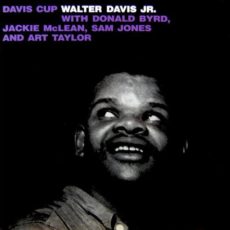
Walter Davis Jr. was born September 2, 1932 in Richmond, Virginia. As a teenager he performed with Babs Gonzales and in the 1950s he recorded with Melba Liston, recorded and played with Max Roach, Charlie Parker, and Dizzy Gillespie. In 1958 he played with trumpeter Donald Byrd at Le Chat Qui Pêche in Paris and shortly after realized his dream of becoming pianist and composer-arranger for Art Blakey’s Jazz Messengers.
He retired from music in the 1960s to work as a tailor, painter, and designer, but returned in the Seventies to perform and record with Sonny Rollins and again with the Jazz Messengers. Walter recorded with Kenny Clarke, Sonny Criss, Walt Dickerson, Teddy Edwards, Slide Hampton, Jackie McLean, Pierre Michelot, Julian Priester, Hank Mobley, Philly Joe Jones, Art Taylor and Archie Shepp.
Known as an interpreter of the music of Bud Powell, he recorded an album capturing the compositional and piano style of Thelonious Monk. Although few of Davis’ recordings as a pianist remain in print, several of his compositions served as titles for albums by Blakey’s Jazz Messengers. Combining traditional harmonies with modal patterns and featuring numerous rhythmic shifts along with internal melodic motifs within operatic, aria-like sweeping melodies, Davis’s compositions included Scorpio Rising, Backgammon, Uranus, Gypsy Folk Tales, Jodi and Ronnie Is a Dynamite Lady.
Occasionally he played the role of the piano player on the CBS television comedy Frank’s Place and contributed to the soundtrack of the Clint Eastwood film Bird. Hard bop pianist Walter Davis Jr. passed away in New York City on June 2, 1990 from complications of liver and kidney disease.
More Posts: piano
Daily Dose Of Jazz…
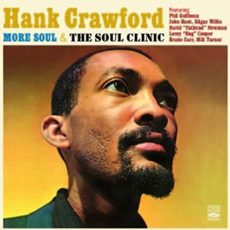
Leroy “Hog” Cooper was born on August 31, 1928 in Dallas, Texas and started his career touring with Ernie Fields’ territory band from 1948 to 1951. With his childhood friend David “Fathead” Newman, the two played together in 1954 in the saxophone section backing Lowell Fulson on his first single Reconsider Baby for Chess Records.
In 1957, Newman recommended Cooper to Ray Charles who joined the band the same summer as bassist Edgar Willis, both musicians staying on with Charles for some twenty years. He also played, recorded or toured with Lightnin’ Hopkins, Clarence “Gatemouth” Brown, The Righteous Brothers, Dr. John, Del Shannon, Joe Cocker and Bobby Short..
Leroy recorded not only with Ray Charles but also with Newman, Hank Crawford, Curtis Amy, Kenny Neal, Noble “Thin Man” Watts and Nat Adderley. Moving to Orlando, Florida baritone saxophonist Leroy Cooper performed locally in Orlando till he passed away on January 15, 2009 with the Smokin’ Torpedoes & Josh Miller Blues Band.

More Posts: saxophone
Daily Dose Of Jazz…
Gilbert Bibi Rovère was born on August 29, 1939 in Toulon, France and grew up in Nice, where he also attended the Conservatory beginning in 1954. He became part of the jazz scene there and for 17 years played the San Remo Festival.
In 1956, a move to Paris saw him working in the jazz clubs and by 1957 he started playing the double bass with Barney Wilen. Over the coming years he accompanied Duke Ellington, Sonny Rollins and Billie Holiday with Mal Waldron. Between 1962 and 1974 he was always part of the combos of Martial Solal and between 1962 to ‘63 he joined Bud Powell, Kenny Drew, Johnny Griffin, Dexter Gordon and Kenny Clarke.
During the Sixties Bibi went on to play with Art Simmons and Jean-Luc Ponty on his first album Jazz Longplaying. He also worked with the Swingle Singers, René Thomas and Cannonball Adderley. In 1966 he received the Prix Django Reinhardt.
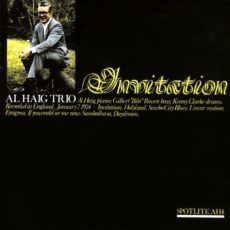
During the Seventies he accompanied Al Haig on his album Invitation and in 1978 he retired from the music industry only to become re-active eight years later, performing with Bud Shank and Jackie McLean. In 1990 he played on Steve Grossman’s album My Second Prime.
On March 13, 2007 double bass and violincello player Bibi Rovère passed away in Menton on the French Riviera.

More Posts: bass,violincello
Daily Dose Of Jazz…
Addison Farmer was born August 21, 1928 an hour after his twin brother, in Council Bluffs, Iowa reportedly at 2201 Fourth Avenue. Their parents divorced when the boys were four, and their steelworker father was killed in a work accident not long after this. He moved with his grandfather, grandmother, mother, brother and sister to Phoenix, Arizona when he was four.
Addison and his brother moved to Los Angeles, California in 1945 and attended the music-oriented Jefferson High School, where they got music instruction and met other developing musicians such as Sonny Criss, Ernie Andrews, Big Jay McNeely, and Ed Thigpen. They brothers earned money by working in a cold-storage warehouse and by playing professionally. He went on to take bass lessons from Fred Zimmermann, and studied at Juilliard and the Manhattan School of Music.
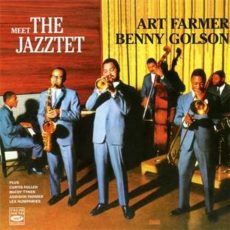
By late 1945, Farmer was with Johnny Alston and His Orchestra recording for the Bihari Brothers’ Modern Music label, backing Jeanne De Metz. Shortly afterwards he recorded on the Blue Moon label with Al “Cake” Wichard and King Fleming and worked with Teddy Edwards’s band. He played and recorded in several groups with his brother and in ensembles led by Benny Golson, Gigi Gryce, Mose Allison, Jay McShann, Charlie Parker, Gene Ammons, Bob Brookmeyer, curtis Fuller, Hampton Hawes, Curtis Fuller, Stan Getz, Teo Macero, Sahib Shihab, Mal Waldron and Miles Davis.
Bassist Addison Farmer recorded extensively for the jazz label Prestige before passing away suddenly from bed death on February, 20, 1963 in New York City at the age of 34.
More Posts: bass