

Daily Dose Of Jazz…
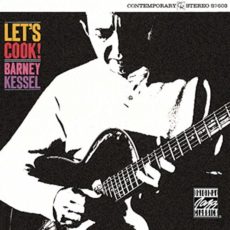
Barney Kessel was born on October 17, 1923 in Muskogee, Oklahoma and began his career as a teenager touring with local dance bands. When he was 16, he started playing with the Oklahoma A & M band, Hal Price & the Varsitonians. It was here that his band mates lovingly nicknamed him “Fruitcake” because he would practice up to 16 hours a day.
Moving on to bands such as that led by Chico Marx, he quickly established himself as a key post-Charlie Christian jazz guitarist. In 1944 he participated in the film Jammin’ the Blues that featured Lester Young, and by 1947 he was recording with Charlie Parker’s New Stars on the Relaxin’ at Camarillo session for Dial Records.
Known for his innovative work in the guitar trio setting, in the 1950s, he made a series of albums called The Poll Winners with Ray Brown on bass and drummer Shelly Manne. He was also the guitarist on the 1955 Julie London album Julie Is Her Name, which includes the million-selling standard Cry Me a River and features a guitar part from Kessel which illustrates his melodic chordal approach in a minimal jazz group. During the 1950s he released three Kessel Plays Standards volumes containing some of his most polished work.
Barney was a member of the Oscar Peterson Trio with Brown for a year, leaving in 1953 and turning the chair over to Herb Ellis. He went on to play with Sonny Rollins in the late 1950s and recorded the Sonny Rollins and the Contemporary Leaders album. A first call guitarist at Columbia Pictures during the 1960s, he became one of the most in-demand session guitarists in America, and is considered a key member of the group of first-call session musicians known as The Wrecking Crew. In this capacity he played outside the jazz genre on hundreds of pop recordings, including albums and singles by Phil Spector, The Beach Boys, The Monkees and many others.
He appeared in an acting part playing a jazz guitarist named “Barney” in one episode of the Perry Mason TV show. He wrote and arranged the source music for the jazz combo, including a jazz version of Here Comes the Bride that was featured in the story. He played Mr. Spock’s theme on bass, which first appeared in the Star Trek episode Amok Time.
During the 1970s, Kessel put on his educator hat and presented his seminar The Effective Guitarist in various locations around the world. During this decade he performed extensively with Herb Ellis and Charlie Byrd as The Great Guitars.
Guitarist Barney Kessel was rated the No. 1 guitarist in Esquire, DownBeat, and Playboy magazine polls between 1947 and 1960. In 1961 The Gibson Guitar Corporation introduced The Barney Kessel model guitar onto the market and continued to make them until 1973. Having been in poor health after suffering a stroke in 1992, he passed away of a brain tumor at his home in San Diego, California on May 6, 2004 at the age of 80.

Give The Gift Of Knowledge

More Posts: guitar
Daily Dose Of Jazz…
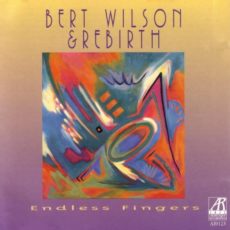
Bert Wilson was born on October 15, 1939 in Evansville, Indiana and contracted polio from a public swimming pool at age 4, and for the rest of his life was in a wheelchair. When he was 10, he heard the music of Charlie Parker in a Chicago hospital school, an experience he often said affected his life far more than the disease.
After graduating from high school Wilson moved to Los Angeles, California where he became interested in the avant-garde “free jazz” of Ornette Coleman. In 1966 he moved to New York, where he lived alone on the sixth floor of a building with no elevator. In New York City and Los Angeles he recorded with fiery alto saxophonist Sonny Simmons, drummers James Zitro and Smiley Winters and trumpeter Barbara Donald.
As an educator some of his students over the years have included the Dave Matthews Band’s Jeff Coffin, Los Angeles ace Ernie Watts, Tower of Power member Lenny Pickett and Latin percussionist Michael Olson. It was Olson in 1979, who along with keyboardist Michael Moore, of the band Obrador, learned that Wilson was living alone and miserable in Woodstock, New York and threw a benefit concert to move him to Olympia, Washington.
From that time forward, Bert was an active participant in the Northwest jazz scene, performing at the Earshot Jazz Festival and other major events, as well as, performing weekly with saxophonist Chuck Stentz at the Water Street Cafe.
On June 6, 2013 tenor saxophonist Bert Wilson, who did things on the saxophone that nobody else could do, passed away of a heart attack at age 73 in Olympia, Washington. He left behind many recordings as a sideman and as a leader of his own band, Rebirth.
Sponsored By

Double Impact Fitness
More Posts: saxophone
Daily Dose Of Jazz…
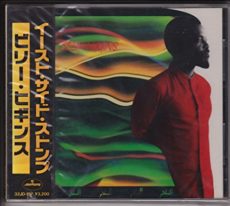
Billy Higgins was born on October 11, 1936 in Los Angeles, California. A jazz drummer who mainly played free jazz, he played on Ornette Coleman’s first records, beginning in 1958 and then freelanced extensively with hard bop and post-bop players. He was one of the house drummers for Blue Note Records and played on dozens of Blue Note albums of the 1960s. On a whole, he played on over 700 recordings, including recordings of rock and funk, and appeared as a jazz drummer in the 2001 movie Southlander.
Tipping his hat into the educator ring, in 1989 Higgins cofounded a cultural center, The World Stage, in Los Angeles to encourage and promote younger jazz musicians. The center provides workshops in performance and writing, as well as concerts and recordings. He also taught in the jazz studies program at the University of California, Los Angeles. Drummer Billy Higgins passed away of kidney and liver failure on May 3, 2001 at age 64 in Inglewood, California.
He left a legacy of music, having recorded eight albums as a leader and his sideman duties had him performing and recording with a who’s who list of musicians including but not limited to Gene Ammons, Robert Stewart, Chris Anderson, Gary Bartz, Paul Bley, Sandy Bull, Jaki Byard, Donald Byrd, Joe Castro, Don Cherry, Sonny Clark, George Coleman, John Coltrane, Bill Cosby, Stanley Cowell, Ray Drummond, Teddy Edwards, Booker Ervin, Art Farmer, Curtis Fuller, Stan Getz, Dexter Gordon, Grant Green, Charlie Haden, Slide Hampton, Herbie Hancock, Barry Harris, Eddie Harris, Jimmy Heath, Joe Henderson, Andrew Hill, Richard “Groove” Holmes, Paul Horn, Freddie Hubbard, Bobby Hutcherson, J. J. Johnson, Hank Jones, Dave Holland, Sam Jones, Clifford Jordan, Fred Katz, Steve Lacy, Charles Lloyd, Pat Martino, Jackie McLean, Charles McPherson, Pat Metheny, Blue Mitchell, , Red Mitchell, Hank Mobley, Thelonious Monk, Lee Morgan, Bheki Mseleku, David Murray, Horace Parlan, Niels-Henning Orsted Pedersen, Art Pepper, Dave Pike, Jimmy Raney, Sonny Red, Freddie Redd, Joshua Redman, Sonny Rollins, Charlie Rouse, Pharoah Sanders, John Scofield, Shirley Scott, Archie Shepp, Sonny Simmons, Sonny Stitt, Idrees Sulieman, Sun Ra, Cecil Taylor, Bobby Timmons, Mal Waldron, Cedar Walton, Don Wilkerson, David Williams and Jack Wilson, among others.
Sponsored By

Voices From The Community
More Posts: drums
Daily Dose Of Jazz…
Born Martin Flachsenhaar, Jr. in New York City on October 7, 1924, Marty Flax played flute, clarinet and trombone in addition to baritone saxophone. He was a mainstay in the bands of Louis Jordan, Dizzy Gillespie, Perez Prado, and Tito Puente. He was also a member of the bands that performed on the soundtracks composed by Raymond Scott.
Marty worked with Les Elgart and Claude Thornhill in the late 1950s, then with Quincy Jones, Melba Liston and Gillespie, including on the State Department tours of the Middle East and South America.
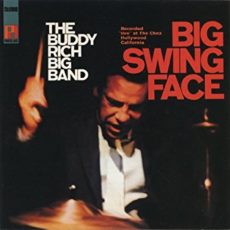
Early in the 1960s he again toured South America with the Woody Herman Orchestra. When not on tour he led a house band at the Cafe Society and worked with Sammy Davis, Jr. and Buddy Rich recording on the Reprise, Norgran and Verve labels.
Baritone saxophonist Marty Flax, a consummate sideman and bandleader who never recorded under his own name, passed away on July 3, 1972.
Dose A Day-Blues Away
More Posts: saxophone
Daily Dose Of Jazz…
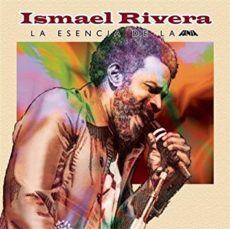
Ismael Rivera also known as Maelo was born on October 5, 1931 in the Santurce sector of San Juan, Puerto Rico. The oldest of five children he was always singing and banging on cans with sticks. He received his primary education at the Pedro G. Goyco Elementary School and then went on to learn carpentry at a vocational school. He also shined shoes to help his family financially and when he was 16 years old, he worked as a carpenter. During his free time he would hang around the corner with his best friend Rafael Cortijo and sing songs. In 1948, he and Cortijo joined El Conjunto Monterrey, where he played the conga and Cortijo the bongos, but was unable to work full-time as a musician because of his work as a carpenter.
In 1952, Ismael joined the U.S. Army but was quickly discharged, because he didn’t speak English. He returned to Puerto Rico and went to work as the lead singer with Orquesta Panamericana, recording and scoring his first hits with the songs El charlatán, Ya yo sé, La vieja en camisa and La sazón de Abuela. However, an incident between Rivera and another band member, over a girl, led to his departure from the popular band. In 1954, he joined Cortijo’s Combo and recorded songs, such as, El Negro Bembón, El Yayo, María Teresa and Yo Soy del Campo, which soon became hits in the Latin community in America
With Cortijo’s Combo continuing to gain fame, so did Rivera’s reputation as a lead singer. Rivera was named sonero mayor by Cuban producer Ángel Maceda, owner of club Bronx Casino in New York and played the band went to New York City and played in the famed Palladium Ballroom.
By 1959, Rivera, together with Cortijo and his Combo were casted in the Harry Belafonte movie titled Calipso. He toured with the combo that included Rafael Ithier and Roberto Roena, throughout Europe, Central and South America. Arrested for drug possession after a trip to Panama with the Cortijo combo, he took the fall to spare the other band members. After his release he formed his own band called Ismael Rivera and His Cachimbos, becoming quite successful for eight years. He reunited with Cortijo and recorded Juntos otra vez. Eventually going solo, he did well with the recordings of El Sonero Mayor, Volare and scored his greatest hit with Las Caras Lindas (de mi gente negra).
1974 saw Ismael in a recording in concert at Carnegie Hall and four years later was in Paris, France opening for Bob Marley in 1978. The death of his childhood friend, Rafael Cortijo in 1982, affected him emotionally to the point that he couldn’t sing in the tribute, and was actively involved in the creation of a historical museum which depicts the contributions made to the cultural life of Puerto Rico by the black Puerto Ricans.
Composer and vocalist Ismael Rivera passed away on May 13, 1987 in the arms of his mother Margarita, from a heart attack. He recorded eleven albums as a leader and has had some thirty compilations released. Posthumously in 2008 Puerto Rico’s governor Aníbal Acevedo Vilá signed a proclaim stating that every anniversary of Rivera’s birth will be celebrated as Día Conmemorativo del Natalicio de Ismael Rivera, the Puerto Rican Senate declared October 5 as Ismael Rivera Day, has a plaza named for him Plaza de los Salseros that has a statue and plaque dedicated to him.
Take A Dose On The Road
More Posts: vocal