

Daily Dose Of Jazz…
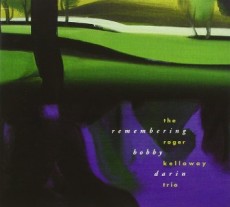
Roger Kellaway was born November 1, 1939 in Waban, Massachusetts. He matriculated through the New England Conservatory and one of his earliest mentors was piano teacher and director of the summer music camp Encore in Marblehead, Massachusetts.
In 1964 Kellaway was a piano sideman for bandleader-producer Boris Midney’s group The Russian Jazz Quartet’s album Happiness on the ABC/Impulse jazz records label. He has written and played the closing theme, Remembering You for the TV sitcom All In The Family and its spinoff Archie Bunker’s Place.
Roger has composed commissioned works for orchestra and jazz big band as well as for film, television, ballet and stage productions. He has served as band leader and pianist for Van Morrison’s Astral Weeks Live at the Hollywood Bowl concerts, been nominated for an Oscar for Best Adaptation Score for the 1976 film A Star Is Born, and a Grammy Award for Best Instrumental Arrangement for Eddie Daniels’ album Memos From Paradise.
He has played with Grady Tate, Jay Berliner, Igor Berukshtis, George Ricci, Ruby Braff, Chuck Domanico, Emil Richards, Edgar Lustgarten, Joe Pass, Red Mitchell, Gene Bertoncini, Jan Allan and Michael Moore among others. He has more than a dozen albums as a leader, and has arranged for Carmen McRae, Diane Schuur, Liza Minelli, Robben Ford, Gary Lemel, Kenny Burrell, J. J. Johnson, Kai Winding, Herbie Mann, Mark Murphy, Oliver Nelson, Clark Terry, Lalo Schifrin, Sonny Rollins, Sonny Stitt, Ben Webster and Jimmy Witherspoon. Pianist Roger Kellaway continues to perform, compose, arrange and record.

Jazz Is Global – Share
More Posts: piano
Daily Dose Of Jazz…
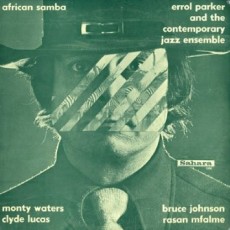
Errol Parker was born Raphaël Schecroun on October 30,1925 in Oran, French Algeria. In 1964, Parker composed the song Lorre, which became a hit in France, and opened his own jazz club called Le Ladybird on Rue de la Huchette.
Following a serious car accident which impaired Parker’s piano playing, he emigrated to New York, where his daughter Elodie Lauten was to begin university in February 1968. It was in America that he started a second career as a record producer, but unable to find a suitable drummer, he started to perform as a jazz drummer, which was not affected by his shoulder injury.
Pianist, composer, record producer and drummer Errol Parker, who played and recorded as a leader and with Django Reinhardt, James Moody, Don Byas and Kenny Clarke among others, passed away of liver cancer at the age of 72 on July 2, 1998 in New York City.
Inspire A Young Mind
Daily Dose Of Jazz…
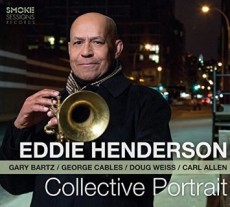
Eddie Henderson was born on October 26, 1940 in New York City. His mother was an original Cotton Club dancer and his father sang with a popular singing group of the day, Billy Williams and The Charioteers. At the age of nine he got an informal lesson by Louis Armstrong and continued his study of the instrument as a teenager at the San Francisco Conservatory of Music, after his family moved there in 1954. As a young man, he performed with the San Francisco Conservatory Symphony Orchestra. In 1957 he met Miles Davis, a friend of his parents and played a gig together when he was just 17.
After three years in the Air Force, Henderson enrolled at the University of California, Berkeley graduating with a B.S. in zoology in 1964. He then studied medicine at Howard University, then went back to the Bay area undertook his residency in psychiatry in 1968, he practiced general medicine from 1975 to 1985 in San Francisco part-time for about four hours a day working at a small clinic.
His break in music came when he took a weeklong gig with Herbie Hancock’s Mwandishi band that led to a three-year job. It was during this period in the early 70s that her recorded three albums with the group but more importantly came out as a leader and recorded his debut album Realization followed by Inside Out.
After leaving Hancock, Eddie worked extensively with Pharoah Sanders, Mike Nock, Norman Connors, and Art Blakey’s Jazz Messengers. He joined Latin jazz band Azteca, recorded with Charles Earland and fronted his own bands, both jazz and rock-oriented. However, recognized for his work with Hancock, his own records were considered too commercial.
By the 1990s, Henderson returned to playing acoustic hard bop, touring with Billy Harper while also working as a physician. He recorded at Miles tribute album So What? with Bob Berg, Dave Kikoski, Ed Howard and Victor Lewis. He has collaborated with his wife Natsuko who composed Tender You, Precious Moment, Around the World in 3/4 and Be Cool.
As an educator trumpet and flugelhorn player Eddie Henderson has been a faculty member of Juilliard since 2007 and is Associate Professor of Trumpet at the Oberlin Conservatory Jazz Department, beginning in 2014. He has recorded 23 albums as a leader, has released two anthologies, and recorded nearly four-dozen sessions as a sideman with Benny Golson, Mulgrew Miller, Richard Davis, Gary Bartz, Leon Thomas, Billy Hart, McCoy Tyner, Mal Waldron, Stanley Cowell, Grover Washington, Jr., Kenny Barron, Joe Farnsworth and the Mingus Big Band to name a few.
Give The Gift Of Knowledge
More Posts: flugelhorn,trumpet
Daily Dose Of Jazz…
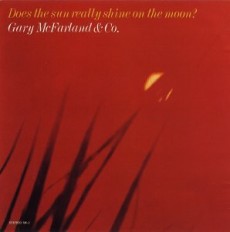
Gary McFarland was born in Los Angeles, California on October 23, 1933. An influential composer, arranger, vibraphonist and vocalist, he made a name for himself on Verve and Impulse Records during the Sixties, making one of the more significant contributors to orchestral jazz. He attained a small following after working with Bill Evans, Gerry Mulligan, Johnny Hodges, John Lewis, Stan Getz, Bob Brookmeyer and Anita O’Day.
His debut as a leader came in 1961 with the Jazz Version of How To Succeed In Business Without Really Trying. Gary recorded for Skye, Buddah and Cobblestone Records through the 1960s into the early Seventies. As well as eighteen of his own albums as a leader and arrangements for other musicians such as Lena Horne, Steve Kuhn, Gabor Szabo, John Lewis, Shirley Scott, Zoot Sims and Gary Burton, he composed the scores to the films Eye of the Devil in 1968 and Who Killed Mary What’s ‘Er Name in 1971.
By the end of the 1960s McFarland was moving away from jazz towards an often wistful or melancholy style of instrumental pop, as well as producing the recordings of other artists on his Skye Records label, run in partnership with Szabo and Cal Tjader until its bankruptcy in 1970.
Gary McFarland and Louis Savary wrote the classic song Sack Full Of Dreams that was first released by Grady Tate in 1968. He was considering a move into writing and arranging for film and stage when on November 3, 1971 he was poisoned with methadone in a New York City bar at the tender age of 38. In tribute Bill Evans performed Gary’s Waltz in 1979, shortly before his own death.
Jazz Is Global – Share
More Posts: arranger,composer,vibraphone,vocal
Daily Dose Of Jazz…
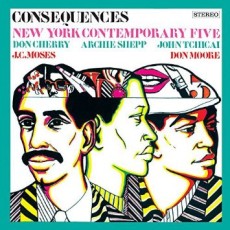
J. C. Moses was born in Pittsburgh, Pennsylvania on October 18, 1936 and was related to pianist Jimmy Golden and trumpeter Clifford Thornton. Somewhat of a mystery figure in jazz history, he was a very versatile and for a time greatly in-demand drummer who played in settings ranging from mainstream to free jazz.
Moses first gained the attention of the jazz world in the early 1960s, when he recorded with Clifford Jordan, Kenny Dorham and Eric Dolphy. As a member of the New York Contemporary Five with Archie Shepp, John Tchicai and Don Cherry, he toured Scandinavia in 1963 and recorded in Denmark. Returning to New York the following year, J. C. recorded with Bud Powell on the album The Return of Bud Powell, was with the New York Art Quartet, then was with an early version of Charles Lloyd’s Quartet and spent two years with Rahsaan Roland Kirk.
During this period drummer J. C. Moses also worked with Archie Shepp, Andrew Hill and Sam Rivers. By 1969 he played regularly in Copenhagen as the house drummer at the Montmartre Club. However, erratic health forced him to cut back on his activities in the early 1970s and he returned to Pittsburgh. Unfortunately he never led his own record date but he would occasionally played with Nathan Davis and Eric Kloss before his untimely death in 1977.
Give The Gift Of Knowledge
More Posts: drums