


Daily Dose Of Jazz…
Andrew Charles Cyrille was born on November 10, 1939 in Brooklyn, New York into a Haitian family. He began studying science at St. John’s University but was already playing jazz in the evenings and soon switched his studies to the Juilliard School. His first drum teachers were fellow Brooklyn-based drummers Willie Jones and Lenny McBrown. Through them, he met Max Roach, nonetheless he became a disciple of Philly Joe Jones.
His first professional engagement was as an accompanist of singer Nellie Lutcher, had an early recording session with Coleman Hawkins and trumpeter Ted Curson introduced him to pianist Cecil Taylor when he was 18. He joined the Taylor unit in 1964 and stayed for about 10 years and eventually performed drum duos with Milford Graves.
In addition to recording a dozen albums as a bandleader, he has recorded and/or performed with David Murray, Irene Schweizer, Marilyn Crispell, Carla Bley, Butch Morris, Reggie Workman, Oliver Lake, Geri Allen, Ahmad Abdul-Malik, Billy Bang, Anthony Braxton, Marion Brown, Walt Dickerson, Charlie Haden, David Murray, Horace Tapscott and the list goes on.
Avant-garde drummer Andrew Cyrille is currently a member of the group, Trio 3, with Oliver Lake and Reggie Workman.

Give The Gift Of Knowledge
More Posts: drums
Daily Dose Of Jazz…
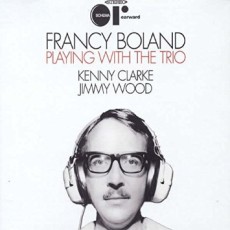
François Boland was born on November 6, 1929 in Namur, Belgium. He was classically trained on piano and first gained notice in 1949 working with Belgian jazz greats like Bobby Jaspar and in 1955 he joined Chet Baker’s quintet.
A move to the United States saw Boland arranging for Count Basie, Benny Goodman, Woody Herman and Dizzy Gillespie. He formed an octet with drummer Kenny Clarke before returning to Europe and becoming Kurt Edelhagen’s chief arranger. In 1961, building from a rhythm section featuring Clarke, Jimmy Woods and himself, he founded the Kenny Clarke Francy Boland Big Band, which rapidly became one of the most noted big bands assembled outside the United States.
Some of band’s collaborators and members over the years included Johnny griffin, Art Farmer, Phil Woods, Ake Persson, Dusko Goykovich, Eddie “Lockjaw” Davis, Muvaffak “Maffy” Falay, Idrees Sulieman, Herb Geller, Benny Bailey and Jimmy Wooden, among others.
After the band broke up in 1972 he concentrated on composing. From 1976 on Francy lived in Europe, primarily Switzerland, arranging music for Sarah Vaughan and others. He was a part of One World, One Peace, an effort that involved Pope John Paul II.
Belgian jazz composer and pianist Francy Boland passed away in Geneva, Switzerland on August 12, 2005.
Inspire A Young Mind
More Posts: piano
Daily Dose Of Jazz…
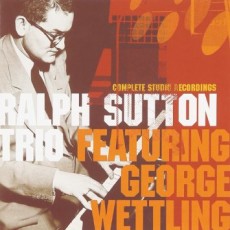
Ralph Earl Sutton was born November 4, 1922 in Hamburg, Missouri. He had a stint as a session musician playing stride piano with Jack Teagarden’s band before joining the US Army during World War II. After the war, he played at various venues in Missouri, eventually ending up at Eddie Condon’s club in Greenwich Village.
In 1956, Ralph relocated to San Francisco, California, where he recorded several albums with Bob Scobey’s Dixieland band. From the 1960s onward, he worked mostly on his own. However, when the World’s Greatest Jazz Band was established in 1968, he was the natural choice for piano. He left that band in 1974 due to the extensive travel involved, and joined an old sidekick, Peanuts Hucko in a quartet in Denver, near his home in Evergreen, Colorado.
He recorded with Ruby Braff, Dick Cary, Kenny Davern, Jay McShann and Johnny Varro. Stride pianist Ralph Sutton, who played in the tradition of James P. Johnson and Fats Waller, passed away on December 30, 2001 of a stroke in Evergreen, Colorado at the age of 79.
Take A Dose On The Road
More Posts: piano
Daily Dose Of Jazz…
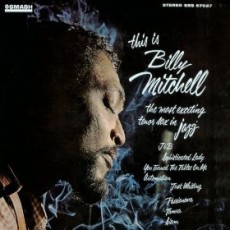
Billy Mitchell was born in Kansas City, Missouri on November 3, 1926. In the late Forties he worked Detroit with the Nat Towles’ band before venturing to New York to join Lucky Millinder. In 1949 he recorded with Milt Jackson, worked and recorded with the big bands of Milt Buckner, Gil Fuller and toured with Woody Herman’s Second Herd.
1950 saw him back in Detroit but by mid-decade Billy was playing with the Dizzy Gillespie Big Band taking a making solo on cool Breeze at the ’57 Newport Jazz Festival. From 1957 until 1961 and from 1966 to 1967 Mitchell played with Count Basie, replacing Eddie “Lockjaw” Davis. In the early 1960s he co-led a group with trombonist Al Grey, and also served as musical director for Stevie Wonder during this period.
Although he had a short list of recordings as a leader Mitchell performed with jazz luminaries like Bobby Hutcherson, Gene Ammons, Rufus Reid, Tommy Flanagan, Sam Jones, Dolo Coker and Earl May among others, his “Colossus in Detroit” has remained a sought after collectible album.
Tenor saxophonist Billy Mitchell, who mainly played in the hard bop genre, passed away of lung cancer on April 18, 2001 in Rockville Centre, New York.
Give The Gift Of Knowledge
Daily Dose Of Jazz…
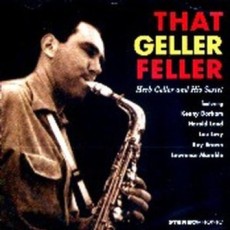
Herb Geller was born Herbert Arnold Geller on November 2, 1928 in Los Angeles, California. His initial exposure to was from his mother who played piano accompanying silent films at a Hollywood theater. At the age of 8, he was presented with an alto saxophone and two years later started clarinet. He went to Dorsey High School, joined the school band with Eric Dolphy and Vi Redd. At the age of 14, after hearing Benny Carter live in performance, he decided to pursue a career a music career playing his original instrument of study.
By age sixteen Geller had his first professional engagement in the band of jazz violinist Joe Venuti. A short time later he discovered Charlie Parker and Johnny Hodges and along with Carter became important idols for him. A move to New York City in 1949 saw him performing in the bands of Jack Fina with Paul Desmond, Claude Thornhill, Jerry Wald and Lucky Millinder. It was during this time he met hi future wife and musical partner Lorraine Walsh.
After three years in New York, Herb joined the Billy May orchestra in 1952 and, following an engagement in Los Angeles, returned there to live. He worked and recorded with Shorty Rogers, Maynard Ferguson, Bill Holman, Shelly Manne, Marty Paich, Barney Kessell, Andre Previn, Quincy Jones, Wardell Gray, Jack Sheldon, and Chet Baker. He recorded three album as a leader for Emarcy plus some with Dinah Washington, Max Roach, Clifford Brown, Clark Terry, and Kenny Drew.
In 1955 he won the “New Star Award” from Down Beat Magazine, worked in the bands of Louis Bellson and Benny Goodman, played bossa nova in Beazil and sailed to Europe and played in Paris with Kenny Clarke, Kenny Drew, Martial Solal, Rene Thomas and toured with a French radio show, Musique Aux Champs-Elysées. He would go on to work with the RIAS Big Band in Berlin, play lead alto and arrange for the NDR Big Band in Hamburg and for twenty0eight years made the city his home. During this period her performed with Don Byas, Joe Pass, Sloide Hampton, Bill Evans, Red Mitchell, Art Farmer, Georgie Fame, Ray Charles, Ella Fitzgerald, Baden Powell, Peter Herbolzheimer and George Gruntz.
He composed for two musicals Playing Jazz, a musical autobiography and Josie B, based upon the life of Josephine Baker, taught at the Hochschule fur Muzik, and wrote a method of improvisation called crossover, was knighted, and awarded the Louis Armstrong Gedachtnispreis. Alto saxophonist Herb Geller who also played clarinet, flute, oboe, English horn and passed away of pneumonia in a hospital in Hamburg, Germany, aged 85, on December 19, 2013.
Put A Dose In Your Pocket
More Posts: english horn,flute,saxophone