

Daily Dose Of Jazz…
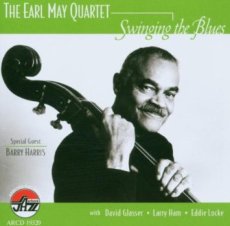
Earl May was born on September 17, 1927 in New York City first gravitated to drums, but at 14 acquired an acoustic bass, later making his professional debut at the Bronx’s 845 Club. While working an insurance job by day, 1949 saw May moonlighting across the New York club circuit, eventually catching the attention of drummer Connie Kay, who invited him to sit in behind Lester Young at Harlem’s now-legendary Minton’s Playhouse. He continued honing his craft in clubs like Minton’s Playhouse with musicians such as Lester Young and Mercer Ellington. A protégé of the legendary Charles Mingus, in 1951 Earl joined the Billy Taylor Trio, appearing regularly in such clubs as the Hickory House, Birdland and the Downbeat Club.
During the Fifties Earl also worked with Charlie Parker, Miles Davis, Quincy Jones, Gene Ammons, Sonny Stitt, Chet Baker, and Lorez Alexandria, Webster Young among others and recorded the classic “Lush Life” with John Coltrane. He left the Billy Taylor Trio in 1959 to form his own group and act as musical director and arranger for Gloria Lynne.
By the mid-sixties May took up the electric bass and led the Earl May Quartet at The New York Playboy Club and the group rapidly became the epitome of great music in the New York club scene.
Over the years Earl has performed or recorded with Dizzy Gillespie, Frank Foster, Cab Calloway, Tommy Flanagan, Barry Harris, Junior Mance, Benny Powell, Carmen Bradford, Frank Foster, Dizzy Gillespie, Linda Hopkins, Doc Cheatham, Charles Brown, Claude Williams, Jon Hendricks, Charles McPherson, Marlena Shaw, Ruth Brown, Winard Harper and Phyllis Hyman to name a few more.
Jazz bassist Earl May, one of the most prodigious and prolific bassists of the postwar era, lent his rich, round sound to every session and performance, was the only bassist to play with his left hand but kept the strings in their normal order and was a member of Local 802 since 1947, passed away on January 5, 2008. He was 80 years old.

Give The Gift Of Knowledge
More Posts: bass
Daily Dose Of Jazz…
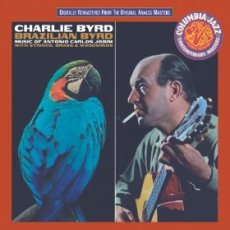
Charlie Lee Byrd was born on September 16, 1925 in Suffolk, Virginia but grew up in Chuckatuck, Virginia and his father taught him to play the acoustic steel guitar at age 10. He went on to Virginia Polytechnic Institute, served in the Army and played in the Special Services band in Paris. Returning to New York he studied composition at Hamett National Music School, taking up classical guitar.
Charlie moved to Washington, D.C. in 1950 and studied classical guitar with Sophocles Papas, then with Andre Segovia. By 1957 he teamed up with bassist Keter Betts and started gigging around D.C. for two years, joined Woody Herman for a State Department goodwill tour.
Byrd was first introduced to Brazilian music by his friend radio host Felix Grant who was well known in Brazil in 1960. A subsequent tour of Brazil and he returned home with recordings from Joao Gilberto and Antonio Carlos Jobim. He met with Stan Getz who convinced Creed Taylor, then at Verve Records to produce the album, recording “Jazz Samba” in 1962 in a building adjacent to All Souls Unitarian Church because of the excellent acoustics found there. And his love affair with Brazilian music began.
Over the course of his career he has toured the world, performed at numerous festivals, played with such jazz legends as Les McCann, Zoot Sims, Vince Guaraldi, his brother bassist Joe Byrd, Chuck Redd, Herb Ellis, Barney Kessel and the list goes on.
Charlie Byrd died of lung cancer on December 2, 1999 at his home in Annapolis, Maryland. He was deemed a Maryland Art Treasure in 1997 and knighted by the government of Brazil as the Knight of the Rio Branco.
Take A Dose On The Road
More Posts: guitar
Daily Dose Of Jazz…
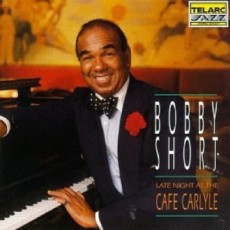
Bobby Short was born Robert Waltrip Short on September 15, 1924 in Danville, Illinois. With his mother’s permission he left home for Chicago and began performing as a busker at the age of eleven.
He started working in clubs in the 1940s and in 1968 he was offered a two-week stint at the Café Carlyle in New York City’s Carlyle Hotel, a relationship that lasted until 2004. His seemingly effortless elegance and vocal phrasing were perfected at the feet of Mabel Mercer and Ethel Waters. Bobby’s presentation of unknown songs worth knowing and his infectious good cheer made him tremendously popular and earned him great respect.
He became best known for his interpretations of songs composed by Rodgers and Hart, Cole Porter, Jerome Kern, Harold Arlen, Vernon Duke, Noel Coward and the Gershwin brothers but was equally adept at championing the works of Duke Ellington, Billy Strayhorn, Eubie Blake, James P. Johnson, Andy Razaf, Fats Waller and Bessie Smith.
Bobby Short, the pianist and cabaret singer, recorded 22 albums from 1955 to 2001, appeared in ten movies and 3 television shows and who was instrumental in spearheading the construction of the Ellington Memorial in his beloved New York City, passed away on March 21, 2005.
Dose A Day – Blues Away
Daily Dose OF Jazz…
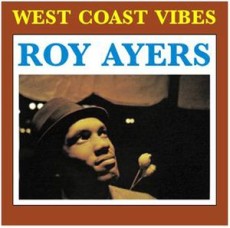
Roy Ayers was born on September 10, 1940 in Los Angeles, California and grew up in the epicenter of southern California Black music scene known as South Park, now called South Central. He received his first set of mallets at age five from Lionel Hampton thus leading him to the vibraphone.
He studied music attending Central Avenue area schools Wadsworth elementary, Nevins Middle and Thomas Jefferson High that also graduated Dexter Gordon. He became part of the West Coast jazz scene in the early ‘60s, played withCurtis Amy as well as Herbie Mann for four years and recorded his first album West Coast Vibes in 1963 and several albums for Atlantic Records as a post-bopper. It was during this period that he became exposed to new styles of music outside bebop.
The 70s saw the advent of jazz funk and Roy was there to help pioneer its rise. With highly successful soundtracks like “Coffy” Ayers went on to record “Mystic Voyage”, “Everybody Loves The Sunshine”, “Running Away” and a string of hits throughout the decade. By 1980 he had teamed with Fela Kuti releasing Afrobeat “Music of Many Colors, went on to produce Sylvia Striplin’s “Give Me Your Love”, and released several albums on the Ichiban label. He collaborated on the Stolen Moments: Red, Hot+ Cool project, turned his attention to house music, founded two record labels – Uno Melodic and Gold Mink, and currently is the feature of the documentary called the Roy Ayers Project.
Roy Ayers, vibraphonist, vocalist, keyboardist, producer, jazz, funk and soul composer has recorded over 50 albums during his long and prolific career and he continues to perform, record and tour.
Give The Gift Of Knowledge
More Posts: keyboard,vibraphone,vocal
Daily Dose Of Jazz…
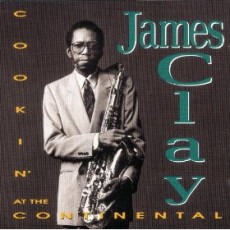
James Earl Clay was born on Sept. 8, 1935 in Dallas, Texas. While in school Clay played alto saxophone, became a professional musician, and played with Booker Ervin and other local Dallas bands. An early associate of Ornette Coleman, he also played with Don Cherry and David “Fathead” Newman.
He later went to California where he played in 1957 in Red Mitchell’s quartet and on recordings with Lawrence Marable but by the end of the year was back in Dallas. Clay served in the Army in 1959.
As a leader he recorded for the Antilles, Jazz West, Fresh Sounds, Polygram and OJC record labels. Jazz flautist, tenor and alto saxophonist James Clay, known for his appealing tone and bop style passed away in Dallas on January 1, 1994.
Dose A Day – Blues Away