

Daily Dose Of Jazz…
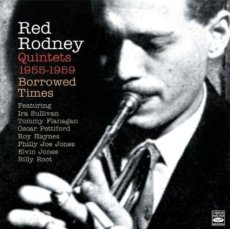
Red Rodney was born Robert Roland Chudnick on September 27, 1927 in Philadelphia, Pennsylvania. He became a professional musician at age 15 working in the mid-Forties Jerry Wald, Jimmy Dorsey, George Auld, Benny Goodman and Les Brown. Inspired by Dizzy Gillespie and Charlie Parker he turned to bebop and began playing with Claude Thornhill, Gene Krupa and Woody Herman.
Red joined Parker’s quintet in 1949 and was billed as Albino Red when playing in the racially segregated South. Leaving Parker he moved to join Charlie Ventura. Recording extensively over the next ten years he left jazz in 1958 due to diminishing opportunities, lack of acceptance as a white bebop trumpeter, and problems with the police about his drug addiction.
He continued to work in other musical fields and although he continued to be paid well, he supported his drug habit through theft and fraud, eventually spending 27 months in prison. In the early 1970s he was bankrupted by medical costs following a stroke and returned to jazz.
From 1980 to 1982, Rodney made five highly regarded albums with multi-instrumentalist Ira Sullivan, worked with The Rolling Stones drummer Charlie Watts, provided an early showcase for saxophonist Chris Potter, a member of his working group when Rodney recorded “Red Alert” in late 1990. Bebop and hard bop trumpeter Red Rodney passed away on May 27, 1994.

Give A Gift Of Jazz – Share
More Posts: trumpet
Daily Dose Of Jazz…
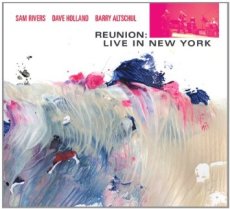
Samuel Carthorne Rivers was born September 25, 1923 in Enid, Oklahoma, the son of a gospel musician who sung with the Fisk Jubilee Singers and the Silverstone Quartet which exposed a young Sam to music at an early age. By 1947 he was in Boston studying Alan Hovhaness at the Boston Conservatory.
Active in jazz since the early 1950s, by the end of the decade he was performing with then 13 year-old drummer Tony Williams. In the mid Sixties he held a short-lived tenure with Miles Davis, producing the album Miles In Tokyo. He went on to sign with Blue Note leading four dates, his first being Fuschia Swing Song and contributing many more as a sideman.
A multi-instrumentalist, Rivers who plays soprano and tenor saxophones, bass clarinet, flute, harmonica and piano, is also a composer. Rooted in bebop and equally adept at free jazz he has performed and recorded with the likes of Quincy Jones, Herb Pomeroy, Tadd Dameron, Jaki Byard, Freddie Hubbard, Herbie Hancock, Andrew Hill, Larry Young and many others.
The 70s saw the rise of the loft era and Rivers ran RivBea in New York’s NoHo district where numerous performance lofts emerged. He continued to perform and record for a variety of labels including several albums for Impulse Records, two big band albums for RCA Victor, and joined Dizzy Gillespie’s band near the end of the trumpeter’s life.
With a thorough command of music theory, orchestration and composition, Rivers has been an influential and prominent artist in jazz music. He performs regularly with his RivBea Orchestra and Trio and is currently recording new works. Sam Rivers, who played soprano and tenor saxophones, bass clarinet, flute, harmonica and piano in the avant-garde and free jazz arenas, passed away on December 26, 2011 in Orlando, Florida at age 88.
Put A Dose In Your Pocket
Daily Dose Of Jazz…
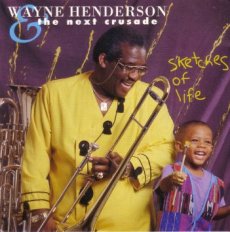
Wayne Henderson was born on September 24, 1939 in Houston, Texas. While studying piano at Texas Southern University the trombonist met Joe Sample and along with several became a part of the Swingsters that became the Modern Jazz Sextet and then the Jazz Crusaders in emulation of one of the leading progressive jazz bands of the day, Art Blakey’s Jazz Messengers.
The soul-jazz and hard bop trombonist and record producer is a very fluent technician who exhibits the influence of lesser apt, yet significant trombonists such as Kid Ory and Jack Teagarden. One can hear his Texas roots in his performances.
He left The Crusaders in 1975 to pursue a career in producing, but revived The Jazz Crusaders in 1995, however, some of his best work is on the mid-1970s Crusaders double album Southern Comfort. Since 2007, he has held a position with the California College of Music in Pasadena, California. Trombonist Wayne Henderson passed away from heart failure on April 5, 2014 at the age of 74 in Culver City, California.
Give The Gift Of Knowledge
More Posts: trombone
Daily Dose Of Jazz…
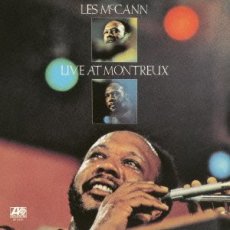
Les McCann was born on September 23, 1935 in Lexington, Kentucky. He first gained notoriety in the early Sixties with his trio while recording for Pacific Jazz Records and working with Ben Webster, Richard “Groove Holmes, Blue Mitchell, Stanley Turrentine, Joe Pass, the Jazz Crusaders, and the Gerald Wilson Orchestra.
In 1969, Atlantic Records released Swiss Movement recorded with saxophonist Eddie Harris at the Montreux Jazz Festival. The album featured trumpeter Benny Bailey and contained the tune “Compared To What” which took the album and the single to the top of the Billboard charts, bringing worldwide recognition to the musician even though it contained political criticism of the Vietnam War.
After the success of Swiss Movement the pianist began to emphasize his rough-hewn vocals more becoming an innovator in the soul jazz style, merging jazz with funk, soul and world rhythms; much of his early 1970s music prefigures the great Stevie Wonder albums of the decade. He was among the first jazz musicians to include electric piano, clavinet, and synthesizer in his music.
Les discovered Roberta Flack, obtained an audition that resulted in a recording contract with Atlantic Records and the 1969 release of her album First Take. In 1971, he and Harris were part of a group of soul, R&B, and rock performers that included Wilson Pickett, The Staple Singers, Santana and Ike & Tina Turner who flew to Accra, Ghana for a historic 14-hour concert before more than 100,000 Ghanaians.
He continued a long and moderately successful career for the next two decades until a stroke in the mid 1990s sidelined McCann for a while but in 2002 he released a new album Pump it Up. The soul jazz piano player and vocalist found success both in the jazz arena and as a crossover artist into R&B and soul. Pianist and vocalist Les McCann died from pneumonia in a Los Angeles hospital on December 29, 2023, at age 88.
Take A Dose On The Road
Daily Dose Of Jazz…
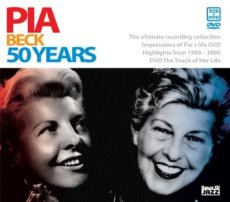
Pia Beck was born Pieternella Beck on September 18, 1925 in Den Haag, Netherlands. She was a natural on the piano without significant musical training. In 1945 she joined the Miller Sextet taking the piano chair and vocalist slot touring Belgium, Germany, Sweden and the Dutch East Indies.
By 1949 she started her own combo and her first composition, Pia’s Boogie, became an instant hit, though she never learned to read sheet music. 1952 saw her first visit the United States, toured the jazz club circuit – an annual event until 1964, was nicknamed “The Flying Dutchess” by Time Magazine who also gave her the cover, and was bestowed honorary citizenship of New Orleans and Atlanta.
In 1965 Beck emigrated to Costa de Sol with her life partner and three children, opened a piano bar and when it went bankrupt she opened a real estate firm and wrote travel guides. By 1975 she was on the comeback trail in Scheveningen, Netherlands and once again enjoyed a successful career, albeit, openly exposing her homosexuality during her U.S. tours by resisting against the anti-gay activist Anita Bryant during the late Seventies.
Pia Beck said goodbye to the general public in 2003. The pianist who Oscar Peterson called the best jazz pianist in the world, died at age 84 of heart failure on November 26, 2009 in Malaga, Spain.