

Daily Dose Of Jazz…
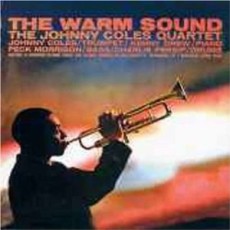
Trumpeter Johnny Coles was born on July 3, 1926 in Trenton, New Jersey. He spent his early career playing with R&B groups, including those of Eddie Vinson, Bull Moose Jackson, and Earl Bostic from 1948-1956). He joined James Moody for two years in 1956, then played with Gil Evans’s orchestra between 1958 and 1964 and was a part of the Miles Davis ensemble on Sketches of Spain.
Following this period, Coles worked with the Charles Mingus sextet which also included Eric Dolphy, Clifford Jordan, Jaki Byard, and Dannie Richmond. From 1968 to 1986 he played with Herbie Hancock, Ray Charles, Duke Ellington, Art Blakey, Dameronia, Mingus Dynasty and the Count Basie Orchestra under Thad Jones’ direction.
Coles recorded as a leader several times over the course of his career for Epic, Blue Note, Mainstream and Criss Cross record labels. As a sideman he recorded sessions with Tina Brooks, Booker Ervin, Grant Green, Horace Parlan and Duke Pearson among others.
Nicknamed “Little Johnny C”, the trumpeter passed away of cancer on December 21, 1997 in Philadelphia, Pennsylvania.
More Posts: trumpet
Daily Dose Of Jazz…
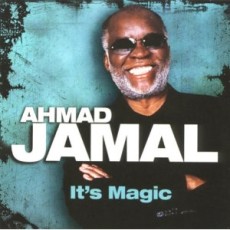
Ahmad Jamal was born Freddy “Fritz” Jones on July 2, 1930, in Pittsburgh, Pennsylvania. A child prodigy, he began playing the piano at the age of three and started formal studies at 7. While attending Westinghouse High School, he completed the equivalent of college master classes under the noted African-American concert singer and teacher Mary Caldwell Dawson and pianist James Miller. Joining the musicians union at 14, he began touring with first the George Hudson Orchestra upon graduation at the age of 17. He followed that employ with The Four Strings, that drew critical acclaim for his solos.
Jamal moved to Chicago in 1950, formed his first trio, The Three Strings and was discovered and signed by record producer John Hammond while performing at New York’s The Embers Club. At Okeh Records the trio cut their first sides in 1951. Working as the house trio at the Pershing Hotel in Chicago they recorded and released the landmark classic album “But Not For Me” which stayed on the Ten Best selling charts for 108 weeks. The financial success from this one album allowed Jamal to open a restaurant and club call The Alhambra.
Miles Davis, Randy Weston, Keith Jarrett, Jack DeJohnette and Gary Peacock cite him as a major influence in use of rhythm and space as well as his innovative use of multi-tonal melodic lines and his unique extended vamps. Over the course of his career Ahmad Jamal’s style has changed steadily from the lighter, breezy style heard on his 1950s recordings to the Caribbean styling of the 1970s and onto the large open voicing and bravura-laden playing of the Nineties.
He performed the title tune by Johnny Mandel for the soundtrack of the film “Mash”, has received the American Jazz Masters award from the National Endowment for the Arts; named a Duke Ellington Fellow at Yale University; and two tracks from his hit album But Not For Me – “Music, Music, Music,” and “Poinciana” were featured in Clint Eastwood’s film The Bridges of Madison County. The French government has inducted Ahmad Jamal into the prestigious Order of the Arts and Letters, naming him “Officer de l’Ordre des Arts et des Lettres.
Pianist Ahmad Jamal continues to tour with his trio, playing the world’s most prestigious venues and festivals exclusively on Steinway pianos.
More Posts: piano
Daily Dose Of Jazz…
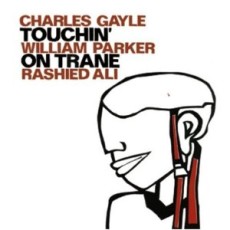
Rashied Ali, born Robert Patterson on July 1, 1933, grew up learning to play drums in Philadelphia, Pennsylvania influenced by his mother who sang with Jimmie Lunceford, and his brother Muhammad, a drummer with Albert Ayler.
Moving to New York in 1963, Ali worked in groups with Bill Dixon and Paul Bley. He would go on to record or perform with Pharoah Sanders, Alice Coltrane, Arthur Rhames, James Blood Ulmer and many others. Scheduled to be second drummer alongside Elvin Jones on John Coltrane’s landmark free jazz album Ascension, he dropped out just before the recording was to take place. Though Coltrane did not replace him, he became best known for playing and recording with Trane from Meditations in 1965 onwards.
Rashied became a driving force in the free and avant-garde drumming world, stimulating the most avant-garde kinds of jazz activities. During the early 1970s, he ran an influential loft club in New York, called Ali’s Alley, briefly formed a non-jazz project called Purple Trap with Japanese experimental guitarist Keiji Haino and jazz-fusion bassist Bill Laswell. In the 1980s, he was member of Phalanx with guitarist James Blood Ulmer, tenorist George Adams and bassist Sirone.
Though most known for his work in the jazz idiom, Rashied Ali also made his contributions to other experimental art forms including multi-media performances and fully improvised large-scale performance pieces. During the last years of his life he played with Sonny Fortune, led his own quintet, served as mentor to young drummers, and was the featured drummer on Azar Lawrence’s 2009 album Mystic Journey.
Over the course of his stellar career drummer Rashied Ali amassed a discography of eighteen albums as a leader with another thirty as a sideman. He continued to record, perform and tour worldwide until his death at age 74 in New York City after suffering a heart attack on August 12, 2009.
More Posts: drums

Daily Dose Of Jazz…
Julian Priester was born on June 29,1935 in Chicago, Illinois. He attended DuSable High School studying under Walter Dyett and during his teens he played trombone with Muddy Waters, Dinah Washington, and Bo Diddley and jammed with jazz greats Max Roach, Clifford Brown and Sonny Stitt.
By the early 1950s Priester was a member of Sun Ra’s big band, recording several albums with the group before leaving Chicago in 1956 to tour with Lionel Hampton. Settling in New York in ’58 Julian joined Max Roach’s band and during his tenure recorded two albums as a leader for Riverside Records titled Spiritsville and Keep Swingin’.
In 1961 Priester left Max Roach and for the next eight years took a sideman gig on albums by Freddie Hubbard, Stanley Turrentine, Blue Mitchell, Art Blakey, Joe Henderson, McCoy Tyner, Johnny Griffin and Sam Rivers. During that period he also took part in Coltrane’s Africa/Brass ensemble, which played with Coltrane’s quartet on the album by the same name recorded in 1961. Accepting an invitation to play with Ellington’s big band, he stayed for six months and by 1970 Priester was playing fusion in Herbie Hancock’s sextet.
In 1973, Priester moved to San Francisco, recorded two more albums as a leader, joined the faculty of Cornish College of the Arts in Seattle in 1979 teaching jazz composition, performance and history. Over the course of the next three decades Julian has been a member of the Dave Holland band, returned to play with Sun Ra’s band, became a member of Charlie Haden’s Liberation Music Orchestra, co-led with drummer Jimmy Bennington “Portraits and Silhouettes”, played the 30th Annual Chicago Jazz Festival and made significant contribution to “Alice”, a tribute album to Alice Coltrane.
Trombonist Julian Priester’s musical experience spans to the borders of jazz and beyond, encompassing R&B, bebop, hard bop, and progressive and free jazz.
More Posts: trombone
Daily Dose Of Jazz…
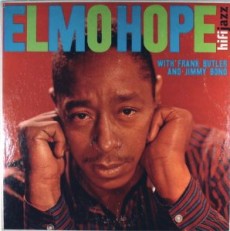
Elmo Hope was born St. Elmo Sylvester Hope on June 27, 1923 in New York City, he began his career with the Joe Morris band. From 1953 he recorded in New York as a leader and as a sideman with Sonny Rollins, Lou Donaldson, Clifford Brown and Jackie McLean. Losing his cabaret card in New York for drug use he moved to Los Angeles in 1957. On the West Coast he performed with Chet Baker before moving, followed with a stint with Lionel Hampton, then recorded with Harold Land and Curtis Counce.
Elmo led recording sessions with Frank Foster, John Coltrane, Hank Mobley, Art Blakey, Paul Chambers, and Philly Joe Jones. On a number of occasions Hope recorded in the trio format and more rarely as a leader of a quintet for Blue Note, Prestige, Riverside and other labels.
Disillusioned with the West Coast scene, Hope returned to New York in 1961, where he went to prison briefly on drug charges then returned to playing, recording duet albums with his pianist wife Bertha but recorded more rarely. Pianist Elmo Hope died of an overdose on May 19, 1967.
Though overshadowed by his contemporaries Bud Powell and Thelonious Monk, with his highly individual playing Hope holds a significant place alongside them, cited by later pianists Frank Hewitt and Sasha Perry, guitarist Kurt Rosenwinkel as their main influence, and Roswell Rudd composed “Hope No. 2” in his honor and during a concert with Archie Shepp, called Elmo Hope “ A great and fine composer and remains one of America’s well kept secrets”.
More Posts: piano