

Daily Dose Of Jazz…
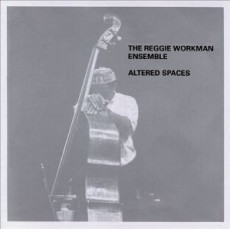
Reggie Workman was born Reginald Workman on June 26, 1937 in Philadelphia, Pennsylvania has been lauded for his work with both John Coltrane and Art Blakey. The double bassist, known for his avant-garde jazz and hard bop playing was a member of jazz groups led by Gigi Gryce, Roy Haynes, Wayne Shorter and Red Garland.
It was in 1961 that Workman joined Coltrane’s quartet, replacing Steve Davis and became a part of Trane’s “Live At The Village Vanguard” sessions, which has since become a legendary album. He also worked along with second bassist Art Davis on “Ole Coltrane”.
After a European tour Workman left the quartet and went on to play with James Moody, Yusef Lateef, Pharoah Sanders, Herbie Mann, Thelonious Monk, and became a Jazz Messenger. He has recorded several albums as a leader and with Archie Shepp, Lee Morgan and David Murray.
Reggie Workman has recorded seven albums as a leader and nearly four-dozen as a sideman working with Booker Little, Oliver Lake, Duke Jordan, Bobby Hutcherson and Grant Green among many others. He is currently a professor at The New School for Jazz and Contemporary Music in New York City.
More Posts: bass

Daily Dose Of Jazz…
Eric Allan Dolphy was born on June 20, 1928 in Los Angeles, California and received his musical education at Los Angeles City College. Performing locally in the big bands of Gerald Wilson and Roy Porter, he played soprano clarinet, baritone saxophone and his main instrument, the alto, on early recordings. But his big break came when he joined Chico Hamilton’s quintet, gaining wider audience recognition.
By 1959 Dolphy had moved to New York City and his early association with then established John Coltrane brought him acclaim amongst jazz lovers. During this period, Dolphy also played in a number of challenging settings, notably in key recordings by Ornette Coleman’s Free Jazz: A Collective Improvisation; Oliver Nelson’s The Blues and the Abstract Truth; and George Russell’s Ezz-thetics. He also worked with Max Roach, Gunther Schuller, Ron Carter, Ken McIntyre and Abbey Lincoln among others.
His first two albums as leader produced Outward Bound and Out There that were deeply rooted in hard bop with trumpeter Freddie Hubbard. This was followed with Far Cry with Booker Little, with whom he would record a series of legendary sets at the Five Spot before Little’s death at 23. In 1964, Dolphy signed with Blue Note and recorded Out To Lunch! with Hubbard, Bobby Hutcherson, Richard Davis and Tony Williams. This record was rooted in the avant-garde, his solos unpredictable and is considered his magnum opus.
Eric Dolphy died in Berlin while touring with Charles Mingus on June 29, 1964. The circumstances are sketchy as to where he died and the cause, though he was a diabetic. Whatever the cause, the jazz world lost an alto saxophonist, flautist, clarinetist who contributed profusely to the genre of jazz during his short-lived 36 years.
Daily Dose Of Jazz…
Sue Raney was born on June 18, 1940 in McPherson, Kansas. The proverbial fruit did not fall far from the tree as her mother was a singer and a great, great aunt had been a performer in German opera. She started singing at age four and a year later was performing in public. Due to her young age no voice teacher could be engaged, mother took voice lessons herself and then passed down what she learned to Sue.
A professional before she was a teenager, Raney worked steadily in New Mexico when her family relocated and took several trips out to Los Angeles during a couple of summer vacations. She joined the Jack Carson radio show in 1954 in L.A. when she was barely 14. By age 17 was signed by Capitol Records to record her debut album, the Nelson Riddle-produced When Your Lover Has Gone, released in 1958.
Sue then appeared on Ray Anthony’s television program and became his band’s main vocalist. At 18 she started working as a single. She had already recorded for Phillips and then signed with Capitol, recording several middle-of-the-road jazz-influenced pop dates including her 1958 Nelson riddle-produced debut album “When Your Love Has Gone”.
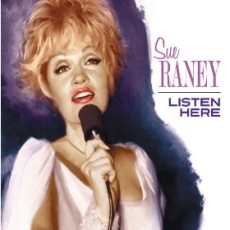
In the 1960’s Raney often appeared on television variety shows, led her own group and became very active in the studios where her impressive voice helped sell products. After a hiatus in the 1970s, the jazz vocalist continued to record sporadically and by the early 1980’s, in addition to recording several jazz albums for Discovery Records, she began working as a voice teacher. Through the Nineties and into the new millennium she sang with the L.A. Voices, Supersax, the Bill Watrous Big Band and as a soloist, releasing “Heart’s Desire”, a 2006 tribute album to Doris Day and in 2011“Listen Here: Alone With Alan Broadbent”.
Over the course of fifty years vocalist Sue Raney has recorded twenty albums, performed music ranging from swinging jazz and ballads to cabaret, middle-of-the-road pop and jingles, and has remained active as a jazz educator and in the studios.
More Posts: vocal
Daily Dose Of Jazz…
Chuck Rainey was born Charles Walter Rainey III on June 17, 1940 in Cleveland, Ohio. His youthful pursuits included violin, piano and trumpet but switched to baritone horn in order to join the Lane College traveling ensemble while matriculating. But it was while on active military duty that he learned the rhythm guitar, however, his lack of improvisational skills led him to pick up the bass. He soon found steady work as a studio bassist in New York, recording and touring with many of the greats of the time.
Through the 1970s he played with Jerome Richardson, Grady Tate, Mose Allison, Gato Barbieri, Gene Ammons and Eddie Vinson. He was a member of the King Curtis All Stars, toured with the Beatles second U.S. run and had firmly established himself as New York City’s “first call” session bass guitarist.
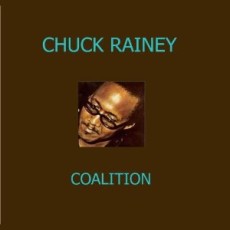
In 1972, he released his first solo album “The Chuck Rainey Coalition” consisting of notable session musicians Richard Tee, Warren Smith, Specs Powell, Eric Gale, Bernard Purdie, Herb Lovelle, Cornell Dupree and Billy Butler. He moved to Los Angeles that same year working with Quincy Jones and his big band but continued as a studio musician playing for Betty Davis, Steely Dan and Aretha Franklin.
Rainey’s style has always been to provide a rhythmic and melodic bottom that works with the drummer for the benefit of the song. His books on bass study refer to ”sensitivity to music” and a dedication to studying the fundamentals of music theory. While his “sideman” philosophy of bass has not brought him the level of recognition of star players such as Jaco Pastorious, Rainey is by far more recorded than his more famous contemporaries.
More Posts: bass
Daily Dose Of Jazz…
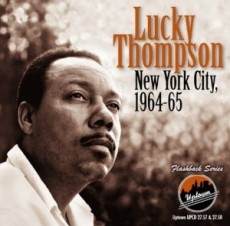
Lucky Thompson was born Eli Thompson on June 16, 1924 in Columbia, South Carolina but the family moved to Detroit, Michigan during his childhood. Raising his siblings after his mother died, he practiced his saxophone fingerings daily on a broomstick prior to acquiring his first instrument. After graduating from high school in 1942 he joined the Erskine Hawkins band.
Lucky went on to play with the swing orchestras of Lionel Hampton, Don Redman, Billy Eckstine, Lucky Millinder and Count Basie, he worked in rhythm and blues, later establishing a career in bop and hard bop working with Kenny Clarke, Miles Davis, Dizzy Gillespie and Milt Jackson.
An inspired soloist playing in a more advanced bebop format in the early 60s and capable of a very personal style in which the tradition of Coleman Hawkins, Ben Webster and Don Byas was intelligently mixed with a modern grasp of harmony. He showed these capabilities as sideman on many albums recorded during the mid-1950s, such as Stan Kenton’s Cuban Fire and those under his own name.
He appeared on Charlie Parker’s Los Angeles Dial Records sessions and on Miles Davis’s hard bop Walkin’ session. Thompson recorded albums as a leader for ABC Paramount, Prestige and as a sideman on records for Savoy with Milt Jackson as leader.
In the late 60’s Thompson lived in Lausanne, Switzerland and recorded several albums there including A Lucky Songbook in Europe. He taught at Dartmouth College in 1973 and 1974, and then left the music business completely, because of the racist treatment he received from record companies and clubs.
In his last years he lived in the Pacific Northwest suffering from Alzheimer’s disease and on July 30, 2005, hard bop saxophonist Lucky Thompson passed away in Seattle, Washington.

More Posts: saxophone