

Daily Dose Of Jazz…
Art Anton was born on September 8, 1926 in New York City. In the early 40’s he was a private student of Irving Torgman, and was a music major at New York University from 1943 through 1944. He returned for further studies from 1946 through 1947. In between, the Navy grabbed him to play its own military paradiddles. From the late ’40s onward, he began working with leaders such as Herbie Fields, Sonny Dunham, Bobby Byrne, Tommy Reynolds, and Art Wall.
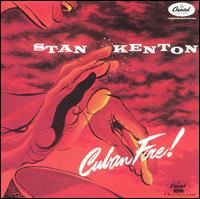
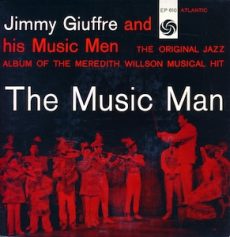
In 1952, he got into the combo of saxophonist Bud Freeman, moving to pianist Ralph Flanagan’s band the following year. Anton’s drumming style stuck closely to straight-ahead jazz swinging or whatever other beat was required. After gigs in 1954 with Jerry Gray and Charlie Barnet, he relocated to the west coast and began freelancing. He performed and recorded with the big band of Stan Kenton to multi-instrumentalist Jimmy Giuffre’s smaller units.
Maintaining steady employment as a jazzman on the stingy Los Angeles, California scene was difficult, and Artie looked for other types of employment. During the ’60s, he turned to selling vacuum cleaners, worked as a private detective, while remaining a highly respected West Coast percussionist.
Drummer and percussionist Art Anton, who is also listed as Artie or Arthur, died on July 27, 2003 in Yakima, Washington.

More Posts: drums,history,instrumental,jazz,music,percussion
Daily Dose Of Jazz…
Sol Schlinger was born on September 6, 1926 in the Bronx, New York. His father was an unsuccessful entrepreneur who booked concerts in Europe, his mother a successful cook who earned the family money. He grew up with Stan Getz, Bernie Glow and Lenny Hambro. His first instrument was the tenor saxophone and took lessons from the saxophonist in the band at a small resort in the Catskill Mountains north of New York City. His dedication did not go unnoticed and his father got him a C-melody saxophone and began lessons with Bill Sheiner on a tenor that he sold him for $75.
He began his professional career at the age of sixteen with Henry Jerome & His Stepping Stones at the Pelham Heath Inn. World War II saw Sol touring wit.h Shep Fields, including a trip to Europe to play for the troops. After the war ended he took up the baritone saxophone and went out on the road with Charlie Barnett’s band. He then joined Buddy Rich’s outfit.
The late Forties saw Schlinger with Tommy Dorsey, recording with Sauter-Finegan, and became a member of the East Coast sax section with Hal McKusick, Gene Quill, Zoot Sims, Al Cohn and sometimes Phil Woods. He often recorded with trombonist-arranger Billy Byers, who was also a ghostwriter for Quincy Jones. Following this he joined Benny Goodman for a period. He would go on to work with Tony Bennett, Carmen McRae and others.
Baritone saxophonist Sol Schlinger, who was a first call and solid anchor in the reed section, died at 91 years old on November 1, 2017.
More Posts: history,instrumental,jazz,music,saxophone
Daily Dose Of Jazz…
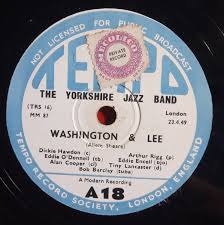
Richard Hawdon was born in Leeds, England on August 27, 1927 and first studied cello before moving to trumpet in his mid-teens. After a stint with the Yorkshire Jazz Band he relocated to London, England in 1951, signing on with Chris Barber’s famed New Orleans Jazz Band.
Hawdon replaced trumpeter Ken Colyer in the Christie Brothers Stompers in 1952, remaining with the group for close to two years. While his Louis Armstrong-inspired approach earned favor among traditional jazz purists, he developed a modernist sensibility influenced by Clifford Brown.
Bop and progressive jazz followed in 1954 as a member of Don Rendell’s group in addition to a stint as trumpeter and arranger with Tubby Hayes. He joined his first big band in mid-1956 with Basil and Ivor Kirchin and the next year he joined John Dankworth in 1957. This would be his longest and most rewarding career collaboration.
Beyond recordings with Dankworth, the group performed with Louis Armstrong, teamed with the Duke Ellington Orchestra, he wrote and arranged a number of Dankworth staples including Cool Kate and One for Janet. Hawdon went on to freelance with bandleaders Sid Phillips, Harry Gold, Oscar Rabin, Terry Lightfoot, and backed singers Tony Bennett and Eartha Kitt during a stint with the house band at the London cabaret Talk of the Town.
On the eve of the demise of jazz as the leading music of the era, Dick relocated to Yorkshire, England in 1967 and led the Batley Variety Club’s house band. A year later, he developed a jazz course at the new City of Leeds College of Music, and became head of the school’s Light Music Department in 1972. Hawdon also led his own jazz quintet throughout the 1980s, and after retiring from academia in 1993 he turned his attention to the bass, playing in a series of local groups.
Trumpeter and bassist Dick Hawdon died June 24, 2009.

More Posts: bandleader,bass,history,instrumental,jazz,music,trumpet
Daily Dose Of Jazz…
Frances Wayne was born Chiarina Francesca Bartocci or Clara Bertocci on August 26, 1924 in Boston, Massachusetts. She graduated from Somerville High School. Moving to New York City in her teens she sang in an ensemble led by her brother, saxophonist Nick Jerret.
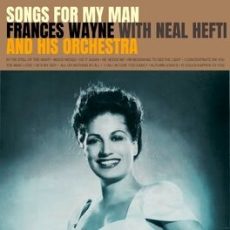
In the early 1940s she recorded with Charlie Barnet’s big band, and in 1943 sang with Woody Herman’s band. Marrying Neal Hefti in 1945, Frances soloed in her husband’s big band formed in 1947. In addition to her solo career she sang with Hefti into the 1950s.
She later sang with smaller ensembles featuring Hank Jones, Milt Hinton, Jerome Richardson, Richie Kamuca, John LaPorta, Billy Bauer and Al Cohn. On The Woody Herman Show broadcasted on the radio, Wayne was his female vocalist.
On February 6, 1978, vocalist Frances Wayne, who received the 1946 Esquire Award as Best New Female Vocalist, died after suffering from cancer over an extended period in her hometown at age 58.
More Posts: bandleader,history,instrumental,jazz,music,vocal
Daily Dose Of Jazz…
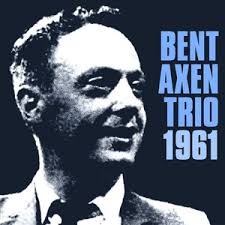
Bent Axen was born on August 12, 1925 in Copenhagen, Denmark.
Axen played for a year with Ib Renard in 1949 and in 1950 became a member of the Johnny Campbell and Max Brüel bands until 1958. He then moved on to work in Ib Glindemann’s orchestra. In 1960 he founded his own jazz quintet and also accompanied guest soloists such as Eric Dolphy in Erik Moseholm ‘s trio.
Between 1961 and 1967 he was a member of the radio jazz groups of Danmarks Radio, for which he also wrote compositions. He also performed with Don Byas. He went on to work as a theater musician and composer, first at Gladsaxe Teater and from 1971 at Folketeatret.
In 1960 he was honored as Danish “Jazz Musician of the Year”. Pianist, theatre and film composer Bent Axen, who released a half dozen albums as a leader, died on May 20, 2010.