

Daily Dose Of Jazz…
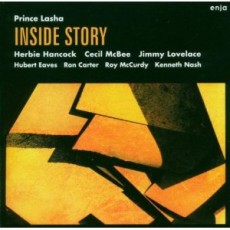
Prince Lasha (pronounced “La-shay“) was born William B. Lawsha on September 10, 1929 in Fort Worth, Texas. He came of age studying and performing alongside fellow I.M. Terrell High School students John Carter, Ornette Coleman, King Curtis, Charles Moffett and Dewey Redman.
Lasha moved to California during the 1950s. In the 1960s, Prince Lasha was active in the burgeoning free jazz movement, of which his Fort Worth cohort Ornette Coleman was a pioneer. Lasha worked closely with saxophonist Sonny Simmons , with whom he recorded two albums, The Cry and Firebirds no the Contemporary label, the latter receiving five stars and an AMG Albumpick at Allmusic. Later, he played with Harold Land.
Living to Europe for twenty years beginning in 1965, Lasha worked as a sideman appearing on recordings with Eric Dolphy, Elvin Jones/Jimmy Garrison Sextet featuring McCoy Tyner, and with Michael White. He also played with Steve Lacy , Paul Bley , Attila Zoller , Gary Peacock , and Barry Altschul. In the 1970s, Lasha and Simmons made additional recordings under the name Firebirds. In 2005, Lasha recorded the album The Mystery of Prince Lasha with the Odean Pope Trio.
From 1965, Lasha lived in Europe for two years, where In the 1970s, he recorded with the sextet of
Saxophonist, flautist and clarinetist Prince Lasha died on December 12, 2008, in Oakland, California. He left a small legacy of six recordings as a leader marking his place in jazz history.
Daily Dose Of Jazz…
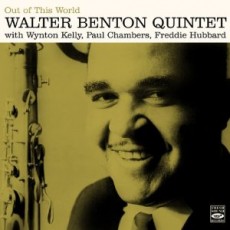
Walter Benton was born September 9, 1930 in Los Angeles, California and first began playing saxophone as in high school. After three years of service in the Army in the early 1950s, he played in 1954 with Kenny Clarke, Max Roach and Clifford Brown.
From 1954 to 1957 he played Afro-Latin jazz with Pérez Prado, touring Asia with the band. Returning to the States, he went on to work with Quincy Jones in 1957 and Victor Feldman in 1958-59. He led his own group from 1959, recording under his own name in 1960 with Freddie Hubbard , Wynton Kelly , Paul Chambers , and Albert “Tootie” Heath.
That same year he worked again with Max Roach and Julian Priester. In 1961 he recorded with Abbey Lincoln, Roach once more, Eric Dolphy and Slide Hampton. By the late 1960s he was working with Gerald Wilson and John Anderson.
As so often happens with great players, in the late 60’s Benton became discouraged with the state of jazz and the overall music business, disappeared from the scene, sank into poverty never re-discovered. He stopped playing and lived the rest of his days in cheap rooming houses and collected a pittance of social assistance.
On August 14, 2000, West Coast tenor saxophonist Walter Benton, who played cool and bluesy, ventured into free and wild before returning to his roots with his beautiful dark and somewhat diffused sound coupled with his own ideas and phrasing, passed away in total obscurity in Los Angeles at the age of 69.
More Posts: saxophone
Daily Dose Of Jazz…
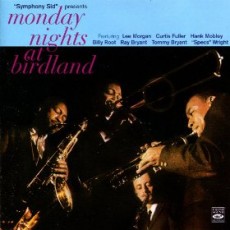
Specs Wright was born Charles Wright on September 8, 1927 in Philadelphia, Pennsylvania. He played drums in an Army band until his discharge in 1947. Following this he played in a group with Jimmy Heath and Howard McGhee. By 1949 he had joined Dizzy Gillespie‘s band alongside John Coltrane, remaining until it disbanded in mid-1950.
Wright would rejoin Dizzy late in the decade as a member of his sextet with Coltrane, Jimmy Heath, Percy Heath, and Milt Jackson. He would go on to play with Earl Bostic, Kenny Drew, Cannonball Adderley, Art Blakey, and Carmen McRae as well as a member of the Hank Mobley sextet with Billy Root, Curtis Fuller, Ray Bryant, Tommy Bryant, and Lee Morgan.
Not one to be idle, though never a leader, he was a sought after sideman playing with Sonny Rollins, Betty Carter, Red Garland, Coleman Hawkins, and Lambert, Hendricks and Ross in the early Sixties. Drummer Specs Wright passed away on February 6, 1963. He was 36 years old.
More Posts: drums
Daily Dose Of Jazz…
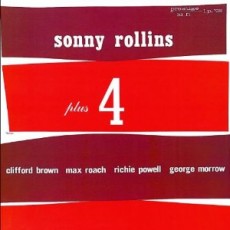
Richie Powell was born on September 5, 1931 in New York City, the older brother of bebop-icon Bud Powell. He studied piano at City College of New York and played in the bands of Paul Williams, Johnny Hodges and for two years was a member of the group led by Clifford Brown and Max Roach
Pianist McCoy Tyner, who grew up next door to Richie and brother Bud in Philadelphia, purportedly got some of his inspiration to develop his pentatonic chord voicings because he heard the Richie voice left-hand chords in fourths.
In 1956, after an informal gig at a Philadelphia store called Music City, Powell and Brown were being driven overnight by Powell’s wife Nancy to an engagement in Chicago. During the dark rainy night Nancy lost control of the vehicle on the Pennsylvania Turnpike, heading for Cleveland, and in the early hours of June 26, 1956 all three occupants were killed.
Although sometimes considered less gifted than his brother, he was a respected musician and was beginning to achieve recognition at the time of his death. He left behind a small discography, playing on albums with Dinah Washington, and Sonny Rollins but mainly with Max Roach and Clifford Brown.
More Posts: piano
Daily Dose Of Jazz…
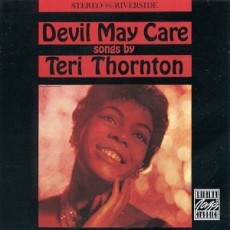
Teri Thornton was born Shirley Enid Avery on September 1, 1934 in Detroit, Michigan. Encouraged by her mother to study classical music, as a teenager she turned to jazz, singing and playing piano. Thornton first performed in local Detroit clubs in the 1950s but her debut as a professional took place at the Ebony Club in Cleveland, Ohio. She moved to Chicago, Illinois and worked with Cannonball Adderley and Johnny Griffin Her debut release of “Devil May Care ” in 1961 for Riverside brought her national attention, with and a subsequent move to New York City where she established herself on the jazz and club scene. She would go on to work with Duke Ellington and Clark Terry.
Scoring her biggest hit with the theme to the television show Naked City “Somewhere in the Night ” in 1963, she would next appear on the Ed Sullivan Show, get a recording contract from Columbia Records and receive a personal stamp of approval from Ella Fitzgerald as her favorite singer. Thornton also found work during this period singing for television ads and recording for several different labels.
By the late Sixties, Teri faded from public view, due to poor managers, alcohol, drugs and her unfailing dedication to taking care of her children. She moved to Los Angeles and it wasn’t until 1979 that she reemerged singing in small piano bars. It was decades later that she was discovered to have been singing on various song poem records in Los Angeles on the Preview label as “Teri Summers.”
Teri moved back to New York in 1983 and once again started performing on the club circuit. In 1998 she fully revived her career after a surprise win at the Thelonious Monk Institute of Jazz Vocal Competition. Thornton signed with Verve Records, releasing I’ll Be Easy to Find. Fame short-lived however, diagnosed with bladder cancer, jazz vocalist Teri Thornton passed away of the disease on May 2, 2000 in Englewood, New Jersey.
More Posts: vocal