

Daily Dose Of Jazz…
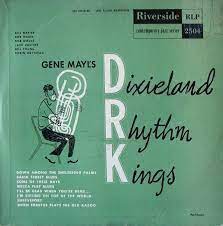
Gene Mayl was born in Dayton, Ohio on December 30, 1928. He lived in France after World War II, where he worked with Claude Bolling, Don Byas, and Claude Luter.
In 1948, he formed his own Dixieland revival ensemble, the Dixieland Rhythm Kings, which recorded for London Records and Riverside Records, and was active through the mid-1970s. Among those he worked with in this group were Speckled Red and Terry Waldo.
Mayl worked extensively with George Brunis in the 1960s and 1970s, and also worked with Wild Bill Davison, Billy Maxted, Bob Scobey, and Muggsy Spanier. Double-bassist, tubaist, and vocalist Gene Mayl transitioned on May 5, 2015 in Harrison Township, Ohio.

Daily Dose Of Jazz…
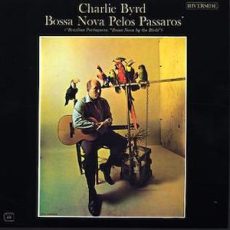
William Frank Reichenbach Sr. was born on December 18, 1923 in Washington, D.C. and started his musical career even before he graduated from the McKinley Tech High School. During World War II, he played in a band of the Navy before he toured with the big bands of Tommy Dorsey, Jimmy Dorsey, and Art Mooney. Later he worked in the jazz clubs of his hometown, where he accompanied Frank Sinatra, Patti Page, Teddy Wilson, and Zoot Sims.
Charlie Byrd hired Reichenbach as an additional drummer for the Stan Getz album Jazz Samba, recorded in 1962. This recording provoked a wave of enthusiasm for bossa nova in the United States. That same year he replaced Buddy Deppenschmidt in the Byrd trio, and stayed as a member for twelve years. Departing from Byrd, he returned to work in Washington D.C., as the house drummer at the Blues Alley.
Drummer and percussionist Bill Reichenbach, who co-developed the jazz-samba drumming style, transitioned following a series of strokes in Los Angeles, California, at the age of 84 on May 16, 2008.
More Posts: bandleader,drums,history,instrumental,jazz,music,percussion
Daily Dose Of Jazz…
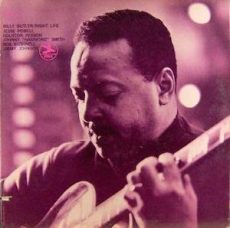
Billy Butler was born William Butler Jr. on December 15, 1924 in Philadelphia, Pennsylvania and began his career in the 1940s behind the Harlemaires. The 1950s saw him as a member of a trio led by Doc Bagby and accompanied keyboardist Bill Doggett.
Butler worked with Al Casey, King Curtis, Eddie “Lockjaw” Davis, Bill Davison, Tommy Flanagan, Panama Francis, Dizzy Gillespie, Benny Goodman, Johnny Hodges, Floyd “Candy” Johnson, David “Fathead” Newman, Houston Person, Sammy Price, Jimmy Smith, Norris Turney, and Dinah Washington.
He is credited as the guitarist on the 1961 Peppermint Twist, Parts 1 & 2 by Joey Dee and the Starliters at the Peppermint Lounge in New York City. He co-wrote Honky Tonk, an R&B hit for Doggett.
Guitarist Billy Butler transitioned on March 20, 1991 from a heart attack at home in Teaneck, New Jersey.
More Posts: bandleader,guitar,history,instrumental,jazz,music
Daily Dose Of Jazz…
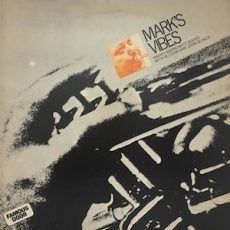
Marky Markowitz was born Irwin Markowitz but also known as Irving Markowitz on December 11, 1923 in Washington, DC. The youngest of seven children of Russian-Jewish immigrants, he learned the trumpet at the local Police Boys’ Club. He played early in his career in a number of big bands during the Forties, including those of Charlie Spivak, Jimmy Dorsey, Boyd Raeburn, and Woody Herman. He played in Buddy Rich’s orchestra in 1946–47, then returned to service under Herman in 1947–48.
Moving his family from Washington, D.C. to New York City in 1958 he eventually settled in Nyack, New York where he worked primarily as a studio musician in the 1960s, 1970s, and 1980s. During this period in his career he did appear on stage with Herman, Gene Krupa, Lee Konit, Ralph Burns, George Russell, Al Cohn, Paul Desmond, and Bill Evans. Marky was a first call trumpeter for many top artists of the time including Paul Simon, Aretha Franklin, Stevie Wonder, the Young Rascals, Frank Sinatra, Tony Bennett, Dionne Warwick, Maynard Ferguson, George Segal, and many others. He played as well on hundreds of advertising jingles, TV ads and movie scores.
He was a perennial on the Jerry Lewis Labor Day Telethon for Muscular Dystrophy, had a vocal impression of Louis “Satchmo” Armstrong, and performed in his hometown with an All-Star band, led by Nelson Riddle, at the Inaugural Ball for President Ronald Reagan’s 2nd term.
Trumpeter and flugelhornist Marky Markowitz, who recorded one album as a leader titled Marks Vibes, transitioned on November 18, 1986.
More Posts: bandleader,history,instrumental,jazz,music,trumpet

Three Wishes
Nica inquired of Sam Woodyard what three things he would wish for if they could come true and his response was:
- “To keep living! That’s all there is. Because we don’t come through here but once.”

More Posts: drums,history,instrumental,jazz,music