

Daily Dose Of Jazz…
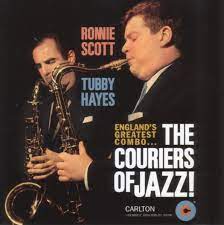
Terry Shannon was born on November 5, 1929 in London, England and started playing as a young child and was completely self-taught. He relied on gleaning from records rather than academic training. Never a good sight reader, he played local gigs with the likes of Les Condon but also worked in an office after leaving school. Finally in 1955 he gave up security for music and joined clarinetist Vic Ash, joining his quartet.
He first recorded with Jimmy Deucher and became a regular on Tempo records in the 1950s working with Dizzy Reece, Ronnie Scott, Tubby Hayes and Victor Feldman. His harmonic sense and his superb sense of time led him to become a favored pianist. Joining the Jazz Couriers in 1957 he stayed until the group broke up two years later, but continued working with Tubby’s various groups for the next five years. During this period he became a member of the Jazz Makers, had his own trio for a period and by 1965 was a part of the Keith Christie/Jimmy Deuchar Five.
Emerging from this period of performance as a consistent player, his career began to falter in the late Sixties through a combination of jazz vices and bitterness. A stint with the Phil Seamen Trio, leading his own trio, and a long illness eventually removed him from the jazz scene for years. He returned to jazz in the Eighties freelancing occasional gigs before moving to South Humberside in 1988. Moving back to London five years later, Shannon regularly played in various groups.

More Posts: bandleader,history,instrumental,jazz,music,piano
Daily Dose Of Jazz…
Lawrence Benjamin Bunker was born November 4, 1928 in Long Beach, California. At first he played primarily drums, but increasingly he focused on vibraphone. He was later highly regarded for his playing of timpani and various percussion instruments.
Bunker is a dependable and in-demand studio drummer and vibist who achieved distinction recording with Billie Holiday, Ella Fitzgerald, Peggy Lee, Diana Krall, and many other jazz greats. In 1952, he was the drummer in one of Art Pepper’s first groups. The next two years he played drums in some of the earliest of Gerry Mulligan’s groups.
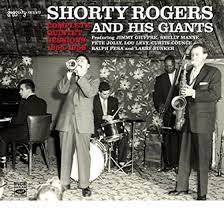
In the 1950s and 1960s he appeared at Howard Rumsey’s Lighthouse in Hermosa Beach, and performed with Shorty Rogers and His Giants and others. The Sixties had him intermittently drumming in the Bill Evans trio and played timpani with the Los Angeles Philharmonic orchestra.
His work in movie soundtracks spanned over fifty years, from Stalag 17 in 1953 and Glengarry Glen Ross in ‘92) to The Incredibles in 2004. Larry’s work included soundtracks by John Williams, Henry Mancini, Quincy Jones, Miklós Rózsa, Jerry Goldsmith, Johnny Mandel, Lalo Schifrin and many other composers.
Drummer, vibraphonist, and percussionist Larry Bunker, who was a central figure on the West Coast jazz scene, transitioned from complications of a stroke in Los Angeles, California at age 76 on March 8, 2005.
More Posts: bandleader,drums,history,instrumental,jazz,music,percussion,timpani,vibraphone
Three Wishes
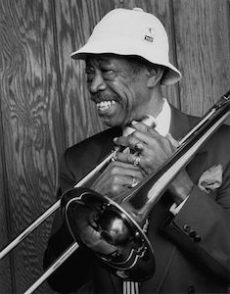
The Baroness approached Al Grey and presented him with the question of three wishes and he replied to her:
- “To have happiness.”
- “Knowledge.”
- “Understanding. I have no more to say.”

More Posts: baroness,history,instrumental,jazz,music,pannonica,three,trombone,wishes
Daily Dose Of Jazz…
Samuel D. Margolis was born on November 1, 1923 in Boston, Massachusetts. Early in his career he played locally with Shad Collins, Vic Dickenson, Bobby Hackett, Nat Pierce, and Rex Stewart.
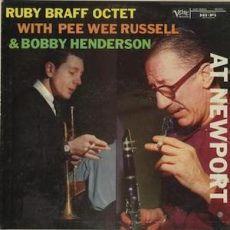
Between 1954 and 1958 Sam worked extensively with Ruby Braff and as sidemen for other musicians, including Pee Wee Russell. He would continue working intermittently with Braff for several decades.
In 1970 Margolis appeared briefly in the parade scene in the Dick Van Dyke movie Some Kind of a Nut. Throughout the 1970s and 1980s, he played often in the New York area, with Ed Polcer, Buzzy Drootin, Max Kaminsky, Roy Eldridge, Tony Bennet, Claude Hopkins, Dill Jones, Vic Dickenson, and Red Balaban.
Clarinetist and saxophonist Sam Margolis, who near the end of his life moved to Deerfield Beach, Florida, transitioned from prostate cancer on March 27, 1996.
More Posts: clarinet,history,instrumental,jazz,music,saxophone
Daily Dose Of Jazz…
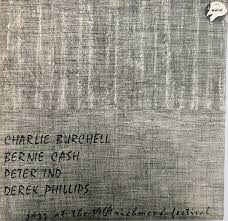
Charles Burchell was born in London, England on October 30, 1925 and began learning the ukulele, then guitar. Then he heard an Artie Shaw record that inspired him to take up the clarinet and play jazz. Switching to alto saxophone, he started his own quintet in 1943, then tried tenor saxophone before he was drafted into the Royal Air Force. Transferred to the army in 1944, he played in Greece with the British Divisional Band.
Following his discharge in 1947 Charles worked in London with the Toni Antone Big Band. By 1949 he had given up full-time musicianship for work in a factory in order to not perform music he did not like in order to make a living.
A disciple of Lennie Tristano and a devoted admirer of Warne Marsh, he continued to play part-time, leading his own quintet for more than 20 years. Burchell has guested with Clark Terry, Emily Remler and Nathan Davis, and recording for Peter Ind’s Wave label. He played with Ind in the group that supported Tristano on his only UK concert, at Harrogate in 1968.
Saxophonist Charles Burchell, who went by Chas and has been touted as one of the great unsung heroes of British jazz, transitioned from a heart attack on June 3, 1986.

More Posts: bandleader,history,instrumental,jazz,music,saxophone