

Daily Dose Of Jazz…
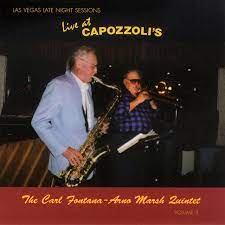
Arno Marsh was born on May 28, 1928 in Grand Rapids, Michigan and played early on in local dance bands, then played in Woody Herman’s ensemble from 1951 to 1953, where he soloed frequently on Herman’s Mars Records releases.
He led a band in a Grand Rapids residency from 1953 to 1955, then rejoined Herman intermittently through 1958. He recorded with Stan Kenton, Charlie Barnet, Lionel Hampton, Buddy Rich, and Harry James. After the late 1950s most of Marsh’s activity was in Las Vegas, Nevada leading hotel orchestras. He accompanied Nancy Wilson on record with one of them in 1968, and did a Woody Herman tribute in 1974.
Tenor saxophonist Arno Marsh transitioned at the age of 91 on July 12, 2019.

More Posts: history,instrumental,jazz,music,saxophone

Daily Dose Of Jazz…
Thomas Bryant was born May 21, 1930 in Philadelphia, Pennsylvania and grew up in a musical family. His mother was a choir director, his brother Ray was a pianist, and another brother, Len Bryant, is a vocalist and drummer. He began playing bass at the age of 12 and played in many local outfits.
The late Forties saw Bryant join Elmer Snowden’s band, staying there until 1952, when he took a tour of duty during the Korean War. In 1956 he returned and formed his own trio, though he never recorded as a leader, he recorded seventeen albums as a sideman.
He is better known for his work with his brother Ray, as well as Jo Jones, Charlie Shavers, Roy Eldridge, Dizzy Gillespie, Barney Wilen, Benny Golson, Big Joe Turner, Hank Mobley, Curtis Fuller, Lee Morgan, Billy Root and Coleman Hawkins.
In the last ten years of his life he played in the follow-up band to The Ink Spots. Double bassist Tommy Bryant, who also recorded with Mahalia Jackson under the name Tom Bryant, transitioned on January 3, 1982.
More Posts: bandleader,bass,history,instrumental,jazz,music
Daily Dose Of Jazz…
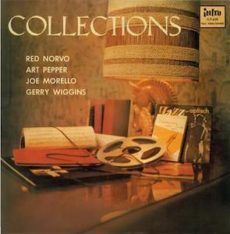
Gerald Wiggins was born on May 12, 1922 in New York City. He started classical piano lessons when he was four but by his teenage years became interested in jazz. He doubled on bass while attending High School & Art and for a period in the 40s accompanied Stepin’ Fetchit. Following this he worked and toured with the big bands of Les Hite, Louis Armstrong and Benny Carter. Stationed in Seattle while in the military he played in the local jazz clubs.
By the mid 40s Wiggins relocated to Los Angeles and played music for television and film. He has worked with Lena Horne, Kay Starr, Nat King Cole, Lou Rawls, Jimmy Witherspoon Helen Humes, Joe Williams, Ernie Andrews and Eartha Kitt to name a few. He also worked at the Hollywood studios as a vocal coach and worked with Marilyn Monroe and others.
Always a highly flexible pianist, Wiggins was comfortable in swing and bop settings with a consistently witty style filled with catchy riffs became his distinctive signature. His best-known recording as an organist was Wiggin’ Out but it was Wiggins’ trio work with Andy Simpkins and Paul Humphreys that is legendary. Pianist Gerald Wiggins passed away at the age of 86 on July 13, 2008.
More Posts: bandleader,history,instrumental,jazz,music,organ,piano

Daily Dose Of Jazz…
Denys Justin Wright was born on May 6, 1924 in Deptford, London, England and grew up in Brockley. His first instrument was the piano but was soon trying to play his brother’s guitar. Known professionally as Denny Wright, he began playing professionally before World War II while at school. He nearly always used his thumb on the top E string and could only play as fast as he could sing.
Wright spent the first part of World War II playing in jazz clubs in the West End of London, doing session work and performing in bands on radio shows. He worked with Stephane Grappelli for the first time in London around 1941. At school he served with the Auxiliary Fire Service in Brockley. Classified medically unfit to serve due to a childhood injury, he joined Entertainments National Service Association (ENSA), entertaining the troops.
In 1945 he started the first bebop club in London where he played piano and guitar. The late 1940s saw him touring Italy and the Middle East with the Francisco Cavez Orchestra. Throughout the 1950s DEnny provided guitar accompaniments for Lonnie Donegan, Johnny Duncan, Humphrey Lyttelton, and Marie Bryant, as well as appearing on Guitar Club on the BBC. In 1952, he accompanied Tex Ritter for a season at the Texas Western Spectacle, and with Joel David on Old Bones and added a guitar solo on Be My Valentine Tonight.
Establishing the Denny Wright Trio with violinist Bob Clarke took skiffle and jazz to the Soviet Union in 1957 for the 6th World Festival of Youth and Students. For four decades from the Forties he worked as a session musician working with the likes of Mary Hopkin, Dusty Springfield and Tom Jones. In the 1960s, he went on to record under The Cooper-Wright Quintet, and during the late Seventies formed the band Velvet with Ike Isaacs, Len Skeat, and Digby Fairweather.
Never one to not be working he continued to put bands together as well as lecturing and giving private lessons. He arranged for and fixed sessions, and was a prolific jazz and orchestra composer. He worked with Latin American, Afro-Cuban and Jamaican bands. Denny was voted the 1980 BBC Jazz Society Musician of the Year.
Guitarist, pianist, arranger and composer Denny Wright transitioned on February 8, 1992 in London after a nine-year battle with bladder cancer.
More Posts: bandleader,guitar,history,instrumental,jazz,music

Daily Dose Of Jazz…
Claus Ogerman, born Klaus Ogermann on April 29, 1930 in Ratibor (Racibórz), Upper Silesia, Germany is now part of Poland. He began his career with the piano but became one of the most prolific arrangers of the 20th century.
In the 1950s, Ogerman worked in Germany as an arranger-pianist with Kurt Edelhagen, saxophonist and bandleader Max Greger, and Delle Haensch. He also worked as a part-time vocalist and recorded several 45 rpm singles under the pen name of Tom Collins, duetting with Hannelore Cremer. He also recorded a solo vocal with the Delle Haensch Jump Combo.
Moving to the United States in 1959, Claus joined producer Creed Taylor at Verve Records, working on recordings with many artists. During this time he also arranged many pop hits, and in 1967 joined Creed Taylor on the A&M/CTi label. Ogerman charted under his own name in 1965 with the RCA single Watusi Trumpets.
In 1980 Ogerman won a Grammy Award for Best Instrumental Arrangement for Soulful Strut and the 2010 Grammy Award for Best Instrumental Arrangement Accompanying Vocalists for Quiet Nights. He composed music for seventeen movies, recorded fifteen albums, and released a compilation in 2002.
He arranged and conducted an impressive 58 albums with George Benson, Solomon Burke, Donald Byrd, Betty Carter, Sammy Davis Jr., Bill Evans, Connie Francis, Michael Franks, Stan Getz, Astrud Gilberto, João Gilberto, João Donato, Lesley Gore, Stephane Grappelli, Al Hirt, Billie Holiday, Johnny Hodges, Freddie Hubbard, Willis Jackson, Cal Tjader, Antônio Carlos Jobim, Dr. John, Wynton Kelly, Ben E. King, Diana Krall, Wes Montgomery, Danilo Perez, Oscar Peterson, Frank Sinatra, Jimmy Smith, Barbra Streisand, Cal Tjader, Mel Tormé, Stanley Turrentine, and Kai Winding.
Having worked in the jazz, top 40, rock, pop, R&B, soul, easy listening, Broadway and classical music fields, it has never been determined the exact number of recording artists for whom he has either arranged or conducted during his career. Arranger, conductor, and composer Claus Ogerman,transitioned on March 8, 2016
More Posts: arranger,bandleader,composer,conductor,history,instrumental